Why Middle Childhood Deserves More Attention
19 October 2026
Ask most parents to name the stage of childhood that worries them most, and you will usually hear about the teenage years. Ask where they think the most important development happens, and many will point to the first three years, when brains are growing at a breathtaking pace and every cuddle seems to matter enormously. Middle childhood, roughly the years from six to twelve, sits quietly in between. It is the stretch when children go to school, make friends, join teams, and gradually become their own people, and yet it receives a fraction of the public attention, research funding, and parental anxiety that surrounds both early childhood and adolescence.
That neglect is a mistake. Middle childhood is not a waiting room between the adorable chaos of toddlerhood and the dramatic upheaval of the teens. It is a distinct developmental period with its own tasks, its own risks, and its own extraordinary opportunities. The habits, self-concepts, and social skills formed during these years shape how children navigate adolescence and adulthood far more than most parents realize. This article explains why this stage matters, what actually happens during it, where parents commonly go wrong, and how to make the most of the years that too many of us overlook.

What Makes Middle Childhood a Distinct Stage
Developmental scientists generally place middle childhood between about age six and the onset of puberty, which in many children begins somewhere between nine and twelve. The boundaries are fuzzy because children mature at different rates, but the core features of the period are consistent enough to treat it as its own chapter.Several things change at once around the start of this stage. Children lose their baby teeth and gain adult ones. Their bodies grow steadily but without the dramatic spurts of infancy or puberty. Their thinking becomes more logical and less magical. They start to compare themselves with others in earnest. And they enter formal schooling, which introduces a whole new set of adults, rules, and measures of success.
The psychologist Erik Erikson described this period as the tension between industry and inferiority. Children are driven to make things, master skills, and prove themselves competent. When they succeed, they develop a sense of capability. When they repeatedly fail or feel they cannot measure up, they risk concluding that they are simply not good enough. That framing captures something essential: middle childhood is when children build their working theory of what kind of person they are and what they can do.
The Quiet Consolidation of Skills
The brain changes during these years are less visible than in early childhood but no less important. Language becomes more sophisticated. Children move from learning to read to reading to learn. They develop the ability to plan, hold multiple ideas in mind, and control impulses, though these skills are still under construction and vary widely from child to child.What makes this period special is consolidation. A child who learned to speak at three now learns to argue, negotiate, and tell a coherent story. A child who learned to run now learns to play a sport with rules and teammates. The raw materials laid down earlier get refined into usable, reliable abilities.

Why This Stage Gets Overlooked
The neglect of middle childhood has several causes, and understanding them helps explain why parents often feel unprepared for problems that emerge during these years.Early childhood commands attention because the stakes feel obvious. Babies cannot care for themselves, and their development is rapid and visible. Adolescence commands attention because it is loud. Teenagers take risks, push back, and experience mental health difficulties at rates that alarm parents and policymakers.
Middle childhood, by contrast, is comparatively calm. Most children this age are reasonably self-sufficient. They can dress themselves, communicate clearly, and spend hours occupied without constant supervision. The problems of this stage, meanwhile, tend to be quiet ones: a child who is slowly withdrawing, a child who has decided she is bad at math, a child who is being excluded at lunch and says nothing about it.
There is also a cultural assumption that school handles this period. Parents often relax once a child is in a stable classroom, assuming that teachers and the routine of education will take care of development. School matters enormously, but it covers only part of what a child needs. The hours after school, the weekends, the summers, and the quality of relationships at home remain decisive.

The Core Developmental Tasks of These Years
To parent well during middle childhood, it helps to know what children are actually working on. Four tasks stand out.Building Competence and a Sense of Capability
Children this age need to get good at things. The specific skill matters less than the experience of effort leading to improvement. A child who learns to bake bread, fix a bicycle chain, or memorize a piece of music is learning that ability is not fixed. This is where the concept of a growth mindset becomes practical rather than fashionable. Children who believe skill comes from practice keep trying when things get hard. Children who believe skill is innate give up quickly, because failure feels like evidence about who they are rather than what they have done.Parents can support this by giving children real responsibilities and real opportunities to struggle. A child who is never allowed to fail at anything cannot develop the evidence that failure is survivable.
Forming Friendships and Reading Social Situations
Peer relationships take on new weight during middle childhood. Friends become central, and social status starts to matter. Children learn to share, negotiate, keep secrets, handle conflict, and read the emotional states of people outside their family.This is also when cliques and exclusion emerge. The social world of a nine-year-old can be surprisingly harsh, and the pain of being left out is real. Parents often underestimate it because it looks trivial from the outside. It is not trivial to the child living it.
Developing Self-Regulation
The ability to manage attention, emotions, and impulses grows steadily during these years, but it grows unevenly. A ten-year-old may show impressive self-control in one setting and melt down in another. This is normal. The brain regions responsible for planning and impulse control are still developing, and they will continue to develop well into the twenties.What matters is that children get practice. A child who is never required to wait, plan, or tolerate frustration does not build these capacities. A child who is given age-appropriate challenges and support does.
Constructing a Self-Concept
By around age eight, children begin to describe themselves in more complex and comparative terms. They notice who is fastest, who is smartest, who is popular. They form beliefs about their own strengths and weaknesses that can persist for years.These beliefs are often inaccurate. A child may decide he is bad at reading because he struggled in first grade, even though he catches up by fourth. A child may decide she is not likable because one friendship fell apart. Parents who understand this can help children examine and revise these conclusions before they harden.

Common Mistakes Parents Make During Middle Childhood
Most parenting mistakes in this stage come from good intentions. Here are the ones that cause the most trouble.Over-scheduling
Many parents respond to the fear of falling behind by filling every afternoon with structured activities. Sports, music lessons, tutoring, clubs, and enrichment programs can all be valuable. But a child whose entire week is scheduled never learns to manage unstructured time, pursue their own interests, or simply be bored, which is often where creativity begins.The trade-off is real. Structured activities build skills and provide supervision. Unstructured time builds initiative and self-direction. Both matter, and the right balance depends on the child. A child who thrives on routine may do well with a fuller schedule. A child who is anxious or easily overwhelmed may need more empty space. Watch your child rather than following a formula.
Treating Academic Performance as the Only Measure of Worth
School is the dominant institution of middle childhood, so it is easy to let grades become the primary lens through which a child is evaluated. The problem is that academic performance is uneven and influenced by many factors outside a child's control, including developmental timing. A child who is a late reader may be perfectly capable and simply on a different timetable.When parents react to every grade as a verdict on the child's future, children learn to equate their worth with their performance. That pattern often intensifies in adolescence and can contribute to anxiety and avoidance. A better approach is to treat school as one domain among several, to focus on effort and process, and to be curious about difficulties rather than panicked by them.
Dismissing Friendship Problems
Adults often wave away childhood social conflict as something kids will sort out. Sometimes they will. But persistent exclusion, bullying, or the slow drift of a child into isolation deserves attention. The mistake is not intervening; it is intervening in the wrong way. Calling the other child's parents in anger, demanding that the school force friendships, or telling your child to just ignore it rarely helps.What helps is listening, taking the problem seriously, helping the child think through options, and working with the school when the situation is beyond what a child can manage. The goal is to support the child's own social agency, not to take over.
Confusing Independence With Abandonment
Middle childhood is when children start to need more privacy, more autonomy, and more say in their own lives. Parents who recognize this sometimes swing too far and stop paying attention. The child seems fine, so they back off entirely.Children this age still need active involvement, just of a different kind. They need adults who are available, who notice changes in mood, who ask questions without interrogating, and who set boundaries that make the child feel safe. The shift is from managing to monitoring, from directing to consulting.
What Actually Works: Practical Guidance
Good parenting in middle childhood is less about elaborate strategies and more about consistent, thoughtful presence. The following practices make a measurable difference.Protect Unstructured Time and Boredom
Children need blocks of time with nothing planned. This is when they build forts, invent games, read for pleasure, or lie on the floor staring at the ceiling. Boredom is not a problem to be solved; it is often the doorway to self-directed activity.If your child is used to constant stimulation, expect complaints at first. Resist the urge to fill the gap with screens immediately. Offer materials and options, then let the child figure it out. Many children rediscover hobbies and interests during these empty hours that no structured program would have produced.
Give Real Responsibility
Children this age are capable of far more than many parents ask of them. Cooking a simple meal, doing laundry, caring for a pet, managing a small allowance, or helping a younger sibling builds competence and belonging. The key is to assign tasks that genuinely matter to the household rather than artificial chores designed to teach a lesson.When children contribute in real ways, they see themselves as capable and needed. That sense of being useful is one of the strongest protective factors against the feelings of inadequacy that can take hold in this stage.
Talk About Effort, Strategy, and Process
Praise that focuses on traits ("you are so smart") tends to backfire over time, because children who believe intelligence is fixed become reluctant to take on challenges. Praise that focuses on process ("you kept trying different approaches until you figured it out") supports persistence.This does not mean never acknowledging talent. It means emphasizing that ability is built through work and that struggle is a normal part of learning rather than a sign of inadequacy.
Take Friendship Seriously Without Taking It Over
When your child comes home upset about a social problem, start by listening. Ask questions. Resist the urge to offer solutions immediately. Often children need to talk through the situation before they can decide what to do.If the problem persists, help your child identify options: talking to the friend directly, seeking out other companions, speaking to a teacher. Involve the school when safety or persistent exclusion is at stake. The goal is to strengthen your child's ability to handle social challenges, not to remove all discomfort.
Keep the Relationship Warm and Available
The single most protective factor in any childhood is a warm, responsive relationship with at least one caring adult. In middle childhood, that relationship often becomes less physically affectionate and more conversational. Children may not want to cuddle as much, but they still need to know you are glad to see them, interested in their thoughts, and available when things go wrong.Small rituals help. A walk after dinner, a shared hobby, a few minutes at bedtime, a regular one-on-one outing. These create the conditions for the conversations that matter, which rarely happen on demand.
Watch for Quiet Warning Signs
Because problems in this stage tend to be quiet, parents need to pay attention to changes. A child who stops talking about school, loses interest in activities she used to love, sleeps poorly, complains of frequent stomachaches, or becomes unusually irritable may be signaling distress. These signs do not always indicate something serious, but they deserve curiosity rather than dismissal.
The Trade-Offs Parents Face
Middle childhood is full of decisions where reasonable people disagree, and it helps to see the trade-offs clearly.Consider screen time. Screens offer learning, connection, and entertainment, and children who are excluded from digital life can feel left behind socially. But excessive screen use can crowd out physical activity, sleep, and face-to-face interaction. There is no universal right number of hours. What matters is what screens are replacing and whether the child has other sources of satisfaction and competence.
Consider competition. Competitive sports and academic contests can build resilience, discipline, and a healthy relationship with challenge. They can also teach children that their value depends on winning. The difference usually lies in how adults frame the activity and how they respond to losses. A child whose parent is devastated by a defeat learns that the stakes are higher than they should be.
Consider independence. Letting a child walk to a friend's house alone or manage a small conflict without adult help builds confidence. But safety concerns are legitimate and vary by neighborhood. The right balance depends on the child's maturity, the local environment, and your own comfort level. There is no prize for being the most permissive or the most protective parent.
Why Paying Attention Now Pays Off Later
The case for focusing on middle childhood is not that it determines everything. Children are resilient, and development continues throughout life. The case is that this stage offers a window of particular leverage.The beliefs children form about themselves during these years tend to persist. The skills they build, from reading fluency to emotional regulation, become the foundation for the demands of adolescence. The relationship patterns they establish with parents and peers set expectations for what relationships feel like.
Adolescence gets the attention because it is dramatic. But much of what plays out in the teenage years has roots in the quieter decade before. A child who enters adolescence with a sense of competence, a few solid friendships, and a warm relationship with at least one parent is better equipped for the turbulence ahead.
Middle childhood deserves more attention not because it is more important than other stages, but because it is important in ways that are easy to miss. The children in this stage are not waiting to become themselves. They are already becoming themselves, quietly, every day. The parents who notice that, and who show up for it, give their children something that no amount of early enrichment or later intervention can fully replace.
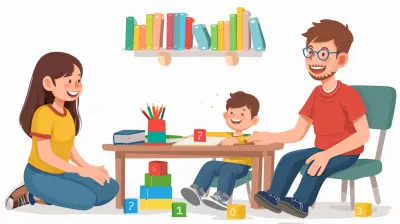
all images in this post were generated using AI tools
Category:
Developmental StagesAuthor:

Noah Sawyer