What to Expect During the Terrific Twos
14 October 2026
Somewhere around your child's second birthday, a switch flips. The sweet baby who happily went along with your agenda suddenly has opinions. Strong ones. About everything. Which cup, which socks, which route to the car, which parent is allowed to open the yogurt lid. Welcome to the terrific twos, the developmental stretch that gets a bad reputation from people who never stopped to ask what is actually happening inside a two-year-old's brain.
Here is the thing nobody tells you: the twos are terrific not in spite of the chaos, but because of it. This is the age when your child stops being a passenger in their own life and starts trying to drive. Your job is not to wrestle the wheel away. It is to install guardrails, teach some rules of the road, and keep everyone from crashing.
What Is Actually Happening in a Two-Year-Old's Brain
To parent a two-year-old well, you have to understand the machinery. During this period, language explodes. A child who had fifty words at eighteen months may have several hundred by thirty months, and may start linking them into short sentences. At the same time, the parts of the brain responsible for impulse control and emotional regulation are nowhere near finished. They will not be finished for years.Think of it like a car with a powerful engine and brakes that are still being manufactured. The engine is curiosity, will, and mobility. The brakes are self-control. Your child is not giving you a hard time; your child is having a hard time, and the hard time is developmental, not personal.
This mismatch explains almost every classic two-year-old behavior. The meltdown over a broken banana is not about the banana. It is about a child who had a clear picture in their head, watched reality violate that picture, and lacks the tools to process the disappointment. The word "no" repeated forty times a day is not defiance for its own sake. It is a child testing whether their preferences matter.
Why the Term "Terrible Twos" Misses the Point
The label sets parents up to dread a year that is actually one of the most exciting in early childhood. When you expect a terrorist, you interpret normal behavior as an attack. When you expect a scientist, you interpret the same behavior as experimentation. Same kid, same yogurt cup standoff, completely different parental response.
The Big Developmental Tasks of This Year
Two-year-olds are working on a handful of core jobs. Understanding these helps you decide when to intervene and when to step back.Autonomy Versus Doubt
This is the central psychological task of the age. Your child is figuring out that they are a separate person with their own will. Every "me do it" is a brick in that foundation. The trade-off is obvious: letting them do it takes four times as long and often produces a worse result. That is a trade worth making, selectively. If you do everything for them because it is faster, you get a faster morning and a child who doubts their own capability. If you let them struggle with the zipper, you get a slow morning and a child who eventually zips their own coat.Language as Power
Words are your child's new superpower, and they know it. You will hear "mine," "no," "stop," and "I do it" on repeat. This is not rudeness. It is a vocabulary of self-assertion that they are practicing because it works.Pretend Play and Symbolic Thinking
Around this age, a block becomes a phone, a box becomes a car, and a stuffed bear gets scolded for not sharing. Pretend play is not just cute. It is how children rehearse social rules, process scary experiences, and build narrative thinking. If your child is reenacting the vet visit with their stuffed animals, they are doing serious cognitive work.Physical Mastery
Running, climbing, kicking, scribbling, stacking. The body is becoming a tool rather than a mystery. This is also why two-year-olds seem to have a death wish near stairs and furniture. They are testing the limits of a body they do not fully understand yet.
The Classic Behaviors and What They Really Mean
Meltdowns
A meltdown is not a tantrum in the manipulative sense. It is a nervous system overwhelm. The difference matters enormously for how you respond.A tantrum, in the older sense, is goal-directed: the child is trying to get something and watches your face to see if it is working. A meltdown is a loss of control: the child cannot be reasoned with, cannot be bribed, and often cannot even hear you.
For meltdowns, the response is co-regulation. Get low, get quiet, get close. Fewer words, not more. "I am here. You are safe." For goal-directed tantrums, the response is calm consistency: hold the limit, acknowledge the feeling, do not negotiate under fire.
The mistake most parents make is treating a meltdown like a tantrum. You try to reason with a child who has no access to reasoning, which escalates everyone. The second most common mistake is treating a tantrum like a meltdown, which teaches the child that screaming produces results.
Hitting, Biting, and Throwing
These are communication failures, not moral failures. A two-year-old who bites is usually a two-year-old who is tired, hungry, overwhelmed, or lacking the words to say "move away from my toy."The effective sequence is short and boring: block the behavior physically, name the feeling, offer the replacement. "You are angry. I will not let you hit. You can stomp your feet or say 'stop.'" Then move on. Long lectures do not land at this age. Repetition does.
The Word "No"
Two-year-olds say no because it is the fastest way to feel like a person. You can reduce the frequency by reducing the number of yes-or-no questions you ask. "Do you want to get in the car?" invites a no. "It is time to go. Do you want to walk or hop to the car?" invites a choice within a limit.This is the single most useful technique of the entire year: replace yes-or-no questions with either-or choices you can live with. Both options must be acceptable to you. If they are not, it is not a real choice and your child will smell the trap.
Possessiveness
"Mine" is developmentally appropriate even when the toy is not technically theirs. Sharing is a skill that emerges gradually and is built on a foundation of secure ownership. A child who is confident that their things are theirs is more willing to lend them. Forced sharing tends to produce hoarding and resentment. A better approach is to narrate turn-taking, protect a child's right to hold onto a special item, and model sharing yourself.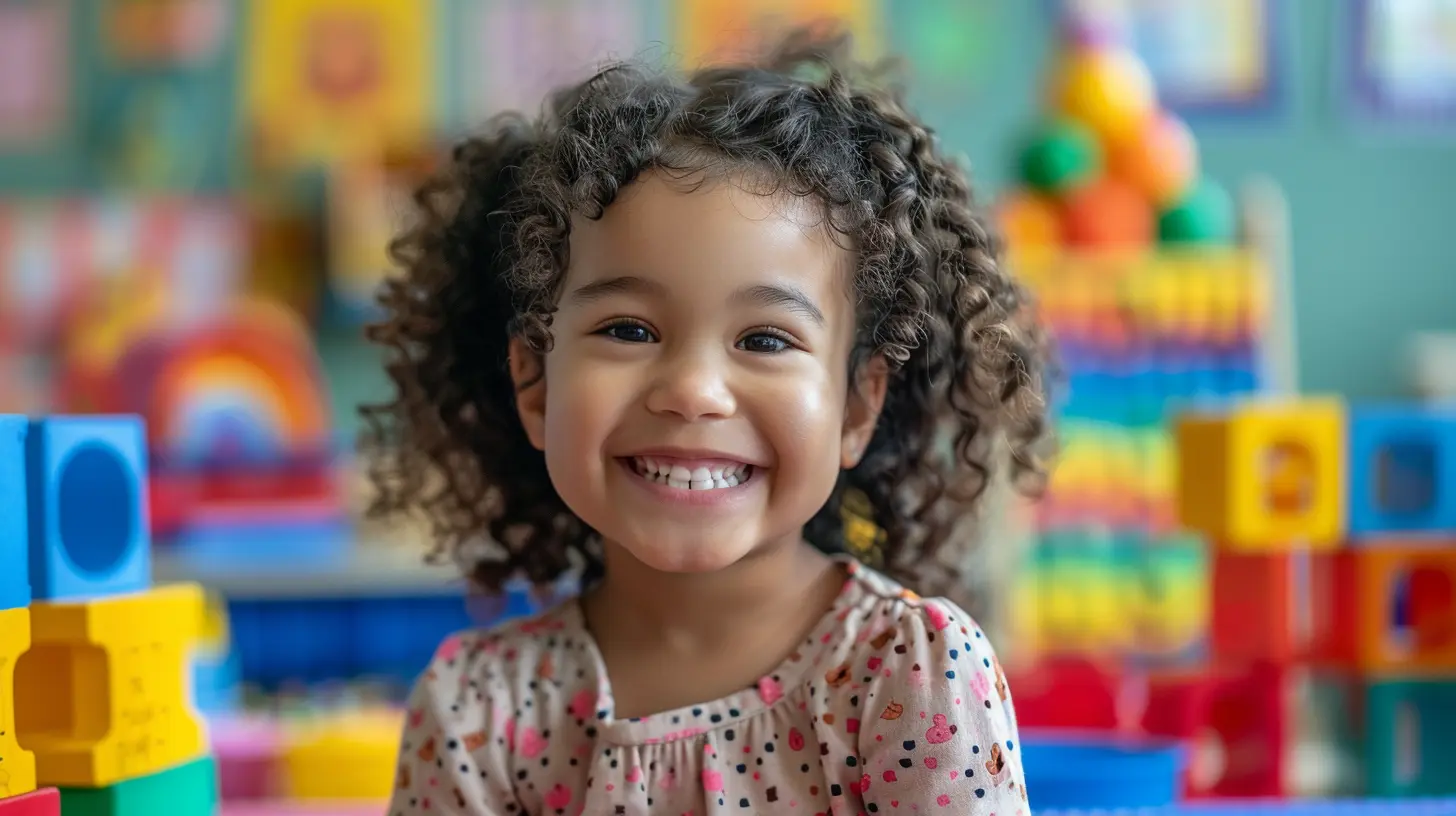
Practical Strategies That Actually Work
Build Routines, Then Protect Them
Two-year-olds thrive on predictability because it reduces the number of decisions they have to make and the number of transitions they have to absorb. A consistent sequence for mornings, meals, and bedtime gives them a script they can follow and eventually anticipate.The trade-off: routines can become rigid. Some children become deeply attached to the exact order of things, and a deviation can trigger distress. That is normal at this age. You can honor the ritual while gently introducing small variations so flexibility develops alongside predictability.
Use Transitions Deliberately
Most meltdowns cluster around transitions: leaving the park, stopping play, getting in the bath, getting out of the bath. Transitions are hard because they require a child to shift attention and abandon something enjoyable, both of which are executive function skills still under construction.What helps: a warning. "Two more slides, then we go." A countdown. A job. "You carry the bucket to the car." A song or a silly walk. What does not help: sudden announcements, especially while the child is absorbed.
Offer Choices Within Limits
You are the one who decides the boundaries. Your child decides what happens inside them. "You need to wear shoes. Do you want the red ones or the blue ones?" This satisfies the autonomy drive without surrendering the structure.Common mistake: offering choices that are too broad. "What do you want for lunch?" is a setup for a standoff. "Do you want cheese or peanut butter?" is workable.
Name Feelings Without Fixing Them
"You are frustrated because the tower fell." That is it. Do not rush to solve. Do not say "it is okay" when it is clearly not okay to them. Naming a feeling helps a child build the vocabulary and the neural pathways to manage it. Over time, a child who can say "I am mad" is a child who is less likely to hit.Pick Your Battles on Purpose
Not every conflict deserves your full attention. Ask yourself: does this matter for safety, health, or values? If not, let it go. If your child wants to wear rain boots to a birthday party in July, that is a battle you can lose with dignity. If your child wants to run into the street, that is a battle you must win, every time, calmly and without negotiation.The reason this matters: a child who hears "no" about everything stops hearing "no" at all. Save your authority for the things that count.
Use Positive Instructions
Two-year-olds have a hard time processing negation. "Do not run" often registers as "run." "Walk, please" is easier to follow. "Do not touch the lamp" becomes "Hands to yourself. Come help me with this." Tell them what to do, not what not to do.Common Mistakes and Misconceptions
Misconception: Discipline Means Punishment
Discipline comes from the same root as disciple, meaning to teach. At this age, discipline is mostly environmental design, routine, redirection, and consistent limits. Time-outs and consequences have a role, but they are a small part of the picture. A two-year-old does not learn from a lecture. They learn from repetition, modeling, and the predictable consequences of their actions.Mistake: Expecting Them to Remember Yesterday's Lesson
Two-year-olds live in the present tense. You can tell them a hundred times not to dump the water out of the bath, and they will do it again tomorrow. This is not defiance. It is a brain that has not yet consolidated the lesson into a general rule. Patience is not optional here; it is the entire job.Mistake: Reasoning Like They Are Miniature Adults
Long explanations do not work because the language comprehension is not there yet. Short, concrete sentences do. "Hot. Do not touch." "We are leaving now." "Hands are for helping."Mistake: Taking It Personally
When your child screams "I do not like you" because you cut the sandwich wrong, they are not delivering a verdict on your parenting. They are expressing frustration with the tools they have. Your ability to stay calm is the most powerful intervention available.Mistake: Comparing Children
Two-year-olds vary wildly. Some talk in sentences at twenty months; some barely speak at thirty. Some are social butterflies; some cling to a parent's leg. Ranges are wide and normal. If you have concerns, talk to a pediatrician, but do not let a cousin's precocious toddler become your benchmark.
When to Seek Professional Guidance
Most two-year-old behavior is within the range of normal. But some signs warrant a conversation with a professional: a loss of skills the child previously had, no words by around two years, no response to name, no pointing or joint attention, extreme difficulty with transitions that disrupts daily life, or persistent aggression that injures others.Early intervention is not a verdict. It is information. If there is a delay or a concern, the earlier you address it, the more options you have.
The Long Game
The terrific twos are a bridge. On one side is a baby who needs you for everything. On the other side is a preschooler who can dress themselves, tell you what happened at their day, and negotiate for one more story. The bridge is loud, messy, and full of yogurt-related drama. Walk it with your eyes open.Your child is not trying to ruin your day. They are trying to become a person. The fact that they are doing it in your kitchen, at full volume, while you are already late, is just the price of admission. Pay it with patience, hold the limits, and let them have the small wins. The twos are terrific. You just have to look at them from the right angle.
all images in this post were generated using AI tools
Category:
Developmental StagesAuthor:

Noah Sawyer
Discussion
rate this article
1 comments
Chelsea Love
The Terrific Twos can be a wild ride, but embrace the chaos. Set clear boundaries and celebrate their independence. It's all about growth for both you and your child... and these moments will shape lasting memories.
October 14, 2026 at 3:10 AM