The Role of Empathy in Building Strong Family Bonds
1 September 2026
Family life is messy. It is loud, unpredictable, and full of moments that test your patience in ways a job or friendship never will. You might think that the glue holding a family together is love, or shared values, or even the simple routine of eating dinner at the same table. But after years of watching families succeed and struggle, I can tell you this: the real glue is empathy. Not the soft, fuzzy kind you see on greeting cards. The practical, hard-working kind that shows up when you are tired, annoyed, and still choose to understand someone else's perspective.
Empathy is not about agreeing with everyone. It is about acknowledging that their feelings make sense to them, even when those feelings make no sense to you. In a family, this skill is the difference between a house where people merely coexist and a home where people actually turn to each other in times of joy and crisis. Let me walk you through why empathy matters so much, how it works in real family moments, and what you can do to build it when you feel like you have none left.

What Empathy Really Looks Like at Home
Most people confuse empathy with sympathy. Sympathy is feeling sorry for someone. Empathy is feeling with someone. When your teenager slams the door and yells that you ruined their life because you took away their phone, sympathy says, "That must be hard." Empathy says, "I remember being that angry and feeling that powerless, and it was awful." The second response does not fix the problem. It does not return the phone. But it does something more important: it tells your teenager that they are not alone in their frustration.At home, empathy shows up in small, unglamorous ways. It is noticing that your partner is quieter than usual after work and not immediately launching into your own stories. It is pausing before you correct your child's homework to ask how they felt about the assignment. It is choosing to say, "I understand why you wanted to stay up late," before you explain why sleep matters. These moments do not require grand gestures. They require attention and a willingness to step outside your own head for a minute.
The tricky part is that empathy is not natural for most people. We are wired to protect our own feelings first. When a family member criticizes us, our first instinct is to defend. When they are sad, we want to fix it quickly so we can stop feeling uncomfortable. Empathy asks us to sit in that discomfort longer than we want to. That is why it is a skill, not a personality trait. And like any skill, it gets stronger with practice.
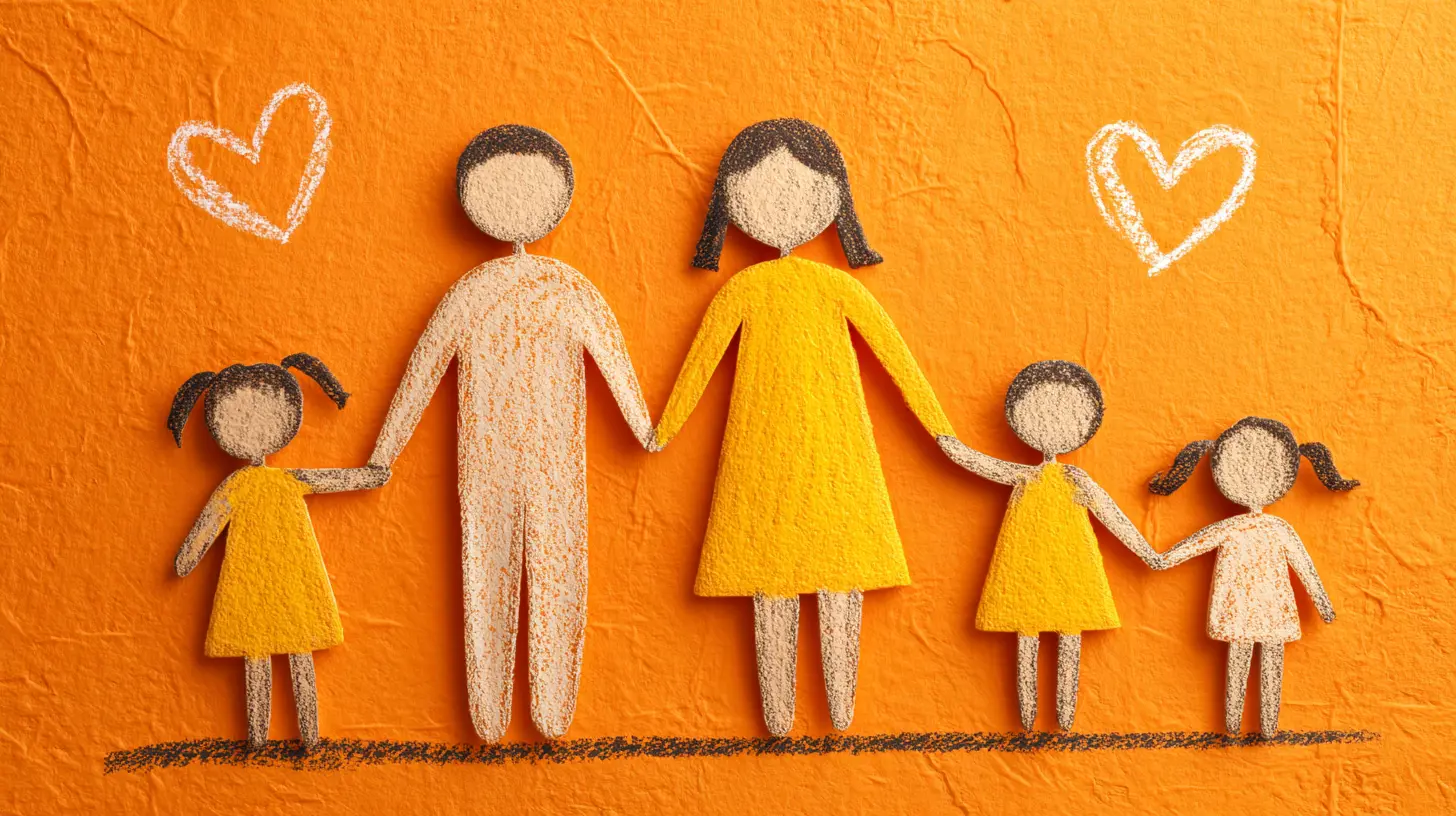
Why Empathy Holds Families Together Under Pressure
Every family faces stress. Money problems, health scares, moving to a new city, or simply the daily grind of school and work. Under stress, people regress. They get short-tempered, defensive, and self-focused. This is exactly when empathy is most needed and least available. A family without empathy under pressure becomes a group of individuals fighting for their own survival. A family with empathy becomes a unit that absorbs the shock together.Consider a common scenario: a parent loses their job. The parent feels ashamed and scared. The children sense tension. Without empathy, the parent might snap at the kids for small mistakes because they are carrying a heavy emotional load. The kids, in turn, might act out because they feel rejected. This creates a downward spiral. With empathy, the parent can say to themselves, "My kids are acting out because they feel insecure, not because they are bad." The kids can think, "Dad is grumpy because he is worried, not because he does not love us." That shift in interpretation changes everything.
Empathy also builds trust, and trust is the foundation of any strong relationship. When you show a family member that you genuinely understand their experience, you signal that they are safe with you. They can be vulnerable without fear of judgment or punishment. This matters enormously for children, who are constantly trying to figure out where they stand in the world. A child who feels understood at home carries a quiet confidence into school, sports, and friendships. They do not need to prove themselves as loudly because they already know they matter.

The Difference Between Empathy and Enabling
Here is where many well-meaning parents get confused. They worry that being empathetic means letting their kids off the hook. They fear that if they understand their child's anger, they are approving of bad behavior. This is a false choice. Empathy is not the same as agreement, and it is certainly not the same as enabling.You can say, "I see that you are furious about losing your gaming privileges, and I understand why that feels unfair to you," and then add, "And you still need to finish your homework before any screens tomorrow." The first sentence validates the feeling. The second sentence upholds the boundary. Both are necessary. Empathy without boundaries creates entitled kids who think their feelings justify any action. Boundaries without empathy create resentful kids who feel unheard and misunderstood.
The same principle applies to spouses and extended family. If your partner is upset about something you did, empathy means listening fully before explaining your side. It does not mean apologizing for something you do not think was wrong. It means saying, "I can see how my decision made you feel left out. That was not my intention, but I hear you." That sentence can defuse an argument that would otherwise escalate into a shouting match. It does not resolve the underlying disagreement, but it creates enough space to actually talk about it.

Common Mistakes That Kill Empathy in Families
Let me be blunt about the habits that quietly destroy empathy in a household. The first is the fix-it reflex. When someone shares a problem, we jump to solutions. Your daughter says she is stressed about a test, and you immediately tell her to study earlier or make flashcards. You mean well, but what she needed was for you to say, "That sounds really stressful. I remember feeling that way before big exams." By rushing to fix, you are telling her that her feelings are a problem to be solved rather than an experience to be shared.The second mistake is comparison. "When I was your age, I walked to school in the snow" or "Your brother never had this much trouble with math." Comparison invalidates the child's current struggle. It suggests that their pain is not legitimate because someone else had it worse. Empathy does not rank suffering. It simply acknowledges that this person is struggling right now, and that is enough.
The third mistake is what I call emotional deafness. This happens when you respond to a feeling with a fact. Your child says, "I hate school." You reply, "You do not hate school, you just do not like your teacher." This is a correction, not a connection. The child feels dismissed. A more empathetic response would be, "School is really frustrating for you right now, is not it? Tell me what happened today." You are not agreeing that school is terrible. You are agreeing that your child's experience is real to them.
How to Practice Empathy When You Are Exhausted
It is easy to be empathetic when you are well-rested and calm. The real test comes at 6 p.m. when you have been at work all day, the kids are fighting, and your partner is complaining about something that seems trivial. In those moments, you have to rely on techniques rather than feelings. Here are a few that actually work.First, buy yourself time. Before responding to any emotional statement, take a breath and say, "Let me make sure I understand what you are saying." This does two things. It slows down the conversation, and it signals that you are listening. Even if you are tired, this small phrase buys you a few seconds to shift gears from your own stress to theirs.
Second, name the feeling out loud. "You seem really frustrated." "It sounds like you felt embarrassed." This is not rocket science, but it is powerful. When you name a feeling, you show that you see the person. You also help them clarify their own emotions, which is especially useful for younger children who do not have the vocabulary to express themselves.
Third, use your own experience sparingly. Sharing a similar story can build connection, but only if you keep the focus on them. Say, "I remember being scared on my first day of school too. What part feels scariest for you?" That is different from saying, "I was scared too, and I got over it, so you will too." The first invites dialogue. The second shuts it down.
Fourth, practice empathy with yourself. This is the step most parents skip. You cannot pour from an empty cup. If you are constantly criticizing yourself for your parenting mistakes, you will have no patience left for your kids' mistakes. Self-empathy means acknowledging, "I am exhausted and I snapped at my child. That does not make me a bad parent. It makes me human. I will apologize and try again." When you treat yourself with understanding, you model that behavior for your children without saying a word.
Empathy Between Siblings: The Hardest Test
If you have more than one child, you know that sibling rivalry is the ultimate empathy challenge. When your two kids are fighting over a toy, your instinct is to figure out who started it and punish accordingly. But that approach misses the point. The fight is rarely about the toy. It is about feeling unseen or unfairly treated. Empathy in this situation means helping each child articulate their perspective in front of the other.For example, you might say, "Lily, you are upset because you were playing with the truck and Sam took it. Sam, you are upset because you felt like Lily was not sharing. Both of those feelings make sense. Now let us figure out a solution that works for both of you." Notice what you did there. You validated both sides without taking sides. You did not call anyone the bad guy. You showed that conflict is normal and that every person's feelings deserve respect.
This is hard work, and it does not always work in the moment. Sometimes the kids are too escalated to listen. That is okay. You can separate them, let them cool down, and then bring them back together to talk. The goal is not to eliminate sibling conflict. The goal is to teach them that even when they are angry at each other, they still need to see each other as human beings with valid feelings. That lesson will serve them for the rest of their lives, in friendships, romantic relationships, and careers.
Empathy with Your Partner: The Marriage Saver
Couples often forget that empathy is a muscle they need to exercise daily. You might be great at empathizing with your kids but terrible at empathizing with your spouse. This is common because we tend to hold our partners to higher standards. We think, "They should know me well enough to understand without me explaining." That expectation is a trap. No one can read your mind, not even the person who loves you most.One practical exercise for couples is the weekly check-in. Set aside twenty minutes, no phones, no distractions. Each person gets ten minutes to talk about their week, focusing on feelings rather than logistics. The other person's job is to listen without interrupting, without offering solutions, and without defending themselves. When the time is up, the listener summarizes what they heard, including the emotions behind the words. This sounds simple, but it is surprisingly difficult. It forces you to slow down and actually pay attention.
The payoff is immense. When you feel heard by your partner, you are less likely to pick fights over small things. You are more likely to give them the benefit of the doubt. You become a team rather than two people managing a household together. And your children notice. They learn what a healthy relationship looks like by watching how you and your partner treat each other. If they see empathy in action, they will absorb it as the norm.
When Empathy Is Not Enough
I want to be honest with you. Empathy is powerful, but it is not a cure-all. There are situations where a family member is abusive, manipulative, or deeply toxic. In those cases, empathy can become a trap. You might keep trying to understand the abuser, hoping that your understanding will change them. It will not. Empathy does not excuse harmful behavior. It explains it, but it does not make it acceptable.If you are in a situation where a family member consistently hurts you or your children, empathy should look like this: "I understand that you are in pain, and that pain is causing you to lash out. That does not make it okay, and I need to protect myself and my family." In this case, empathy actually supports setting firm boundaries, including limiting contact. It helps you leave without hatred, which is healthier for you in the long run.
Similarly, empathy should not replace discipline. A child who hits a sibling needs to understand the impact of their actions, but they also need consequences. Empathy and consequences are not opposites. They work together. You can say, "I know you were angry, and I understand why you hit your brother. But hitting is never okay, and here is what will happen next time." The child learns that their feelings are valid and their actions are still their responsibility.
Building a Family Culture of Empathy
If you want empathy to be more than something you do occasionally, you need to build it into your family's daily rhythm. This starts with language. Use feeling words at the dinner table. Ask each person, "What was the best part of your day and the hardest part?" Then listen to the answers without judging or fixing. This simple ritual teaches everyone that emotions are welcome in your home.Another practice is the apology model. When you mess up, apologize specifically and empathetically. Say, "I am sorry I yelled at you. I was frustrated about work, and I took it out on you. That was not fair." This does more than teach your child to apologize. It shows them that even adults make mistakes and that repair is possible. Many families struggle because no one ever apologizes, so resentment builds like plaque in an artery. A clean apology clears the passage.
You can also create a family ritual of gratitude and empathy combined. Before bed, each person shares one thing they appreciated about another family member that day. This forces everyone to look for the good in each other, which is the foundation of empathy. It is hard to stay angry at someone when you are actively looking for reasons to be grateful for them.
The Long Game: What Empathy Builds Over Time
Empathy is not a quick fix. You will not see dramatic results in a week or a month. But over years, it transforms the texture of your family life. Children who grow up in an empathetic home are more likely to be emotionally intelligent adults. They are better at reading social cues, managing their own emotions, and resolving conflicts without violence or manipulation. They are also more resilient because they know that their family is a safe place to fail and try again.Parents who practice empathy report feeling closer to their children, even during the difficult teenage years. They are less likely to dread family gatherings because they have built a culture where people actually enjoy each other's company. And when the children grow up and leave home, they come back. Not out of obligation, but because home is a place where they feel understood.
That is the real reward of empathy. It does not make your family perfect. You will still have arguments, misunderstandings, and days when you cannot stand each other. But you will have a foundation that allows you to come back together. You will have the skills to repair the inevitable cracks. And you will have the knowledge that, no matter what happens, you are on the same team.
So start small. The next time your child is upset about something that seems silly to you, pause before you dismiss it. Say, "That sounds really hard." The next time your partner complains about their day, put down your phone and look at them. The next time you make a mistake, apologize without excuses. These small acts, repeated daily, are what build strong family bonds. Not grand gestures. Not perfect parenting. Just the simple, brave choice to understand each other.
all images in this post were generated using AI tools
Category:
Parenting With EmpathyAuthor:

Noah Sawyer
Discussion
rate this article
2 comments
Andrea Good
Empathy: the secret ingredient for surviving family dinners and avoiding those "we need to talk" moments. Who knew?
September 9, 2026 at 2:37 AM
Noah Sawyer
Absolutely! Empathy really is key to navigating family dynamics and keeping the peace. It helps us understand each other better and strengthens our connections.
Theodora Hill
Empathy strengthens connections within families, fostering understanding and support that last a lifetime. Great insights!
September 2, 2026 at 4:49 PM
Noah Sawyer
Thank you for your thoughtful comment! I'm glad you found the insights valuable. Empathy truly is key to nurturing strong family ties.