The Importance of Self-Reflection for Empowered Kids
18 October 2026
Most parents want their children to grow into adults who can make good decisions, handle setbacks, and understand themselves. We sign them up for sports, monitor their homework, and coach them through social conflicts. Yet one of the most powerful skills for becoming a capable adult rarely gets deliberate attention: the ability to look inward and make sense of one's own thoughts, feelings, and behavior. Self-reflection is not a personality trait some kids are born with. It is a practice, and like any practice, it develops through repetition, guidance, and the right conditions.
This article explains why self-reflection matters for children, how it actually works in a developing brain, what parents and educators can do to build it, and where well-meaning approaches go wrong. It is written for adults who want children to leave home with an internal compass, not just a set of rules they follow when someone is watching.
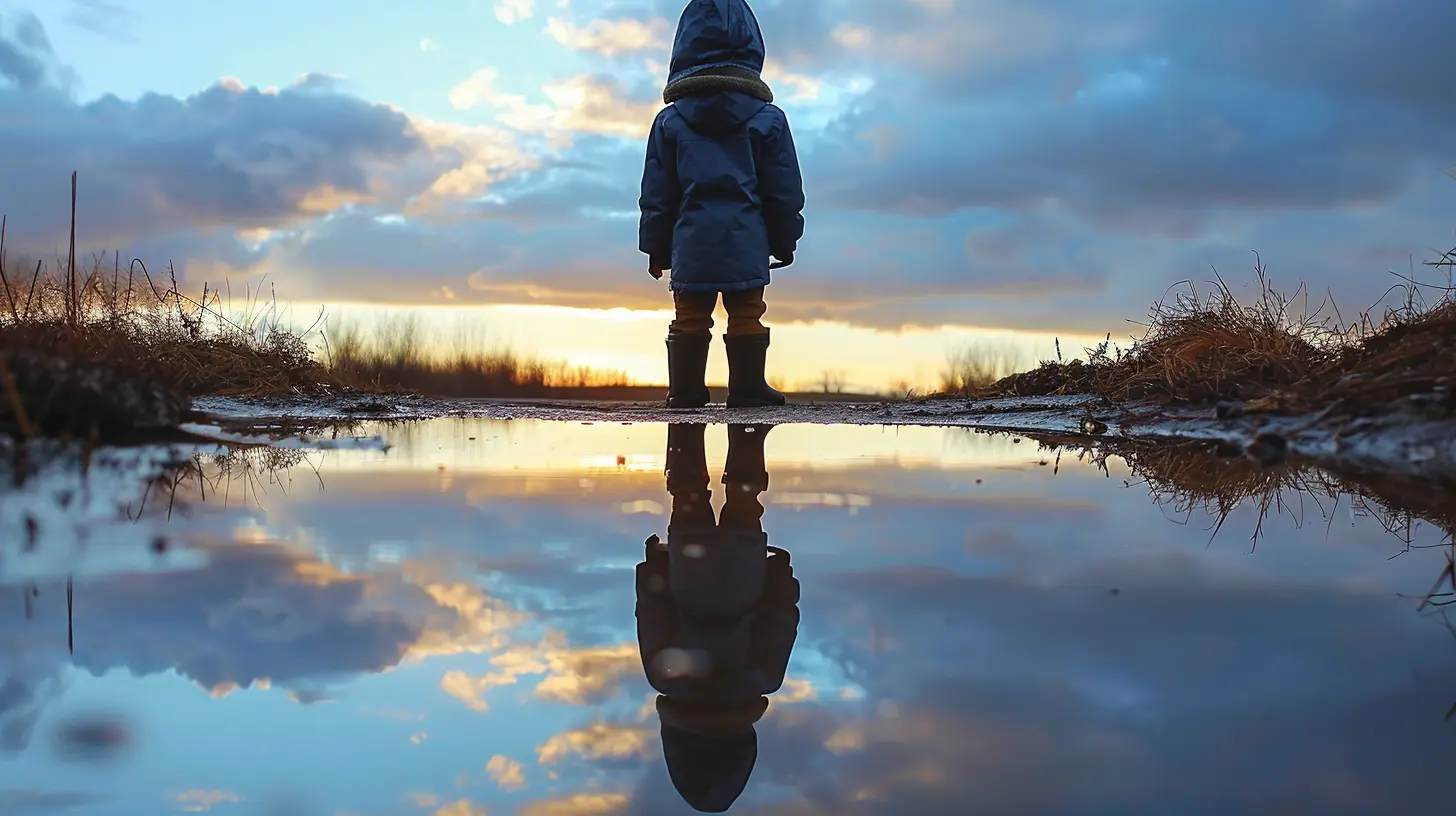
What Self-Reflection Actually Means for a Child
Self-reflection is the capacity to step back from an experience and examine it: what happened, what I felt, what I thought, what I did, and what I might do differently. For adults, this often happens through journaling, conversation, or quiet thought. For children, it looks different depending on age.A four-year-old reflecting might say, "I got mad because he took my truck, and I hit him. I felt bad after." That is reflection in its earliest form: connecting an event to an internal state and an outcome. A nine-year-old might notice a pattern: "I always rush my math homework and then feel stupid when I get it wrong. Maybe I should slow down." A fifteen-year-old might question a belief: "I keep saying I do not care what people think, but I skipped the party because I was worried about what they would say. That does not add up."
Notice what all three examples share. The child is not just reporting events. They are observing their own mind at work. This is sometimes called metacognition, thinking about thinking, and it sits at the heart of self-reflection. It is the difference between a child who experiences frustration and a child who can say, "I am frustrated right now, and I know I get snappy when I am frustrated, so I need a minute."
That distinction matters enormously. Children who can observe their internal states have more room to choose their response. Children who cannot tend to be pushed around by whatever they feel in the moment.
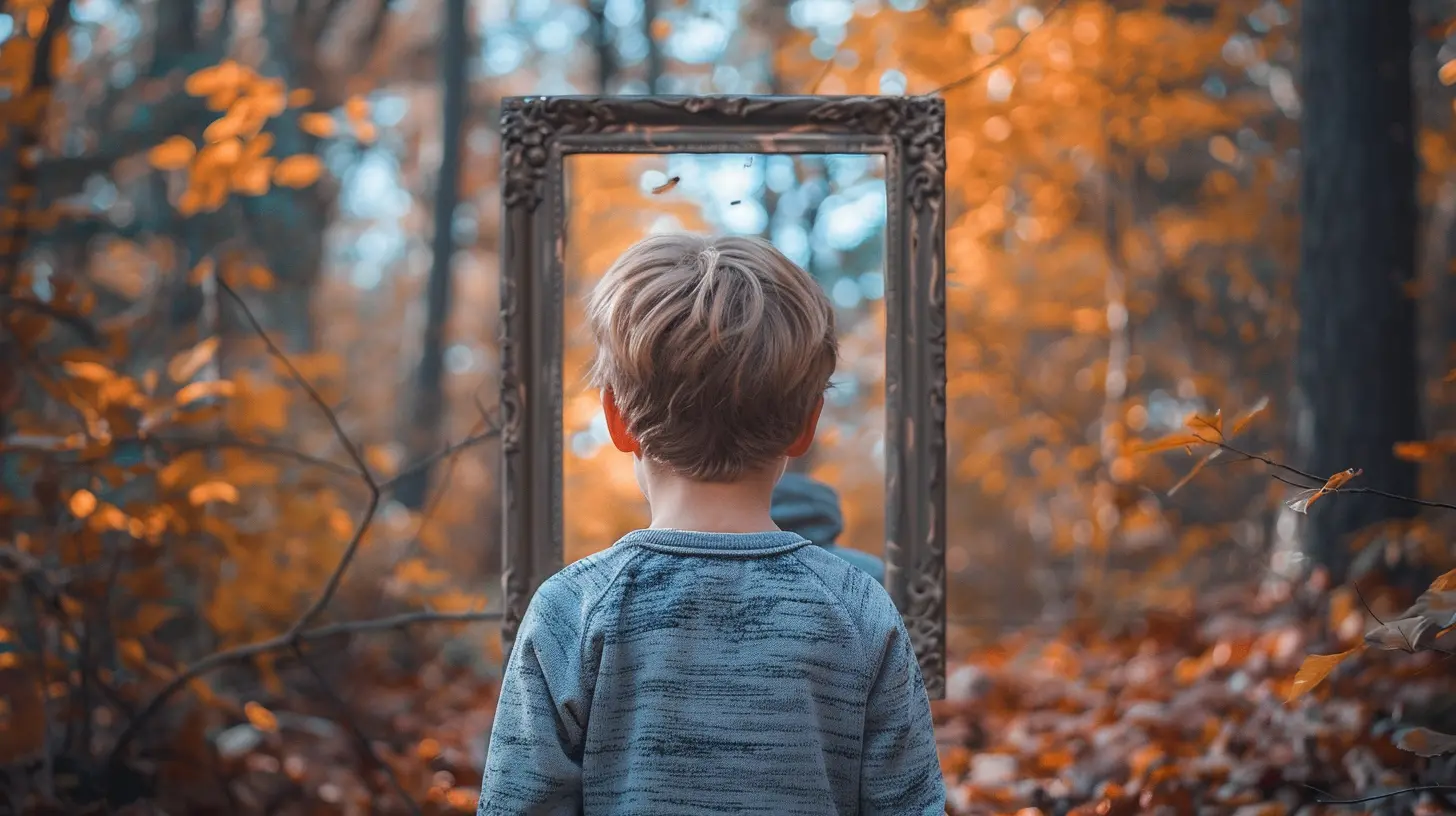
Why This Skill Matters More Than Ever
Self-reflection supports nearly every outcome parents say they want for their kids, and the connection is not mystical. It works through specific mechanisms.Emotional regulation. Reflection gives a child a moment between feeling and acting. When a child can name what is happening inside, the intensity of the feeling often drops enough for the thinking brain to engage. This is not about suppressing emotion. It is about creating a small gap where choice becomes possible.
Decision-making. Good decisions require accurate self-knowledge. A teenager who knows they tend to make impulsive choices when tired can plan around that weakness. A child who knows they need quiet to concentrate can ask for it. Self-knowledge is the raw material of good judgment.
Resilience. After a failure, reflection turns a painful event into information. The child who can ask "what went wrong and what is in my control" recovers faster than the child who either blames everyone else or collapses into self-criticism. Reflection is the mechanism that converts setback into learning.
Authenticity and resistance to peer pressure. A child who regularly checks in with their own values is harder to sweep along by a crowd. They have practice noticing when their behavior and their beliefs do not match, which is the first step toward correcting course.
Relationship health. Reflection helps children see their own contribution to conflicts. This is uncomfortable, which is exactly why it needs practice. Adults who never developed this skill tend to spend their lives certain the problem is always someone else.
There is also a cultural reason this matters now. Children today grow up in environments engineered for distraction. Notifications, short-form video, and constant connectivity make it easy to move from one stimulus to the next without ever pausing to process. Reflection is a counterweight. It is a deliberate slowdown in a world that rewards speed.

How the Capacity Develops: A Developmental View
Parents often try to teach reflection too early or too late. Knowing what is realistic at each stage prevents frustration on both sides.Early childhood, roughly ages three to six. Children this age are just beginning to understand that other people have minds different from their own. Reflection is concrete and immediate. Useful prompts are simple: "What happened? How did you feel? What did you do?" Abstract questions like "why do you think you did that" usually go nowhere. Keep it short and tied to a specific event.
Middle childhood, roughly seven to eleven. This is the sweet spot for building habits. Children can now think about their own thinking in simple terms and can notice patterns across time. They can handle questions like "what would you do differently next time" and "what helped last time you felt this way." This is also when comparison with peers becomes salient, so reflection should stay focused on the child's own growth rather than rankings.
Adolescence. The teenage brain is undergoing a major reorganization, and one consequence is heightened sensitivity to social evaluation alongside a growing capacity for abstract thought. Adolescents can reflect deeply, but they are also prone to rumination, which is reflection's dark twin. The goal shifts from teaching the skill to protecting its healthy form: reflection that leads to insight and action rather than loops of self-criticism.
Young adulthood. The task becomes independence. A young adult should be able to reflect without a parent's prompting, which means the scaffolding has to come down gradually. Parents who keep directing the process into the twenties produce adults who either comply or rebel, not adults who think for themselves.

The Difference Between Reflection and Rumination
This is the most common misconception, and it deserves its own section because getting it wrong can harm children.Reflection is curious, specific, and forward-looking. It asks: what happened, what did I contribute, what can I learn, what will I try next time. It has an exit. Rumination is repetitive, global, and backward-looking. It asks: why am I like this, why does this always happen to me, what is wrong with me. It loops without resolution.
Outwardly, both can look like a child sitting quietly and thinking. Inwardly, they are opposites. Reflection builds agency. Rumination erodes it.
Parents can unintentionally push children toward rumination by over-analyzing every mistake, demanding explanations for feelings, or treating normal struggles as problems to be dissected. A child who is asked "why did you do that" five times after a minor error learns that reflection is an interrogation. A child who is asked "what would help next time" learns that reflection is a tool.
The practical test is simple. After a reflective conversation, does the child seem clearer and more capable? Or do they seem smaller, more anxious, and more stuck? If it is the latter, stop, offer reassurance, and shift toward action.
Practical Strategies That Actually Work
The following approaches are effective because they fit how children actually learn: through modeling, repetition, and low-stakes practice.Model your own reflection out loud
Children learn far more from what they observe than from what they are told. Narrate your own reflection in everyday moments. "I snapped at your dad this morning and I felt bad about it. I think I was stressed about work. I am going to apologize and try to notice when I am carrying stress into the house." This does three things: it normalizes imperfection, it shows the process, and it demonstrates repair. Keep it brief and appropriate. You are not asking your child to manage your emotions; you are letting them watch you manage your own.Ask better questions
Question quality determines whether reflection happens at all. Compare these pairs.- "Why did you hit him?" versus "What was going on for you right before that?"
- "Why are you always so disorganized?" versus "What got in the way of finishing this time?"
- "Do you feel sad?" versus "Where do you notice that feeling in your body?"
"Why" questions often trigger defensiveness because they demand justification. "What" and "how" questions invite observation. This is a small change with a large effect.
Build a routine, not a lecture
Reflection sticks when it is woven into daily life rather than reserved for crises. A few minutes at bedtime with three questions works well for younger children: what was good today, what was hard, what do you want to remember. For older children, a short weekly check-in over a meal or a drive, when eye contact is optional and conversation flows more naturally, often works better than a formal sit-down.The routine should be consistent but not heavy. If it feels like a chore or an audit, it will be abandoned or gamed.
Use writing, but do not force it
Journaling can be powerful, especially for adolescents who prefer privacy. But mandatory journaling that gets read by adults is not reflection; it is surveillance. Offer a notebook and the option to keep it private. Some children will use it. Many will not. That is fine. Writing is one tool among many.Teach the pause
Reflection requires a pause, and pauses have to be practiced. Teach children a simple sequence: notice the feeling, name it, wait, then choose. For younger children, a physical anchor helps, such as taking three slow breaths or pressing their feet into the floor. For older children, a phrase like "name it to tame it" or simply "I notice I am feeling..." gives them a handle. The goal is to make the pause automatic over time.Debrief experiences without judgment
After a game, a test, or a conflict, a short debrief builds the habit. Ask what went well, what did not, and what they would adjust. Resist the urge to add your own verdict. The child's conclusions are the point. If they are off base, ask a question that helps them see it rather than correcting them directly. "You said the loss was entirely the referee's fault. What did you notice about your own play in the second half?" That question does more than a lecture.Let natural consequences teach
Reflection deepens when children experience the results of their choices. A child who forgets their lunch and goes hungry once will reflect on that far more seriously than a child whose parent rushes to school with it. This does not mean abandoning children to hardship. It means resisting the urge to shield them from every small, safe consequence. Protect them from danger; let them learn from inconvenience.
Common Mistakes and Misconceptions
Mistake: Turning reflection into confession. If every reflective conversation ends with the child admitting fault, they will learn to avoid the conversation. Reflection should include what went right, what was outside their control, and what they are proud of.Mistake: Reflecting only after failure. Children quickly associate reflection with punishment. Reflect after successes too. "That went well. What did you do that made it work?" This builds the same skill with positive associations and teaches children to recognize their own effective strategies.
Mistake: Doing the reflecting for them. Parents often supply the insight: "You were tired, that is why you were grumpy." Sometimes that is helpful scaffolding. Done habitually, it teaches children to wait for someone else to explain them to themselves. Ask, then wait. Silence is a tool.
Mistake: Expecting adult-level insight. A child's reflection may be shallow or self-serving at first. That is developmentally normal. The goal is the habit, not the profundity. Depth comes with age and practice.
Misconception: Reflection makes children self-absorbed. The opposite tends to be true. Children who understand their own minds are usually better at understanding others, because they have practice noticing that inner experience is complex and not always visible. Reflection that stays entirely inward is a problem, but healthy reflection naturally extends outward: how did my actions affect others, what might they have been feeling.
Misconception: Some kids just are not reflective. Temperament matters. Some children are naturally more introspective, and some are wired toward action. But the skill can be built in every child, just at different paces and through different entry points. The active child may reflect best while kicking a ball or walking. The social child may reflect best in conversation. Match the method to the child.
What to Consider Before You Start
Before building a reflection habit, think through a few questions honestly.What is your own relationship with self-reflection? If you never examine your own behavior, your child will notice the mismatch. The most effective starting point is your own practice, not theirs.
Is your home emotionally safe enough for honesty? Children will not reflect openly if honesty gets them punished, mocked, or used against them later. Reflection requires a baseline of trust. If that is missing, build it first.
What is your goal? If the goal is a child who agrees with you more, reflection will backfire. If the goal is a child who can think independently, expect that they will sometimes use that skill to disagree with you. That is the point.
How much structure fits your family? Some families thrive on routines and journals. Others need it informal and woven into daily life. Both work. Rigid systems that do not fit the family get abandoned, and an abandoned system teaches children that reflection is a phase.
What is developmentally appropriate? Pushing abstract self-analysis on a young child creates confusion. Withholding it from a teenager creates dependence. Calibrate to the child in front of you, not to a book or a benchmark.
The Long Game
Self-reflection is not a subject children master by a certain age. It is a lifelong practice, and the version a child uses at eight is not the version they will use at twenty-eight. What parents can do is build the habit early, keep it low-pressure, model it honestly, and gradually hand it over.The payoff is not a child who never makes mistakes. It is a child who, when they do, knows how to look at themselves without flinching, extract the lesson, and move forward. That is what empowerment actually looks like in practice: not confidence without evidence, but the steady ability to learn from your own life.
all images in this post were generated using AI tools
Category:
Empowering KidsAuthor:

Noah Sawyer