The Impact of Environment on Developmental Growth
29 October 2026
Parents often ask me some version of the same question: how much of who my child becomes is up to me? It is a fair question, and it deserves an honest answer rather than a comforting slogan. The environment a child grows up in does not determine everything, but it shapes development in ways that are deep, cumulative, and often invisible in the moment. Understanding how that influence actually works, rather than simply believing that "environment matters," gives you far more control over the choices that count.
This article is about that mechanism. Not a list of tips, but a working model of how surroundings, relationships, routines, and experiences get under a child's skin and influence how they think, regulate emotion, build skills, and relate to others. Along the way I will point out where common advice goes wrong, where trade-offs are real, and what to prioritize when you cannot do everything.
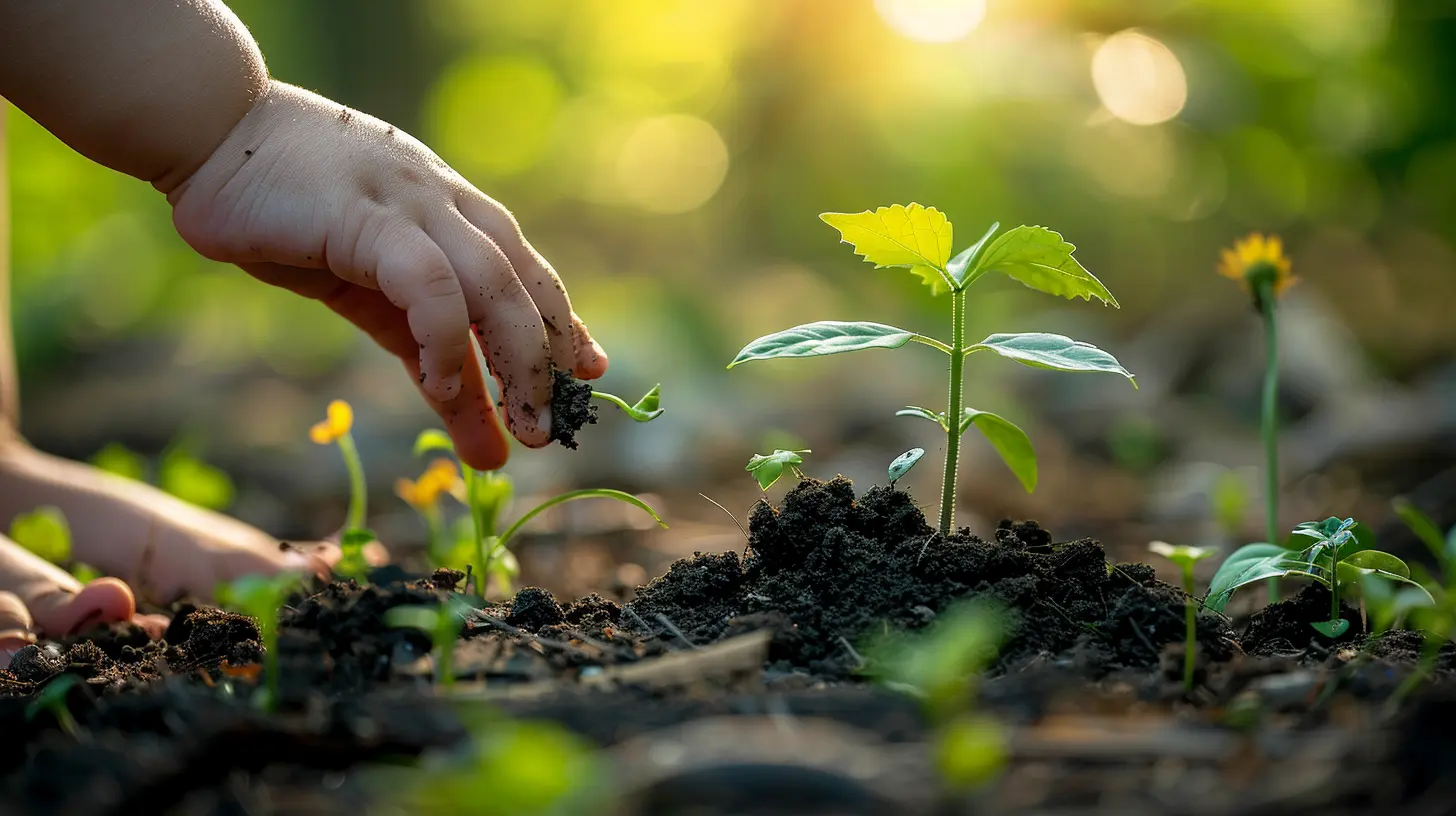
What "Environment" Really Means in Child Development
Most parents hear "environment" and picture a physical space: a tidy home, a good school, a safe neighborhood. Those matter, but they are only part of the picture. In developmental terms, environment refers to the full set of conditions a child grows up inside, and it operates on several layers at once.The first layer is the physical setting: nutrition, sleep, noise, light, crowding, access to outdoor space, exposure to toxins, and the sheer amount of stimulation in a room. The second is the relational setting: who cares for the child, how predictably, how warmly, and how those adults treat each other. The third is the structural setting: routines, rules, expectations, and the rhythm of an ordinary day. The fourth is the cultural and emotional climate: what is talked about, what is avoided, what is celebrated, and what is punished.
These layers interact constantly. A calm room does little for a child whose caregiver is unpredictable. A loving home can partially buffer a chaotic neighborhood, but not infinitely. The practical takeaway is that environment is not one thing you fix once. It is a system you tune.

Why Environment Shapes Development So Powerfully
Children are not passive recipients of experience. They are active learners running a massive experiment on the world, forming hypotheses about how people behave, what is safe, what gets attention, and what happens when they fail. The environment is the data set they learn from.Two mechanisms explain most of the impact. The first is repetition. A single chaotic morning teaches little. Ten thousand mornings of the same pattern teach a great deal. Brains specialize around what happens often, which is why routines and stable relationships carry so much weight.
The second is emotional salience. Experiences that carry strong feeling are encoded more deeply than neutral ones. A child who is regularly shamed for mistakes does not just learn to avoid mistakes; they learn that being wrong is dangerous. That lesson can outlast the specific incident by decades. This is why the emotional tone of an environment often matters more than its material quality.
There is also a sensitivity window effect. Young children are especially responsive to their surroundings because their regulatory systems are still forming. This does not mean later experiences do not matter. It means early patterns set defaults that later experience either confirms or revises. A difficult start is not destiny, but it does mean later environments have more work to do.
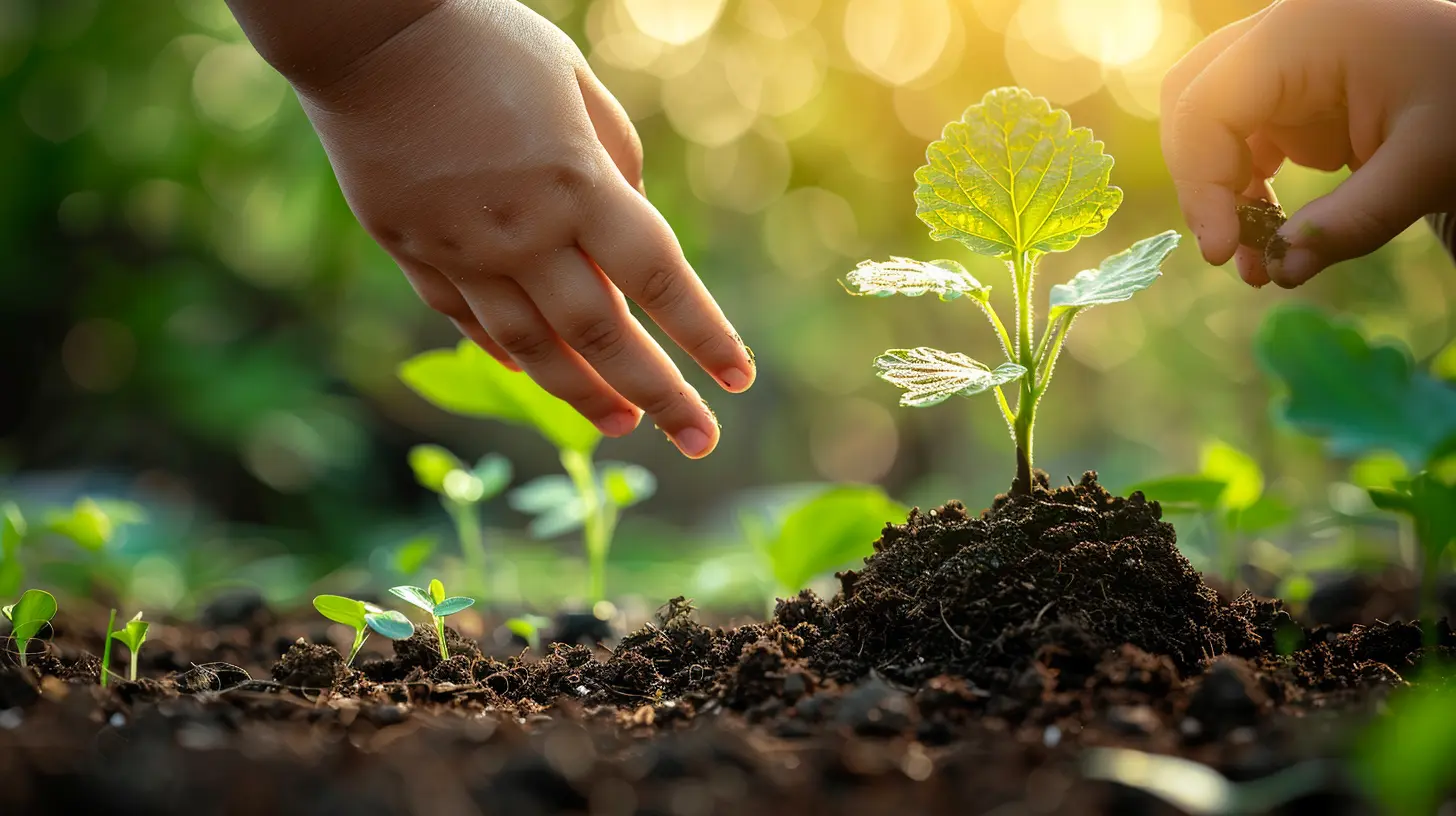
The Relational Core: Why People Outrank Things
If you remember one idea from this article, make it this: the most powerful part of a child's environment is the quality of the relationships inside it. Not the number of activities, not the quality of the furniture, not the educational toys. The people.Decades of developmental observation point to the same conclusion. Children develop best when they have at least one reliable, responsive relationship with an adult who is consistently present, reads their signals reasonably well, repairs ruptures, and treats them as worthy of attention. This relationship functions as a kind of external regulation system early on. A calm adult helps a overwhelmed child settle. Repeated over time, the child internalizes that calm and begins to regulate themselves.
This is why two families with identical incomes and identical homes can produce very different developmental trajectories. The difference is rarely the stuff. It is the predictability, warmth, and responsiveness of the daily interactions.
What responsiveness actually looks like
Responsiveness is not constant entertainment or immediate gratification. It is accurate reading and timely response. A responsive parent notices that a toddler is getting overloaded before the meltdown and adjusts. A responsive parent answers a question at the child's level rather than brushing it off. A responsive parent repairs after snapping, rather than pretending it did not happen.The repair piece is underrated. No parent is perfectly attuned. What protects children is not flawless parenting but a pattern of rupture followed by repair. A child who learns that conflict can be resolved and relationships can survive mistakes is learning something more valuable than any academic skill.
The trade-off: responsiveness versus structure
There is a real tension here that many parenting frameworks gloss over. Highly responsive parenting can drift into permissiveness if it is not paired with structure. Highly structured parenting can drift into coldness if it is not paired with warmth. The research-informed middle is often called authoritative parenting: high warmth combined with high, clearly communicated expectations. It is more demanding to sustain than either extreme because you have to hold both at once. But it is the combination that supports both security and self-discipline.
The Physical Environment: More Than Aesthetics
Physical conditions influence development through biology, not just mood. Sleep, nutrition, noise, light, and movement all affect attention, emotional regulation, and learning capacity. A child who is chronically short on sleep is not just grumpy; they are operating with a compromised regulatory system, which makes every other developmental task harder.A few practical realities are worth naming. Chronic background noise, whether from a television left on or a crowded apartment, makes it harder for young children to process language and sustain attention. Predictable sleep routines support emotional regulation more reliably than almost any behavioral intervention. Regular outdoor time and physical movement support attention and mood in ways that indoor enrichment rarely replicates. None of this requires an expensive home. It requires attention to conditions that are easy to overlook because they are ordinary.
When the physical environment becomes a real constraint
I want to be honest here, because a lot of parenting content pretends otherwise. Some families face genuine physical constraints: overcrowding, unsafe housing, food insecurity, or neighborhoods where outdoor play is not safe. These are not parenting failures, and no amount of routine-building fully compensates for them.What helps in these situations is focusing on what is controllable. A single consistent sleep routine in a shared room still matters. A predictable mealtime, even a modest one, still builds security. A safe indoor corner for play still functions as a stable base. The goal is not to match an ideal environment. It is to maximize the protective factors you can influence and to seek outside support, whether through community programs, schools, or extended family, where the constraints are structural.
Routines and Predictability: The Invisible Scaffolding
Children are pattern-seeking. Predictability reduces the cognitive load of figuring out what happens next, which frees attention for learning and play. It also reduces anxiety, because uncertainty is expensive for a developing brain.This is why routines punch above their weight. A consistent morning sequence, a predictable bedtime ritual, a weekly family pattern, and clear household expectations all function as scaffolding. They tell a child what the day holds and where they fit in it.
The common mistake: rigidity disguised as routine
Routines become harmful when they turn into rigidity. A child who panics when the schedule shifts has not been given a routine; they have been given a dependency. The goal is predictability with flexibility, not predictability instead of flexibility.The practical test is simple. Does the routine help your child feel secure enough to handle change, or does it make change feel threatening? If it is the latter, the routine has become an end in itself. Good routines are a base camp, not a cage. Build in small, deliberate variations so your child learns that the world can shift without collapsing.
Language, Conversation, and Cognitive Growth
The linguistic environment of a home shapes cognitive development in ways that are easy to underestimate. Children who hear more talk, more varied vocabulary, and more back-and-forth conversation tend to develop stronger language and reasoning skills. But the key variable is not word count. It is interactive talk: the kind where an adult responds to what the child says and extends it.Reading aloud to children is one of the most reliable ways to build this environment, not because books are magic but because reading naturally produces the kind of back-and-forth conversation that supports language growth. Asking "what do you think happens next?" and waiting for an answer does more than finishing the book quickly.
Why "educational" content often underdelivers
A common misconception is that more educational input produces more learning. In practice, passive input, whether from screens, audio, or structured lessons, tends to produce less developmental benefit than interactive input. A child watching a language video is not getting the same benefit as a child talking with an adult about the same content. The difference is the responsiveness loop: the adult adjusts to the child, and the child learns from the adjustment.This does not mean screens are harmful in every context. It means the trade-off matters. Time spent in passive input is time not spent in interactive exchange. For young children especially, that trade-off is worth taking seriously.
Peer Environment and Social Learning
As children grow, peers become a larger part of the environmental picture. Peer groups shape social norms, interests, and behavior in ways that parents cannot fully control. This is normal and necessary. Children need peer experience to develop social skills, negotiate conflict, and build identity outside the family.The parental role shifts from controlling the peer environment to shaping the conditions around it. Knowing who your child spends time with, hosting friends at home, and keeping communication open matter more than trying to curate a perfect social circle. Children who feel they can talk to their parents about peer pressure are better positioned to navigate it than children whose parents only intervene after problems appear.
The trade-off: protection versus independence
There is a real tension between protecting children from negative peer influence and allowing them the independence they need to develop judgment. Overprotection delays social learning. Underprotection exposes children to risks they are not ready to manage. The middle path is graduated independence: expanding freedom as competence grows, with clear expectations and open conversation. This is harder than either extreme because it requires ongoing calibration rather than a one-time decision.
The Emotional Climate: What Children Absorb Without Being Told
Children learn more from what they observe than from what they are told. The emotional climate of a home, meaning how adults handle stress, conflict, affection, and disappointment, teaches children how to handle those things themselves.A home where conflict is handled with respect and repair teaches children that disagreement is survivable. A home where conflict is explosive or silent teaches something else. Neither lesson needs to be spoken aloud. It is absorbed through repetition.
This is why parental self-regulation is one of the most consequential environmental factors. A parent who can stay calm under pressure, or who can name their own frustration and step away, models regulation in real time. A parent who cannot do this, and who does not repair afterward, models something harder for a child to unlearn.
A note on parental stress
It is easy to read this and feel judged. That is not the intent. Parental stress is real, and no parent regulates perfectly. What matters is the pattern, not the individual moment. A parent who is often overwhelmed but who repairs consistently is still providing a protective environment. A parent who is rarely overwhelmed but who never repairs is not. Consistency and repair matter more than perfection.Common Misconceptions About Environment and Development
A few beliefs about environment are widespread and worth correcting.Misconception one: environment is mostly about resources. Material resources matter, especially at the lower end where basic needs are unmet. But above a threshold of sufficiency, relational quality and routine stability matter more than additional resources. A child in a modest home with predictable, warm relationships often develops better than a child in a wealthy home with chaotic relationships.
Misconception two: early environment determines everything. Early experience matters a great deal, but development is not a one-way street. Later environments, including school, friendships, mentorship, and therapy, can shift trajectories. The early years set defaults, not destinies.
Misconception three: more stimulation is better. Overstimulation is a real problem. Children need downtime, boredom, and unstructured play to consolidate learning and develop self-direction. A packed schedule can crowd out the very experiences that support development.
Misconception four: environment is something parents alone control. Environment includes schools, neighborhoods, extended family, and community resources. Parents influence these but do not fully control them. Recognizing this reduces guilt and clarifies where effort is best spent.
Practical Priorities: What to Focus On First
When parents ask where to start, I usually suggest a short list ordered by leverage.First, secure the relational core. Prioritize consistent, warm, responsive interactions with at least one primary caregiver. This is the foundation everything else rests on. If you do nothing else, do this.
Second, stabilize the basics. Sleep, nutrition, and predictable routines. These are unglamorous but they affect everything downstream. A child who is rested and fed is a different child from one who is not.
Third, protect interactive time. Reading, talking, playing, and being present without distraction. This is where language, reasoning, and emotional skills grow. It does not require special equipment or programs. It requires attention.
Fourth, manage the emotional climate. Repair after conflict. Name feelings. Model regulation. This is ongoing work, not a one-time fix.
Fifth, calibrate independence. As your child grows, expand their freedom in step with their competence. Keep communication open. Accept that you cannot control everything, and that you should not try.
What to deprioritize
If you are stretched thin, some things can wait. Elaborate enrichment programs, perfect home organization, and curated educational content are lower leverage than the items above. They are not harmful, but they are not where the biggest developmental returns are. Spending energy on the relational core and stable routines will do more for your child than any single purchase or program.When to Seek Outside Support
Environment is powerful, but it is not the only factor. Some children face developmental challenges that require professional support regardless of how well their environment is structured. If you notice persistent difficulties with sleep, feeding, language, attention, emotional regulation, or social interaction that do not improve with consistent environmental adjustments, it is worth talking to a pediatrician or developmental specialist.Seeking support is not an admission that your environment failed. It is a recognition that development is complex and that some challenges need more than environmental tuning. Early support tends to be more effective than waiting, so err toward asking.
A Final Word on Perspective
The impact of environment on developmental growth is real, substantial, and largely within your influence, but it is not a verdict. Children are resilient, and development is cumulative rather than fixed. The goal is not to construct a perfect environment. It is to build one that is stable, warm, responsive, and flexible enough to adapt as your child grows.That is achievable. It does not require wealth, perfection, or a flawless parenting manual. It requires attention to the conditions that shape daily life, a willingness to repair when things go wrong, and the humility to recognize that you are shaping a person, not programming a machine. The environment you build is the message your child receives about the world. Make that message one of safety, capability, and connection.
all images in this post were generated using AI tools
Category:
Developmental StagesAuthor:

Noah Sawyer
Discussion
rate this article
1 comments
Olivia Adams
This article highlights an essential truth about child development. The environment plays a crucial role, shaping cognitive, emotional, and social growth. Parents should be mindful of their surroundings and the influence they have on their child's experiences and opportunities for learning and exploration.
October 29, 2026 at 3:38 AM