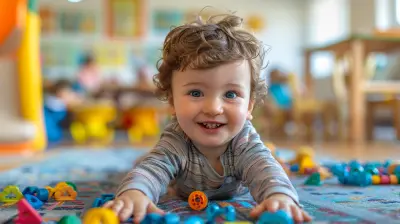
Teaching Empathy to Your Son
24 July 2026
Ever noticed how your son reacts when someone else is upset or hurt? Does he rush in with a hug or stand there unsure of what to do? Teaching empathy to boys can feel like navigating a maze—especially when the world often tells them to "toughen up" or "man up."
Let’s be real: empathy isn't just about being "nice." It's one of the most powerful, emotional superpowers your child can have. It helps build healthy friendships, leads to stronger communication, and even sets the foundation for future success—in school, relationships, and life. If you’re wondering how to raise a kind, understanding, and emotionally intelligent son, you’ve come to the right place.
Let’s pull back the curtain on what empathy really is and how we, as parents, can cultivate it in our kids—especially our boys.
What is Empathy, Anyway?
Empathy is the ability to understand and share someone else's feelings. Not just hear them out, but actually feel them. It's like emotional Wi-Fi—being able to connect without wires. And the crazy thing? Kids aren’t born with it fully programmed in. They learn it.Sometimes people confuse empathy with sympathy. Sympathy says, "I feel bad for you." But empathy says, "I feel what you're feeling." Big difference, right?
Why Is Empathy So Important for Boys?
Here’s the kicker: society often teaches boys to be emotionally reserved. Phrases like “boys don’t cry” or “be a man” can push them to bottle up what they feel instead of expressing it.But what if we flipped the script? Teaching empathy helps combat toxic masculinity and gives boys permission to be emotionally whole human beings. It builds character, lowers aggression, and leads to stronger, more compassionate human connections.
Also, boys who understand empathy are more likely to:
- Handle conflicts peacefully
- Communicate better
- Stand up against bullying
- Have stronger friendships
- Become respectful partners and fathers someday
And that’s a future we all want, right?
When Should You Start Teaching Empathy?
Now. Right now.Seriously though, it's never too early or too late to start. Toddlers can begin learning empathy in simple ways—like learning to say sorry or recognizing when someone is sad. But teaching empathy is not a one-time lesson. It’s a thread you continually weave into your parenting.
From toddlerhood to teenage years, empathy can be nurtured gradually. Think of it like watering a plant—you don’t dump a bucket once; you water consistently, over time.
Lead by Example: Mirror What You Want to See
Kids are sponges. If you’re yelling at someone on the phone or rolling your eyes at the checkout counter, guess what they’re absorbing? Yup.Show empathy in your everyday life:
- Ask your child how their day was—and really listen.
- Talk about your emotions openly: “I’m feeling a little overwhelmed today, but I’ll feel better after some quiet time.”
- Treat others with kindness and talk your child through what you’re doing.
They’re always watching. Scary? Maybe. Powerful? Definitely.
Encourage Emotional Vocabulary
Ever hear your son say “I’m fine” when you know he’s obviously not? Boys are often taught to suppress feelings or lack the language to describe them. That’s where emotional vocabulary comes into play.Start simple:
- Happy
- Sad
- Angry
- Scared
- Frustrated
Then build from there:
- Disappointed
- Embarrassed
- Proud
- Nervous
- Lonely
Use books, cartoons, or even your own experiences to talk about emotions. If a character in a story is upset, pause and ask, “How do you think he feels right now?” You'll be surprised how eager your child might be to share.
Validate, Don’t Minimize
This one’s a biggie.When your son says he’s sad because his toy broke, avoid saying, "It’s just a toy, don’t cry." Instead, try, "I can see you’re upset—it’s hard when something you love breaks, huh?"
Validation is the gateway to empathy. When you acknowledge their emotions, you're showing that it’s okay to feel.
That message? It sticks.
Encourage Perspective-Taking
Put yourself in someone else’s shoes—that’s the heart of empathy, right?Try asking questions like:
- “How would you feel if that happened to you?”
- “What do you think your friend is feeling right now?”
- “Why do you think your sister is crying?”
You’re helping your son flex his empathy muscles by making these ideas part of your everyday dialogue.
Even playing pretend helps—superheroes, doctors, animals—these games help kids imagine how others might think or feel.
Use Books and Stories as Tools
Books are like empathy training camps. They pull kids into different worlds, different perspectives, and different emotions.Some great books that teach empathy:
- Have You Filled a Bucket Today? by Carol McCloud
- The Invisible Boy by Trudy Ludwig
- Last Stop on Market Street by Matt de la Peña
- Enemy Pie by Derek Munson
After reading, chat about the characters’ feelings. Ask questions like, “Why do you think he did that?” or “What would you do if you were her?”
Simple storytime becomes a powerful empathy lesson.
Praise Empathetic Behavior
When your son does something thoughtful—acknowledge it. Don’t just say “good job.” Be specific.Try things like:
- “That was kind of you to share your toy. You made your friend really happy!”
- “You noticed your sister was sad and gave her a hug. That’s being really caring.”
Reinforcing these actions helps him connect the dots: kind acts = positive outcomes.
Encourage Apologies—But Make Them Genuine
We’ve all heard the monotone “I’m sorry” that a kid mutters under pressure, right?The goal here isn’t just to get your child to say sorry—it’s to understand why he's apologizing.
Instead of forcing an immediate apology, talk first:
- “How do you think your friend felt when that happened?”
- “What can you say or do to help make it better?”
This way, the apology becomes heart-driven, not habit-driven.
Set Limits—With Empathy
Wait, setting rules AND being empathetic? Yup—it’s a thing.Empathy doesn’t mean letting your child do whatever they want. In fact, clear boundaries help kids feel safe and cared for.
So when you do have to enforce a rule or say no, do it with compassion:
> “I know you’re mad that screen time is over. It’s okay to be upset. I get why you feel that way—but we agreed on 30 minutes.”
You’re showing them that you can be firm and kind at the same time. A powerful combo.
Teach Digital Empathy
Let’s face it—our kids are growing up in a digital playground. And empathy online? It’s lacking, to say the least.Talk to your son about respectful communication in texts, video games, and social media (if they’re old enough). Teach them to really consider how messages might be interpreted on the other end of the screen.
The golden rule still applies: if you wouldn’t say it face-to-face, don’t type it.
Let Boys Be Sensitive
Repeat after me: Sensitivity is not weakness.Let your son cry. Let him be moved by a sad movie or affected by a conflict. Society might try to tell him to “man up,” but you have the power to rewrite that narrative at home.
Being sensitive is part of being deeply human. It’s also what allows empathy to flourish.
Be Patient. It’s a Journey!
Empathy doesn’t bloom overnight. It’s not a lesson you cross off like a chore. It’s like building a muscle—it takes time, consistency, and support.Some days, you’ll see progress. Other days, it may feel like two steps back. That’s okay. You’re planting seeds.
And every conversation, every moment of understanding, brings your son one step closer to becoming a kind, compassionate human being.
Final Thoughts
Raising a boy who’s empathetic doesn't mean raising a boy who’s soft. It means raising someone who’s emotionally intelligent, strong in character, and aware of the world around him.It’s not about forcing feelings. It’s about guiding your son to recognize them in himself and others.
So next time your son comforts a friend, asks how someone’s feeling, or even sheds a tear over something small—lean in. That’s empathy in action. And it’s something to be proud of.
Your efforts matter. And trust me, the world needs more empathetic boys growing into empathetic men.
all images in this post were generated using AI tools
Category:
Raising BoysAuthor:

Noah Sawyer
Discussion
rate this article
1 comments
Jane Graham
This article is a great reminder of how important empathy is for our kids. It's not always easy, but every small step counts. Thank you for sharing these insights.
July 29, 2026 at 3:09 AM
Noah Sawyer
Thanks for your thoughts! I completely agree-every step we take makes a difference.