Supporting Language Development in Toddlers and Beyond
24 September 2026
Language does not arrive on a schedule. It grows, stalls, lurches forward, and sometimes goes quiet for weeks before a burst of new words appears. Parents often ask whether their child is "on track," but the more useful question is whether the conditions for language growth are in place. Those conditions are surprisingly specific, and they have less to do with flashcards or apps than most people assume.
This article is for parents and caregivers who want to understand how language actually develops, what genuinely helps, what quietly gets in the way, and how to adjust their approach as a child moves from first words through the preschool years and into early elementary school.
What Is Actually Happening When a Child Learns to Talk
Language development is not one skill. It is at least four running in parallel:- Phonology: the sounds of a language and how they combine.
- Semantics: what words mean.
- Syntax and grammar: how words fit together into sentences.
- Pragmatics: how language is used socially, including turn-taking, tone, and context.
A child can be strong in one area and behind in another. A three-year-old might speak in long, grammatically complex sentences but be difficult to understand because several speech sounds are still developing. Another might pronounce everything clearly but use mostly single words. Both profiles mean different things, and treating "speech" and "language" as the same thing leads to confused decisions.
Speech is the physical production of sounds. Language is the system of meaning and rules behind it. A child with a speech issue may have excellent language comprehension. A child with a language disorder may speak clearly but struggle to understand or construct sentences. This distinction matters because the support strategies differ.

The Input That Actually Moves the Needle
Decades of observation in homes and clinics point to a handful of interaction patterns that reliably support language growth. None of them require special equipment.Serve and Return
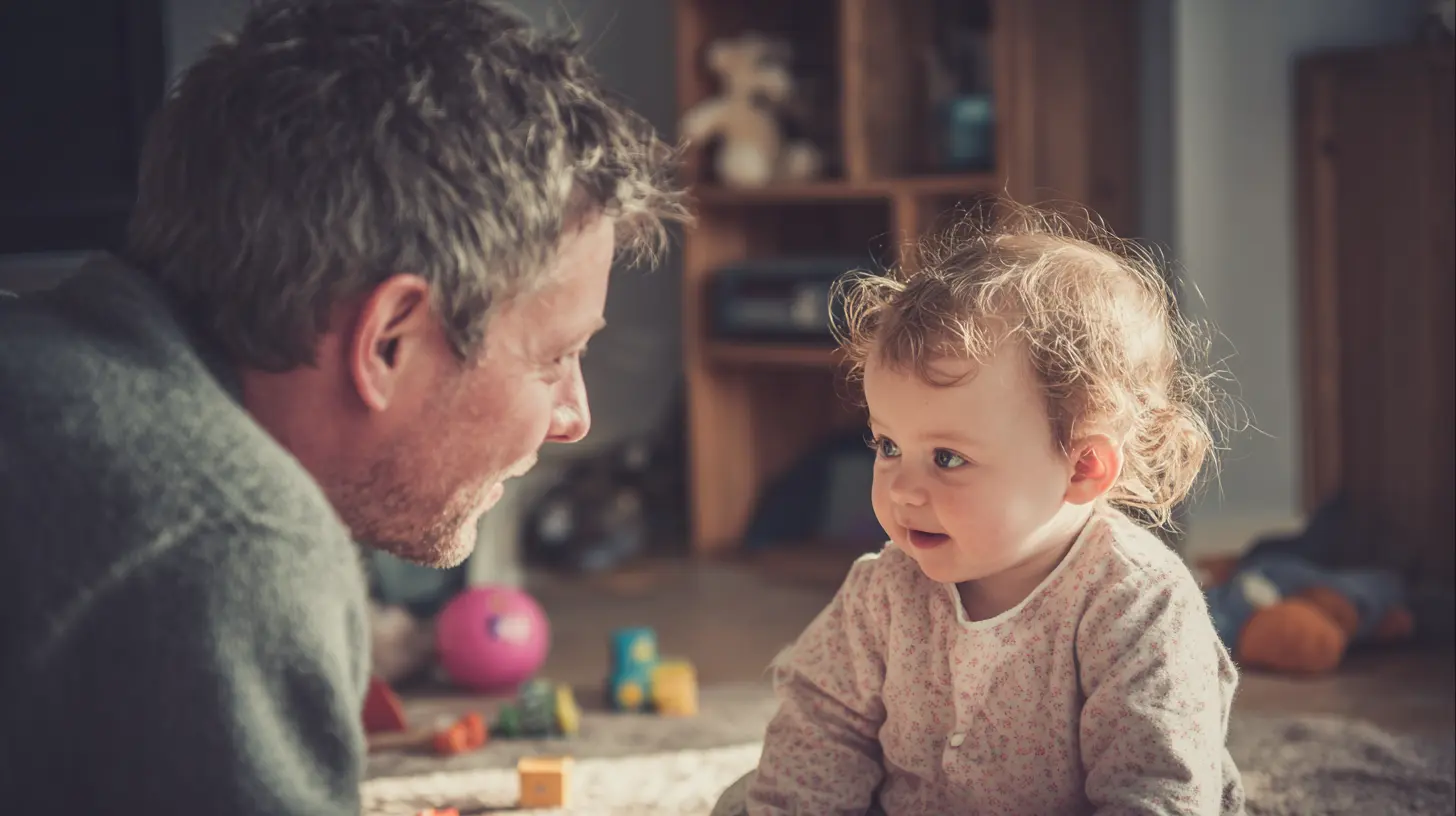
Young brains build language through back-and-forth exchanges, not passive listening. When a toddler points at a dog, the adult who looks, names it, and waits for a response is doing something more powerful than narrating the entire day.The key ingredient is the pause. Many parents fill silence quickly because it feels uncomfortable. But a two-second pause gives a child room to process and respond, even if the response is a gesture, a sound, or a wrong word.
Self-Talk and Parallel Talk
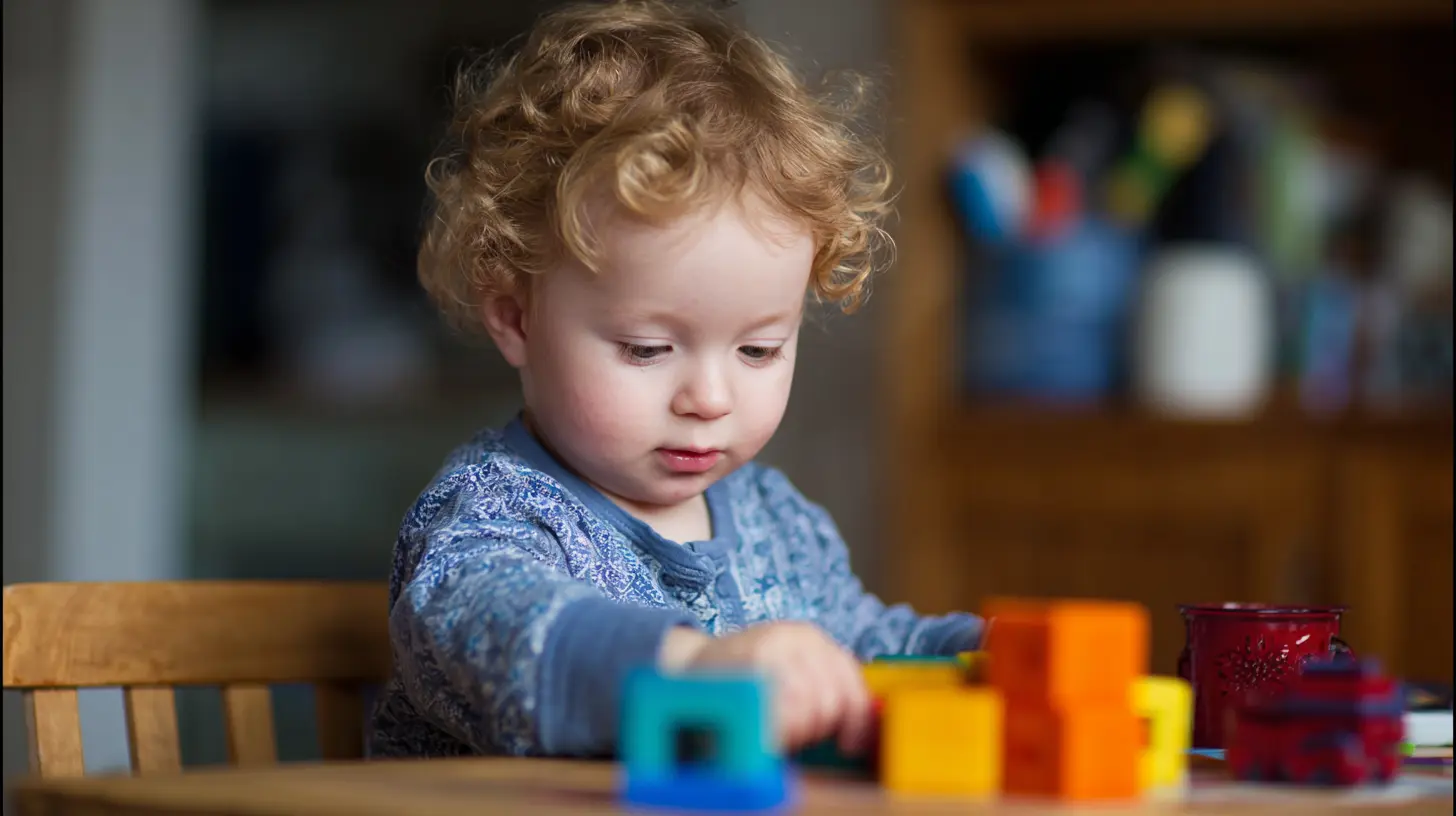
Self-talk means describing what you are doing: "I am cutting the apple. The knife is sharp." Parallel talk means describing what the child is doing: "You are stacking the blocks. That one is on top."These strategies work because they attach language to concrete, visible action. The child hears words in context, which is how meaning gets built. They are most useful between roughly 12 and 36 months, when vocabulary is expanding fastest.
They can become counterproductive if overused. A parent who narrates constantly without leaving space turns language into background noise. The goal is not word volume. It is word relevance.
Expansion and Recasting
When a child says "doggie run," an adult can respond with "Yes, the doggie is running fast." This is expansion: taking the child's utterance and modeling a slightly more complete version.Recasting changes the form while keeping the meaning: child says "I goed there," adult says "You went there?" This corrects grammar without correction. The child hears the correct form in a natural response rather than as a reprimand.
Both techniques work because they meet the child at their current level and stretch it by one step. Research on language intervention consistently supports this "just above current ability" principle, though the exact mechanisms are still being studied.
Common Mistakes That Slow Progress
Correcting Too Often
Telling a child "Say it correctly" or "That is not how you say that" does two things. It interrupts the flow of communication, and it teaches the child that talking is a performance with a pass or fail grade. Children who are corrected frequently often speak less, not more.The better move is to respond to the message first, then model the correct form naturally. If a child says "I want the bwoo one," you can hand them the blue one and say, "Here is the blue one." The correction is embedded, not announced.
Talking Over Them
Some parents fill every silence with questions: "What is that? What color is it? Can you say truck?" This turns conversation into a quiz. Children learn quickly that their job is to produce answers, not to communicate.A useful rule of thumb: aim for more statements and fewer test questions. Statements model language. Questions demand it.
Assuming Screen Time Is Neutral
Screens are not inherently harmful, but they are also not equivalent to human interaction for language learning. Passive video, even educational video, does not provide the contingent back-and-forth that drives language. A child watching a show is receiving input, not participating in a conversation.This does not mean zero screens. It means being honest about what screens can and cannot do. A video call with a grandparent, where the child actually responds and is responded to, is a different category than a cartoon.
Ignoring Hearing
If a child is not progressing as expected, hearing should be checked early. Even mild, fluctuating hearing loss from ear infections can affect language development. This is not a scare tactic. It is a basic screening step that is sometimes skipped because parents assume hearing is fine.
When to Seek Help, and Why Waiting Is Often the Wrong Choice
There is a persistent belief that children will "catch up" on their own. Sometimes they do. Often they do not, and the cost of waiting is real.General milestones that warrant a conversation with a professional include:
- No babbling by 12 months
- No single words by 16 to 18 months
- No two-word combinations by 24 months
- Difficulty understanding simple directions by 2 years
- Loss of language or social skills at any age
These are not diagnoses. They are flags. A speech-language pathologist can assess whether a child needs support or is simply on a slower but typical path.
Early intervention works better than later intervention for a straightforward reason: the brain is most plastic for language in the first few years. A child who receives support at 24 months often needs fewer sessions and makes faster progress than a child who starts at 5.
Some parents hesitate because they worry about labeling. In practice, an evaluation is information, not a verdict. It tells you what is happening and what to do next. That is almost always better than guessing.
Beyond Toddlerhood: Language Keeps Developing
Language development does not end when a child starts talking in sentences. It continues through the school years in ways that are easy to overlook.The Shift to Academic Language
Around age 5 to 7, the demands change. Children move from conversational language, which is supported by context and gesture, to academic language, which is abstract and decontextualized. Explaining why a character made a choice, or describing a process without visual support, requires a different set of skills.This is where some children who seemed fine in preschool begin to struggle. They can chat easily but cannot retell a story in sequence or explain a concept. These are language skills, not intelligence issues.
Vocabulary Growth
By early elementary school, children learn most new words indirectly, through reading and listening. The children who read widely and are read to regularly build larger vocabularies, which in turn makes reading easier. This is a feedback loop. Small advantages compound.Parents can support this by continuing to read aloud well past the age when children can read independently. A child who can read simple books still benefits from hearing richer, more complex language than they can decode on their own.
Narrative Skills
Being able to tell a coherent story, with a beginning, middle, and end, is a foundational skill for both writing and social connection. Parents can support it by asking open-ended questions after shared experiences: "What was the best part of the day? What happened first?"Resist the urge to correct the sequence. Let the child build the story. You can model good narration by telling your own stories with clear structure.
Practical Strategies by Age
12 to 24 Months
- Name objects the child shows interest in.- Use short, clear sentences.
- Pause and wait for responses.
- Read board books with simple, repetitive text.
- Avoid quizzing.
2 to 3 Years
- Expand on what the child says.- Introduce new words in context, not in isolation.
- Ask simple choice questions: "Do you want the red cup or the blue cup?"
- Play pretend, which naturally builds narrative and vocabulary.
3 to 5 Years
- Ask open-ended questions.- Encourage storytelling.
- Introduce books with more complex plots.
- Model thinking aloud: "I wonder why the bear was sad."
5 to 8 Years
- Continue reading aloud.- Discuss what you read.
- Introduce new words through conversation, not word lists.
- Encourage your child to explain things to you.
A Note on Bilingualism
A common misconception is that learning two languages causes language delay. It does not. Bilingual children may have smaller vocabularies in each language individually, but their combined vocabulary is typically comparable to monolingual peers. They may also mix languages, which is normal and not a sign of confusion.If a bilingual child is showing signs of delay in both languages, that is worth evaluating. But the presence of two languages is not the cause.
What Matters Most
The through-line in all of this is interaction. Language grows in the space between people, in the back-and-forth of attention and response. No app, program, or product replaces that.Parents do not need to be perfect. They need to be present, responsive, and willing to adjust when something is not working. That is enough to give most children a strong foundation, and it is enough to notice when a child needs more.
all images in this post were generated using AI tools
Category:
Developmental StagesAuthor:

Noah Sawyer