Raising Kind Humans: Everyday Wins That Count
15 October 2026
Most parents say they want to raise kind children. Fewer stop to ask what kindness actually requires of a person, and fewer still notice how often our daily habits work against it. We praise the child who shares without being asked. We beam when a toddler hands over a toy. But kindness is not a single act. It is a set of capacities: noticing another person's state, regulating your own discomfort long enough to respond, and choosing a response that costs you something small. Those capacities develop slowly, and they develop mostly in ordinary moments that look like nothing special.
This article is about those moments. Not the big talks, not the character-building lectures, but the small, repeatable interactions that shape how a child treats other people when no one is watching. I will be honest about what is well established, what is reasonable practice, and what remains genuinely uncertain. Parenting advice is full of confident claims that outrun the evidence. I would rather give you something you can actually use.
What Kindness Really Is, and What It Is Not
Kindness gets confused with politeness, compliance, and agreeableness. They are not the same thing, and treating them as interchangeable creates problems.Politeness is scripted. A child can say "please" and "thank you" on autopilot while treating a classmate badly. Compliance is obedience to authority. A child who shares only because an adult is watching has learned surveillance, not generosity. Agreeableness is a temperament trait. Some children are naturally easygoing, and that ease can look like kindness while masking a real difficulty: the agreeable child may avoid conflict so thoroughly that they never learn to stand up for someone else.
Real kindness has three parts.
First, it requires accurate perception. You have to notice that another person is struggling, excluded, or in need. This sounds trivial, but it is the most common failure point. Children who are absorbed in their own experience, which is developmentally normal, simply do not register what is happening three feet away.
Second, it requires some capacity to manage your own reaction. If a child feels overwhelmed by another person's distress, they will look away, laugh, or lash out. That is not cruelty. It is dysregulation. Kind behavior depends on being calm enough to act.
Third, it requires a choice that carries a cost. Sharing a toy you did not want is not kindness. Sitting with the kid everyone else ignored, when you would rather be with your friends, is.
Understanding these three parts changes what you pay attention to. Instead of asking "was my child nice today," you can ask which of the three is developing and which needs support.
Why Everyday Moments Matter More Than Grand Gestures
Parents tend to remember the dramatic episodes: the birthday party meltdown, the apology after a fight, the volunteer project. Those moments matter, but they are rare and emotionally charged, which makes them poor teaching opportunities. A child in the middle of a conflict is not in a state to absorb a lesson about empathy.Ordinary moments are different. They are frequent, low-stakes, and repeatable. A child who hears you wonder out loud why a neighbor seems upset is getting a small lesson in attention. A child who watches you return a shopping cart because it makes life easier for the next person is absorbing something about invisible consideration. These moments accumulate.
There is a practical reason this works. Habits form through repetition in calm conditions. If you want kind behavior to become a default rather than a performance, it has to be practiced when nobody is upset, nobody is watching, and nothing is at stake. The high-stakes moments are where you find out what has already been built.
This also means you do not need to engineer elaborate experiences. You need to notice the ones already happening.
Modeling: Necessary, Not Sufficient
Every parenting book says children learn from what you do, not what you say. That is true as far as it goes, but it is incomplete advice, and treating it as the whole story leads to frustration.Modeling works through a mechanism worth understanding. Children are not simply copying behavior. They are building a working model of how relationships operate. When they see you handle a frustrating phone call without snapping at the person on the other end, they are not memorizing a script. They are forming a belief that frustration does not have to become aggression. Over hundreds of observations, that belief becomes a default.
But modeling has two limits.
The first is visibility. Much of the kindness adults practice is invisible to children. You do not vent about a coworker in front of your kid. You quietly cover for a friend. You bite back a sharp reply. The child sees the calm outcome, not the effort, which means they may conclude that kindness is effortless for everyone but them. Naming the effort out loud fixes this. "I was really annoyed just now, and I decided not to say the thing I wanted to say." That single sentence does more than an hour of good behavior.
The second limit is that modeling alone does not build skill. A child can watch excellent tennis for years and still have a terrible backhand. Kindness involves real skills: reading facial expressions, asking questions instead of assuming, repairing after a mistake. Those need practice and coaching, not just exposure.
So model, but also narrate, and also teach. The three together are far stronger than any one alone.
The Skill of Noticing
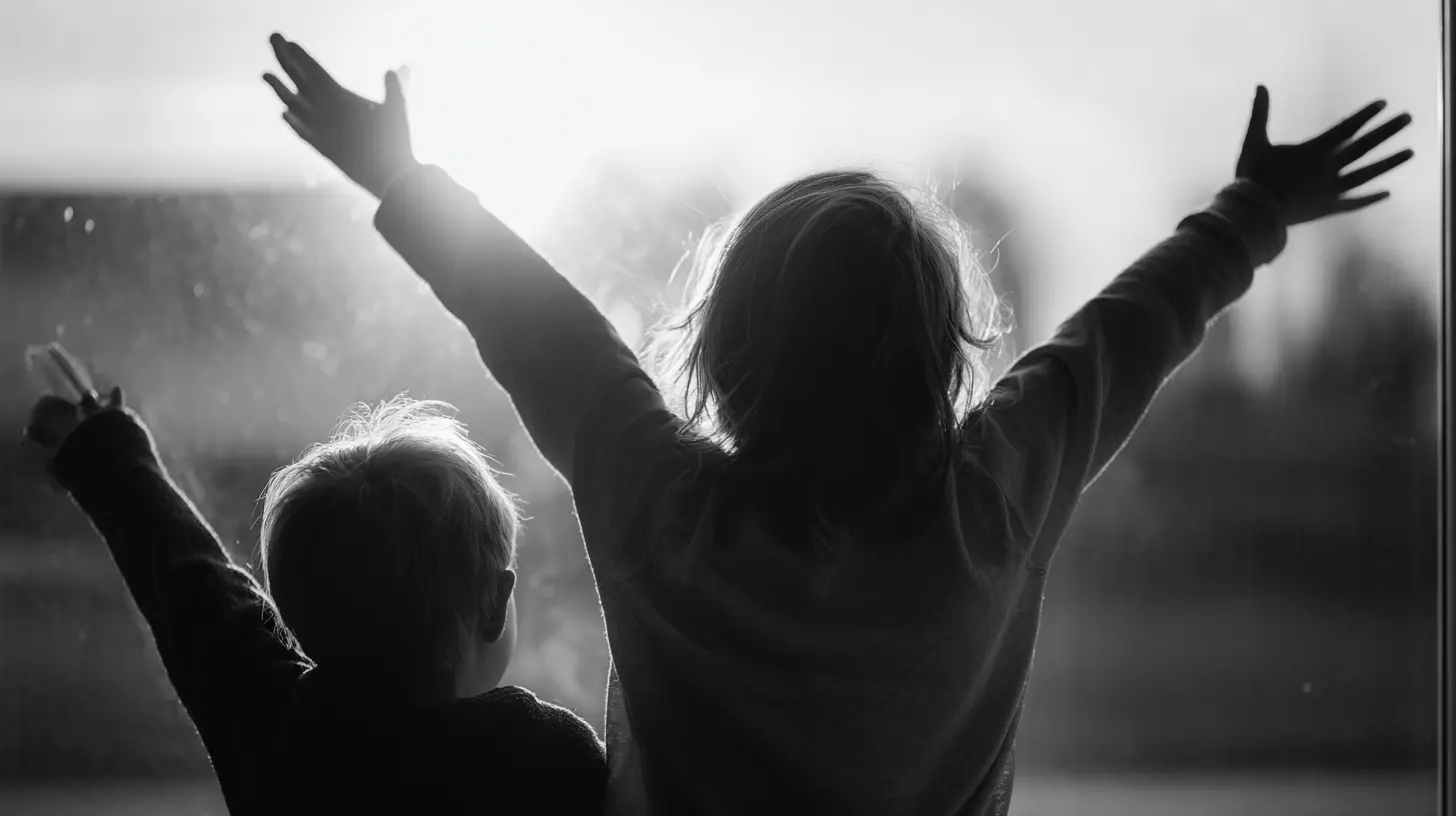
Noticing is the entry point to kindness, and it is teachable.Young children are naturally egocentric in the cognitive sense, not the moral sense. They are not selfish. They simply have limited practice taking another person's perspective. This is why a four-year-old can step on your foot without registering it.
You can build noticing without lecturing. The most effective approach is to make observation a normal part of conversation.
At dinner, instead of asking "how was school," try "who seemed to have a hard day today?" That question does two things. It tells the child that other people's inner states are worth tracking, and it gives them a reason to have been paying attention.
On a walk, you might say, "That man looked like he was in a hurry." You are not asking the child to do anything. You are demonstrating that you read people.
Reading books together offers another opening. When a character is upset, pause and ask what the character might be feeling and why. This is not a comprehension exercise. It is perspective-taking practice, and it transfers. Children who regularly practice interpreting fictional minds get better at interpreting real ones.
One caution: do not turn noticing into a test. If a child says "I don't know," let it go. The goal is to make the question familiar, not to produce correct answers.
Emotional Regulation Comes First
Here is the part many kindness-focused approaches skip. A child who cannot manage their own emotions cannot consistently be kind, no matter how well they understand kindness in theory.Think about what happens when a child sees a classmate crying. If the child's own nervous system floods, they have three options: freeze, flee, or fight. None of those look like kindness. The child who offers comfort is the one who stayed regulated enough to act.
This is why co-regulation matters more than instruction in the early years. When you stay calm while your child is upset, you are lending them your nervous system. Over time, they internalize the ability to do it themselves. That internalized calm is the foundation for every kind act that requires composure.
Practically, this means a few things.
Do not try to teach empathy in the middle of a meltdown. The child is not available for it. Handle the emotion first, and revisit the lesson later, when everyone is calm.
Name your own regulation strategies out loud. "I am going to take a few breaths before I answer that." You are giving the child a concrete tool and permission to use it.
Protect sleep and unstructured time more than you think necessary. A tired, overscheduled child has a shorter fuse, and a short fuse makes kindness expensive.
None of this is about excusing unkind behavior. It is about recognizing that the behavior often has a physiological cause, and treating the cause is more effective than punishing the symptom.
Praise That Builds Character Instead of Performance
How you praise matters more than how much you praise.Generic praise like "you are so kind" feels good, but it can backfire in two ways. It can create a fixed identity the child feels pressure to maintain, which makes them avoid situations where kindness is hard. And it can shift attention to the label rather than the action.
Process praise works better. "You noticed he was left out and you went over. That was a choice you made." This does three things. It names the specific behavior, it credits the child's agency, and it makes the act repeatable because the child knows exactly what they did.
There is a subtler issue: praising kindness can undermine it if the praise becomes the point. Children who are praised heavily for helping may start helping mainly when adults are present. The internal motivation gets crowded out.
The fix is not to stop praising. It is to praise less, and to include the child's own experience. "How did it feel when you did that?" Sometimes the reward is the feeling itself, and pointing to it helps the child locate the intrinsic payoff.
A useful rule: praise the noticing and the choice, not the identity. "You saw that" and "you decided to" are stronger than "you are such a good kid."
Repair Matters More Than Never Messing Up
Every child will be unkind sometimes. So will every adult. What distinguishes people who grow into genuinely kind adults is not a spotless record. It is the ability to notice harm, take responsibility, and repair.Repair is a skill, and it is learnable.
Forced apologies do not teach it. "Say sorry" produces words, not accountability, and children know the difference. What teaches repair is walking through the steps: what happened, who was affected, what could make it better, and what you will do differently.
This is slow. It is much faster to demand an apology and move on. But the fast version teaches the child that the goal is to end the adult's discomfort, not to address the harm. The slow version builds a person who can own a mistake without collapsing.
You can model this yourself. When you snap at your child, come back and say so. "I was short with you earlier and that was not fair. I am sorry. Here is what was going on with me." This does not undermine your authority. It teaches the exact skill you want them to have, and it shows that repair is normal rather than shameful.
What About Rewards and Consequences
This is where reasonable parents disagree, and the disagreement is worth taking seriously.Reward systems, like sticker charts for kind behavior, can work in the short term. They make the behavior salient and give the child a reason to try. The concern is that they can shift the child's focus to the reward, and once the chart disappears, so does the behavior. External rewards tend to work best for behaviors that are boring or effortful and that the child would not otherwise do. Kindness is not usually in that category.
Natural consequences, by contrast, are the ordinary results of a child's actions. If a child excludes a friend and the friend stops inviting them over, that is a natural consequence, and it teaches more than a lecture. The problem is that natural consequences can be slow, invisible, or too harsh, and young children may not connect them to their own behavior.
A balanced approach uses rewards sparingly, leans on natural consequences where they are safe and clear, and relies most on conversation, modeling, and the relationship itself. The relationship is the most powerful lever you have. Children who feel connected to you care about what you think, not because they fear punishment, but because the relationship matters to them.
Common Mistakes and Misconceptions
Several well-intentioned patterns quietly work against the goal.Mistake one: treating kindness as a personality trait rather than a practice. If you believe your child is either kind or not, you will miss the daily opportunities to build the skill.
Mistake two: confusing obedience with goodness. A child who complies out of fear is not learning to consider others. They are learning to avoid trouble.
Mistake three: skipping the regulation piece. Teaching empathy to a dysregulated child is like teaching swimming on dry land. The conditions are wrong.
Mistake four: protecting children from all discomfort. Kindness requires the capacity to sit with someone else's pain. A child who has never been allowed to feel anything difficult has no practice.
Mistake five: overcorrecting with shame. "How could you be so selfish" does not produce generosity. It produces a child who hides their mistakes.
Mistake six: assuming kindness means never setting boundaries. Genuinely kind people can say no. A child who gives everything away is not kind. They are unregulated. Teaching your child to protect their own limits is part of teaching them to give well.
A Practical Frame for the Week Ahead
If you want to start somewhere, start small and specific.Pick one noticing question and use it daily. "Who needed help today?" is a good one because it invites the child to have been looking.
Narrate one act of your own effort or restraint each day. Not a lecture. One sentence.
When your child does something kind, name the noticing and the choice, then ask how it felt.
When they mess up, walk through repair rather than demanding an apology.
Protect sleep and downtime. It sounds unrelated. It is not.
And give yourself the same treatment. You will not do this perfectly. The point is not a flawless record. The point is a direction, practiced often enough that it becomes who your child is when you are not in the room.
That is what raising kind humans actually looks like. Not a program, not a milestone, but a long series of small, unremarkable moments that add up to something that matters.
all images in this post were generated using AI tools
Category:
Parenting WinsAuthor:

Noah Sawyer