Parenting in 2026: Centering Emotional Growth
5 September 2026
Parenting has never been a static practice, but the pace of change over the last decade has been staggering. By 2026, the conversation has shifted away from purely behavioral management, academic milestones, or even digital safety checklists. The central question parents now ask is not "How do I make my child behave?" or "How do I get them into a good school?" but rather "How do I help my child become a stable, self-aware, and emotionally resilient person?"
This shift is not a trend. It is a response to a world that has become more complex, more isolating, and more demanding on young minds. The children growing up today are navigating a reality that did not exist for their parents: AI tutors that know their weaknesses better than their teachers do, social feeds that algorithmically amplify their insecurities, and a global culture that expects them to perform happiness while processing anxiety. Centering emotional growth is not about coddling. It is about giving children the internal scaffolding they need to handle a world that will not slow down for them.
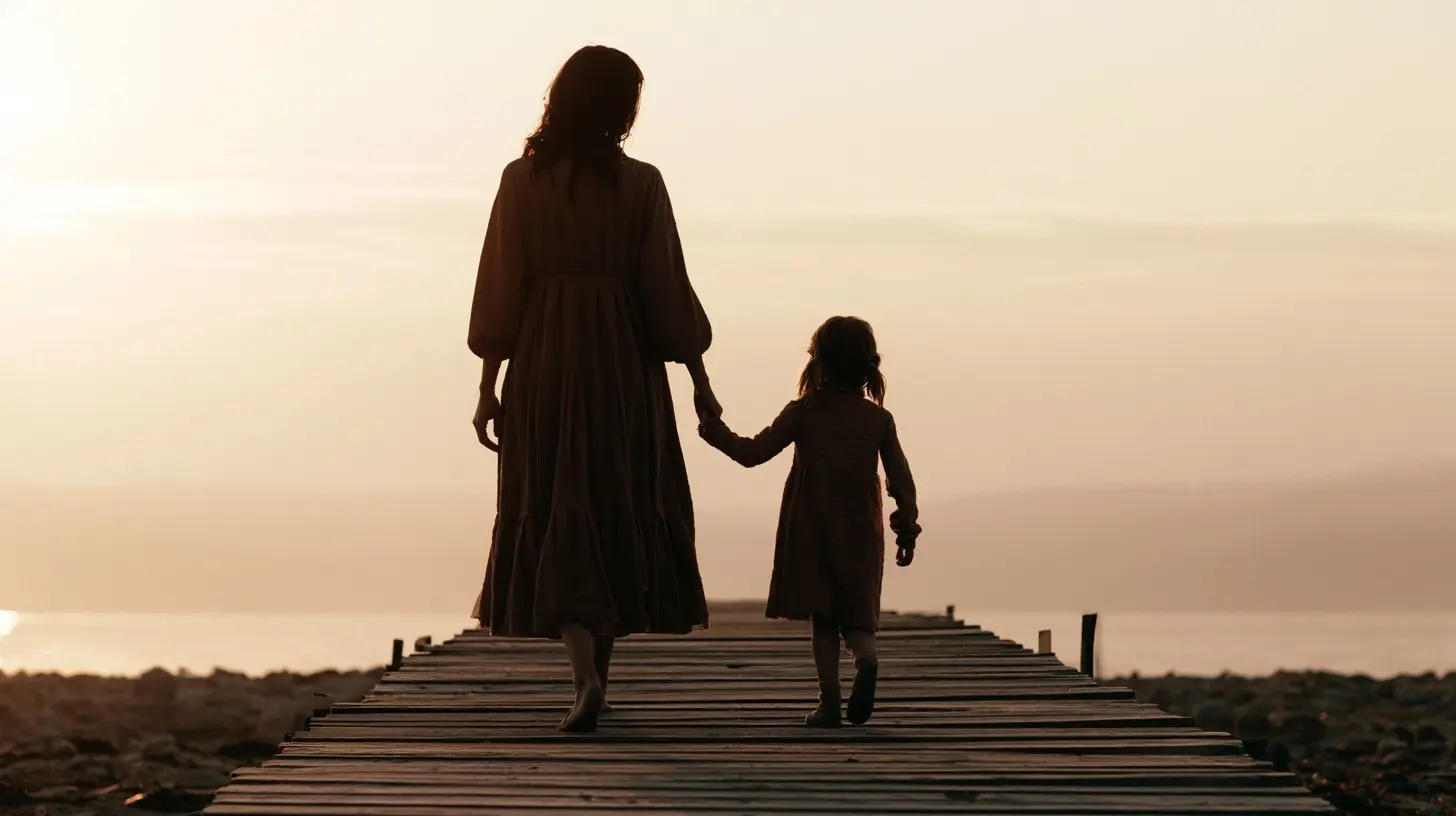
Why Emotional Growth Became the Priority
For decades, the dominant parenting frameworks focused on outcomes. Sleep training, potty training, reading scores, and later, college admissions. These are measurable, visible, and easy to compare. Emotional growth, by contrast, is invisible and slow. You cannot quantify a child's ability to name their frustration or to recover from a social rejection in a spreadsheet. But the reason it has moved to the forefront is that the old metrics have started to fail.Consider the typical high school student in 2026. They have access to more information than any generation in history. They can learn calculus from a video, speak to peers across continents, and access mental health resources with a single tap. Yet rates of anxiety, depression, and self-reported loneliness among adolescents remain stubbornly high. The problem is not a lack of knowledge or opportunity. The problem is that many of these young people have never been taught how to sit with discomfort, how to tolerate uncertainty, or how to build a sense of self that is not dependent on external validation.
Parents in 2026 are realizing that the most important gift they can give their child is not a perfect childhood, but a toolkit for processing an imperfect one. This means shifting from a reactive parenting style, where you solve problems as they appear, to a proactive one, where you deliberately build emotional skills on a daily basis.

The Core Pillars of Emotional Growth
Emotional growth is not a single skill. It is a cluster of competencies that develop over time, often in a specific order. Understanding these pillars helps parents avoid the common mistake of expecting a six-year-old to regulate emotions like a sixteen-year-old.Self-Awareness: The Foundation
Before a child can manage an emotion, they must be able to recognize it. This sounds simple, but it is surprisingly difficult. Many adults still struggle to distinguish between feeling tired and feeling sad, or between anger and fear. In young children, this confusion is even more pronounced because their emotional vocabulary is limited.The goal in 2026 is not to force a child to articulate complex feelings they do not yet understand. The goal is to help them build a basic emotional map. This starts with labeling. When a toddler throws a toy, instead of immediately punishing the action, a parent might say, "You look frustrated because the block tower fell. Is that right?" This does two things. It validates the feeling, and it gives the child language to attach to that internal state.
By age seven or eight, this practice evolves into more nuanced conversations. Parents can ask open-ended questions like, "What was the best part of your day and why do you think it felt good?" This encourages the child to reflect on their internal experience rather than just reporting events. The key is consistency. A single conversation about feelings does nothing. A daily practice of checking in, even for five minutes, builds a neural pathway that makes self-awareness automatic.
Emotion Regulation: Not Suppression
There is a widespread misconception that emotional regulation means keeping a child calm at all times. That is suppression, and it is harmful. Suppression teaches children that certain emotions are unacceptable, which often leads to shame and, later, to explosive outbursts when the pressure becomes too much. True regulation is the ability to experience a strong emotion without being controlled by it.A practical example: A ten-year-old is angry because their sibling broke their favorite toy. The regulated response is not "Stop crying, it is just a toy." The regulated response is to acknowledge the anger, help the child express it safely, and then guide them toward a solution. This might look like, "I see you are really mad. It is okay to be mad. Let us take three deep breaths together, and then we will figure out what to do next."
The reason this works is because it teaches the child that emotions are temporary states, not permanent identities. They learn that anger does not have to lead to hitting, and that sadness does not have to lead to isolation. Over time, they internalize the sequence: notice the feeling, pause, choose a response. This is the foundation of impulse control, which is a far better predictor of long-term success than IQ.
Empathy: The Social Glue
Empathy is often framed as a moral virtue, but it is actually a cognitive skill. It is the ability to understand another person's perspective, not just to feel sorry for them. In 2026, empathy is particularly critical because children are spending more time interacting with screens than with faces. A screen cannot show you the subtle shift in someone's posture that indicates they are upset. A text message cannot convey tone. As a result, many children are developmentally delayed in reading non-verbal cues.Parents can counteract this by deliberately practicing perspective-taking. This does not require elaborate role-playing games. It can happen in everyday moments. When watching a movie together, pause and ask, "Why do you think that character acted that way? What were they feeling?" When a conflict arises with a friend, instead of immediately asking "What happened?" ask "How do you think they felt when you did that?" This shifts the child's focus from self-protection to understanding.
It is also important to model empathy for the child, not just toward the child but toward others. If a parent complains about a coworker in front of their child, the child learns that other people are obstacles. If a parent talks about a coworker's difficult situation with compassion, the child learns that everyone has an inner life. This modeling is far more powerful than any lesson.

The Role of the Parent: Coach, Not Fixer
One of the hardest adjustments for modern parents is stepping out of the fixer role. It feels natural to solve a child's problem, to call the teacher, to mediate the friendship dispute, to rush in with a solution the moment a child expresses distress. But this approach, while well-intentioned, robs the child of the opportunity to practice their own emotional skills.A better frame is to think of yourself as an emotional coach. A coach does not play the game for the athlete. A coach observes, gives feedback, and helps the athlete develop their own strategy. This requires a different kind of patience.
Let us say your teenager comes home upset because a group project fell apart. The fixer response is to immediately suggest solutions: "You should talk to the teacher, or just do it yourself, or let me email the other parents." The coach response is to ask questions first: "What do you think went wrong? How did you feel when it happened? What do you think you could do differently next time?"
This is not about abandoning your child to struggle. It is about being present, supportive, and curious, while allowing them to lead the problem-solving process. Sometimes they will fail. They might make a choice that leads to a worse outcome. That is acceptable, as long as the stakes are not catastrophic. Failure is one of the most efficient teachers of emotional regulation, because it forces a child to process disappointment and then try again.
The Difference Between Support and Rescue
Support means standing beside your child while they face a challenge. Rescue means removing the challenge entirely. Both have their place, but they should not be confused. Rescue is appropriate when the challenge is genuinely beyond the child's developmental capacity or when there is a safety issue. Support is appropriate in almost every other situation.A common mistake is to rescue too often in the name of love. Parents who do this often have children who become anxious in adolescence because they have never developed confidence in their own ability to cope. They have learned that problems are solved by adults, not by themselves. That is a fragile foundation for adulthood.

Practical Strategies for Daily Life
Emotional growth is built in small, consistent moments, not in grand interventions. Here are some concrete strategies that have proven effective in daily routines.The Daily Emotional Check-In
This is a simple practice that takes less than five minutes. At dinner or before bed, each family member shares one high point and one low point of their day. The parent models this by sharing their own, not just the child's. This normalizes the idea that everyone has a mix of good and bad experiences. It also gives parents a window into their child's inner world without interrogation.The key is to listen without immediately offering solutions. If your child says their low point was a test they failed, resist the urge to say "You should have studied more." Instead, ask "How did that feel?" and "What do you think you will do differently next time?" This keeps the focus on the child's emotional processing rather than the parent's evaluation.
The Pause Before Punishment
Punishment delivered in anger is almost always counterproductive. It teaches a child to fear the parent, not to reflect on their behavior. Before any disciplinary action, take a pause. Say "I am feeling frustrated right now, so I need a moment to calm down before we talk about this." This is not a weakness. It is modeling exactly the kind of regulation you want your child to develop.When you return to the conversation, focus on the behavior, not the child's character. Say "Hitting your brother was not okay because it hurt him. Let us talk about what you could do instead when you are angry." This separates the action from the identity, which is crucial. A child who is told they are "bad" will internalize that label. A child who is told they made a "bad choice" can learn to make a better one.
Boredom as a Growth Opportunity
In 2026, boredom has become almost a taboo state. Parents feel pressure to fill every moment with structured activities, educational apps, or social engagements. But boredom is actually a fertile ground for emotional growth. It forces a child to sit with their own thoughts, to generate their own stimulation, and to tolerate a low level of discomfort.When a child says "I am bored," the parent does not need to solve it immediately. The parent can say "That is okay. Boredom is a chance for your brain to rest. You will figure out something to do." Often, within a few minutes, the child will invent a game, pick up a book, or start drawing. This self-directed play is where creativity and emotional resilience are built. It is also where children learn that they do not need constant external input to feel content.
Common Mistakes and Misconceptions
Several well-meaning practices have become popular in recent years, but they are often misapplied.The "Feelings Over Everything" Trap
Some parents swing too far in the opposite direction and treat every emotional expression as sacred. They validate every feeling without setting any boundaries. This leads to children who are emotionally expressive but also dysregulated, because they have not learned that feelings do not justify all actions.It is possible to validate a feeling and still set a limit. The phrase "I understand you are angry, but you still cannot hit your sister" is a perfect example. The feeling is acceptable. The behavior is not. This distinction is the core of emotional intelligence.
The Overuse of "I'm Sorry"
Some modern parenting advice emphasizes forcing children to apologize immediately after a conflict. The problem is that a forced apology is often empty. The child says the words to escape the situation, not because they feel remorse. This teaches them that apologies are a way to avoid consequences, not a way to repair relationships.A better approach is to separate the apology from the repair. First, help the child understand what they did and how it affected the other person. Then, ask "What can you do to make this better?" The child might apologize, or they might draw a picture, or they might help rebuild what they broke. The repair action is more meaningful than the words.
Ignoring the Parent's Own Emotional State
It is impossible to center a child's emotional growth if the parent is emotionally depleted. Parental stress is contagious. Children are highly attuned to their parents' moods, even when the parents think they are hiding them. A parent who is constantly anxious will raise a child who is constantly anxious, regardless of the words they use.This means that emotional growth is a family project, not just a child project. Parents need to attend to their own emotional health, whether through therapy, exercise, meditation, or simply carving out time for adult relationships. The phrase "put on your own oxygen mask first" is not a cliche. It is a biological reality.
Comparing Approaches: Structure vs. Flexibility
There are two broad schools of thought in emotional parenting. The first emphasizes structure. These parents rely on routines, clear rules, and predictable consequences. This approach provides a sense of safety for children, which is indeed a prerequisite for emotional growth. A child who never knows what to expect will be too anxious to process their feelings deeply.The second approach emphasizes flexibility. These parents are more intuitive, responding to each situation as it arises rather than following a fixed protocol. This approach allows for more nuance and is often better at handling unexpected emotional moments. However, it can also lead to inconsistency, which confuses children.
The best practice in 2026 is not to choose one side but to integrate both. The structure should be the container, and the flexibility should be the content. For example, a family might have a fixed bedtime routine (structure) but within that routine, the parent allows the child to talk about whatever is on their mind, even if it takes longer than planned (flexibility). This gives the child both safety and space.
The Long View: What Success Looks Like
It is helpful to define what emotional growth actually produces. A successful outcome is not a child who is always happy. Happiness is a fleeting state, not a personality trait. A successful outcome is a young adult who can experience the full range of human emotions without being overwhelmed by them. They can feel sad and still function. They can feel angry and still choose their words carefully. They can feel anxious and still take a risk.This kind of child is not born. They are built through thousands of small interactions. A parent who listens without judgment, who sets limits with love, who models their own emotional struggles, and who allows failure to happen, is doing more for their child than any curriculum, any app, or any enrichment class.
Practical Considerations and Trade-offs
Centering emotional growth requires time, which is the scarcest resource in modern parenting. It requires slowing down, having conversations that have no immediate outcome, and tolerating your child's distress without rushing to fix it. This often means sacrificing other things, like a spotless house, a perfectly planned schedule, or even some career advancement.There is also a trade-off in the short term. A child who is allowed to process their emotions may be less compliant than a child who is simply told to stop crying and obey. The latter is easier in the moment. But the former builds an internal compass that will guide them when the parent is not there.
Parents should also be aware that emotional growth is not linear. There will be regressions, particularly around developmental milestones, school transitions, and adolescence. A child who was emotionally articulate at eight might become sullen and withdrawn at thirteen. This is not a failure. It is a normal part of development. The parent's job is to remain a steady presence, not to panic and change course.
What Not to Do
Do not confuse emotional growth with constant talking. Some children process internally and do not want to discuss every feeling. Forcing a conversation can be as harmful as ignoring the feeling. Watch your child's cues. If they push away, respect that and leave the door open for later.Do not use emotional language as a weapon. Saying "I am so disappointed in you" is not emotional coaching. It is guilt-tripping. The focus should always be on the child's experience, not on the parent's emotional reaction as a control mechanism.
Do not compare your child's emotional progress to their peers. Emotional development has a wide normal range. A child who is slow to regulate their anger at seven may be exceptionally empathetic at twelve. Comparison creates anxiety in the parent, which then transfers to the child.
A Final Word on the Future
The children of 2026 will grow up to face challenges that we cannot predict. They may navigate a world with fewer traditional jobs, more complex social structures, and deeper questions about identity and purpose. What will carry them through is not their GPA or their resume. It is their ability to know themselves, to connect with others, and to adapt when life does not go as planned.Centering emotional growth is not a luxury. It is the most practical thing a parent can do. It is the work of building a human being who can stand on their own, not because they were never knocked down, but because they learned how to get back up. That is a gift that will outlast any toy, any lesson, or any college fund.
all images in this post were generated using AI tools
Category:
Parenting With EmpathyAuthor:

Noah Sawyer
Discussion
rate this article
2 comments
Rina Shaffer
In the fast-paced world of 2026, prioritizing emotional growth is essential. By nurturing our children's feelings and teaching them resilience, we help them build strong foundations for their future relationships and self-acceptance.
September 13, 2026 at 3:58 AM
Noah Sawyer
Absolutely. Fostering emotional intelligence in our children is key to their future happiness and success.
Lena McKellar
What an inspiring read! Emphasizing emotional growth in parenting is so important. It's heartwarming to see how we can nurture our children's feelings and resilience as they navigate the world ahead. Keep shining!
September 6, 2026 at 4:28 AM
Noah Sawyer
Thank you! I'm glad you found it inspiring. Nurturing emotional growth is truly vital for our children's resilience. Let's keep the conversation going!