Managing Sibling Rivalry with Clear Family Boundaries
30 May 2026
Ah yes, sibling rivalry — the age-old gladiator tournament of childhood, featuring eye-rolls, door slams, and the eternal debate over who got the bigger scoop of ice cream. If you've got more than one child, congratulations! You own a front-row seat to your very own reality show: Survivor: Living Room Edition.
While you may have once imagined your little cherubs growing up hand-in-hand, giggling through shared secrets and snack time, reality smacked you with shrieks, accusations of favoritism, and the occasional flying Lego. Welcome to parenting! But don’t worry—we’re diving headfirst into the turbulent waters of sibling rivalry and how clear family boundaries are your life raft.
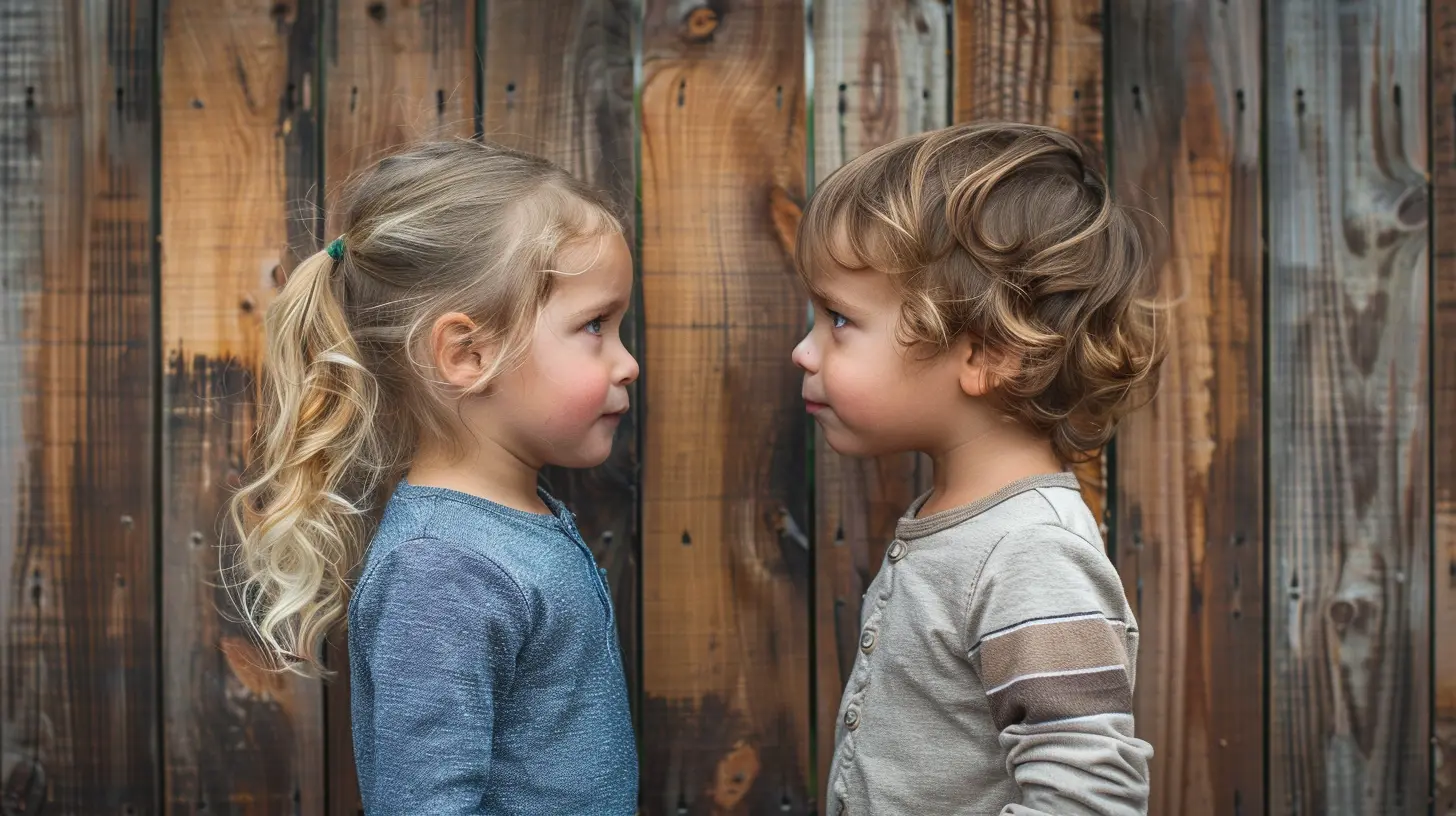
What is Sibling Rivalry Anyway?
In short? It’s every parent’s daily endurance test. Technically speaking, sibling rivalry is the jealousy, competition, and fighting between brothers and sisters. But let's be honest, it usually looks more like this:- “Mooooooom, he’s breathing my air again!”
- “Why does she get to sit in the front seat every time?”
- “His chicken nugget looks bigger than mine!”
Sound familiar? Yep. Sibling rivalry is natural, but that doesn’t mean it has to rule your household like a pint-sized soap opera.

Why Does Sibling Rivalry Happen?
Because children are small, emotionally unstable tornadoes learning to be humans. Simple as that.But really, rivalry happens when kids feel like they’re not getting their fair share of attention, love, independence, power, or privileges. Even when they're raised under the same roof, with the same rules, kids are different. Their personalities, needs, and ages factor into how they process fairness (spoiler alert: they don’t).
Add in parental stress, inconsistent discipline, and—for some reason—the last cookie, and bingo! You’ve got a brawl brewing.

Enter: The Magical Power of Clear Family Boundaries
Let’s be real—setting boundaries sounds boring. Like, “Let’s have a family meeting to discuss our conflict resolution strategies!” Blech.But boundaries, when done right, are less about whiteboards and chore charts and more about setting clear, consistent expectations across the board. Think of them not as rules, but as your family's guardrails. They keep your kids from metaphorically (and sometimes literally) drop-kicking each other off the couch.
What Are Family Boundaries?
Family boundaries are the structure that says:- “This is okay.”
- “This is not okay.”
- “Here’s what happens if you do it anyway.”
They’re not dictatorial (we’re not building a mini-prison here), but they do make it crystal clear that actions have consequences—and that all kids are treated with the same level of respect. Whether you’re 4 or 14, boundaries apply. No exceptions.

Creating Boundaries Without Losing Your Mind
Let’s go over how you can implement family boundaries without turning your house into a military academy or completely giving up and moving to a beach hut in Tahiti.Step 1: Establish House Rules That Make Sense
Throw out the ten-page rulebook no one reads. Instead, come up with 4–5 core rules that apply to everyone—parents included.Examples:
- No hitting, ever. (Yes, tickle attacks count.)
- Speak kindly—or at least don’t scream.
- Keep your hands, feet, and belongings to yourself.
- If you break it, clean it/fix it/apologize for it.
Make these non-negotiable. Post them on the fridge. Recite them like the family national anthem. Tattoo them on your soul if you must.
Step 2: Be Consistently Boring
Kids are basically expert lawyers in tiny sneakers. If there’s even one instance where you let Ryan get away with insulting Lucy’s hair while Lucy got grounded for side-eyeing Ryan during snack time, they will remember. Forever.Consistency is key. Boring? Yep. Effective? Also yep. Apply consequences evenly, without making exceptions for “but he’s tired” or “she had a hard day.”
Consistency = credibility. Credibility = respect. And respect? That solves a LOT of sibling drama.
Step 3: Let Natural Consequences Do Their Thing
Sometimes the best consequence is just letting consequences...well, happen. If one kid keeps stealing their sibling’s stuff and it gets broken, guess who gets to deal with the fallout?Instead of constantly refereeing with time-outs and forced apologies, let the kids face the natural results of their actions (within reason—don’t let anyone get physically hurt or traumatized, obviously).
This helps them connect the dots between behavior and result—something even adults struggle with, let’s be honest.
Step 4: Encourage Teamwork (Bribery is Totally Acceptable)
Sibling rivalry thrives on constant comparisons. So flip the script! Instead of “who did it better?”, go for “can you two work together to earn something awesome?”Team-based incentives are magic for diffusing rivalry. If they both clean the living room without killing each other, maybe they earn a movie night, or extra screen time, or gasp dessert.
Your goal? Get them to see each other as allies, not enemies. Kind of like when Avengers team up, minus the laser beams and city demolition.
Step 5: Give Each Kid “You Matter” Moments
A lot of rivalry stems from kids feeling invisible or less important. So go ahead—schedule a little one-on-one time with each child, even if it’s just 15 minutes of doing something they love. Read a book, play a game, or just let them talk (and yes, you have to listen).These mini-dates reassure your kids that they don’t have to compete for your love. You know, like a parent version of “The Bachelor,” but way more wholesome and with fewer roses.
Step 6: Model the Behavior You Want to See
Ever seen two kids argue in a shocking imitation of how you and your partner bicker over the thermostat? Yeah, they’re watching. Always.Make kindness, respect, and conflict resolution part of your daily vibe. When they see you apologize, listen, and (gasp) admit when you’re wrong, they’ll be more likely to do the same.
Monkey see, monkey do, after all.
The Secret Sauce: Family Meetings (Not as Awful as They Sound)
Hold up—I know what you’re thinking: “Oh great, another boring sit-down that ends in tears and spilled juice.” But seriously, regular family meetings (even once a month) can be incredibly helpful for:- Reinforcing boundaries
- Letting kids share their feelings
- Talking through recurring issues
- Celebrating wins, however small
Keep it short. Keep it light. Serve snacks. Boom—now you’re a therapist with cookies.
What NOT to Do (Because Sometimes We All Need Reminders)
Let’s save you a few headaches. Avoid:- Taking sides publicly. If you must referee, do it privately. No courtroom drama in front of the jury (AKA other siblings).
- Labeling kids. “She’s the smart one,” “He’s the naughty one” — nope. Congratulations, you just gave them a lifelong identity crisis and a reason to hate each other.
- Snoozing on boundaries. Once you start, keep going. Inconsistency kills everything.
- Thinking it’ll magically go away. Truth bomb: unmanaged sibling rivalry doesn't "phase out" on its own. It evolves — into adult siblings who avoid each other at holidays.
When To Get Help
Despite your best efforts, sometimes the rivalry reaches nuclear meltdown levels. If the fighting is physical or emotionally damaging, or if one sibling is constantly bullying or dominating the other, it might be time to loop in a therapist or counselor.There’s zero shame in calling in reinforcements. If anything, it shows your kids that their well-being is priority number one—and that you’re willing to do the messy work to help them grow.
Final Thoughts: You’ve Got This, Chaos and All
Managing sibling rivalry with clear family boundaries isn’t about creating a conflict-free utopia (pfft, good luck with that). It’s about giving your kids the tools to coexist, communicate, and—on a good day—actually kinda sorta enjoy each other.So yes, there will still be squabbles over who got the bigger cookie. There will still be slammed doors and dramatic eye-rolls. But with structure, consistency, and a sprinkle of sarcasm-fueled sanity, you’re building something stronger than temporary peace. You’re building respect, resilience, and relationships that just might survive past adolescence.
Now, go pour yourself that coffee, and maybe—just maybe—put your feet up for five whole uninterrupted minutes. You’ve earned it.
all images in this post were generated using AI tools
Category:
Parenting BoundariesAuthor:

Noah Sawyer
Discussion
rate this article
2 comments
Damian Simmons
Establishing boundaries teaches kids respect for each other and strengthens family bonds.
July 21, 2026 at 3:31 AM
Noah Sawyer
I completely agree. Clear boundaries help kids understand respect and foster stronger connections within the family.
Norah McWhorter
Setting clear boundaries creates a loving environment where siblings can thrive together and grow.
June 4, 2026 at 3:15 AM
Noah Sawyer
Absolutely! Clear boundaries help siblings understand expectations and foster respect, which is key for a harmonious relationship.