Managing Big Back-to-School Emotions in 2027
6 September 2026
The first day of school used to be about new backpacks and sharpened pencils. By 2027, it is something else entirely. Children are walking into classrooms that look different, feel different, and demand different things from them than they did just a few years ago. And the emotional weight they carry is heavier than any textbook.
Parents often focus on the practical checklist: supplies, immunizations, sleep schedules. But the real work happens underneath the surface. Anxiety, excitement, dread, and hope can all collide in the weeks before the bell rings. This article is not about controlling those feelings. It is about understanding them, naming them, and giving your child the tools to move through them without falling apart.

Why 2027 Feels Different for Kids
Let us be honest about what has changed. The pandemic years are not ancient history. They are part of your child's developmental timeline. A third grader in 2027 spent their preschool years in masks and remote learning. A high school freshman was in fourth grade when the world shut down. Those early disruptions left marks on social routines, attention spans, and the way children perceive uncertainty.Add to that the rapid integration of AI tools in classrooms. Many schools now use adaptive learning platforms that adjust difficulty in real time. Some kids thrive on that. Others feel like they are being constantly evaluated by a machine that never blinks. The teacher is still there, but the feedback loop is faster, more frequent, and often less forgiving than a human waiting until Friday to hand back a quiz.
Social media has also shifted. In 2027, most middle schoolers carry a device, and the pressure to maintain a curated presence starts before they can drive. The back-to-school transition is no longer just about seeing friends in the hallway. It is about updating bios, responding to group chats, and managing the fear of missing out on a thousand small moments that happen after school hours.
None of this is inherently bad. But it means that the emotional landscape of starting school is more complex than it was for previous generations. Your child is not just worried about a pop quiz. They are worried about their place in a networked, noisy, fast-moving world.
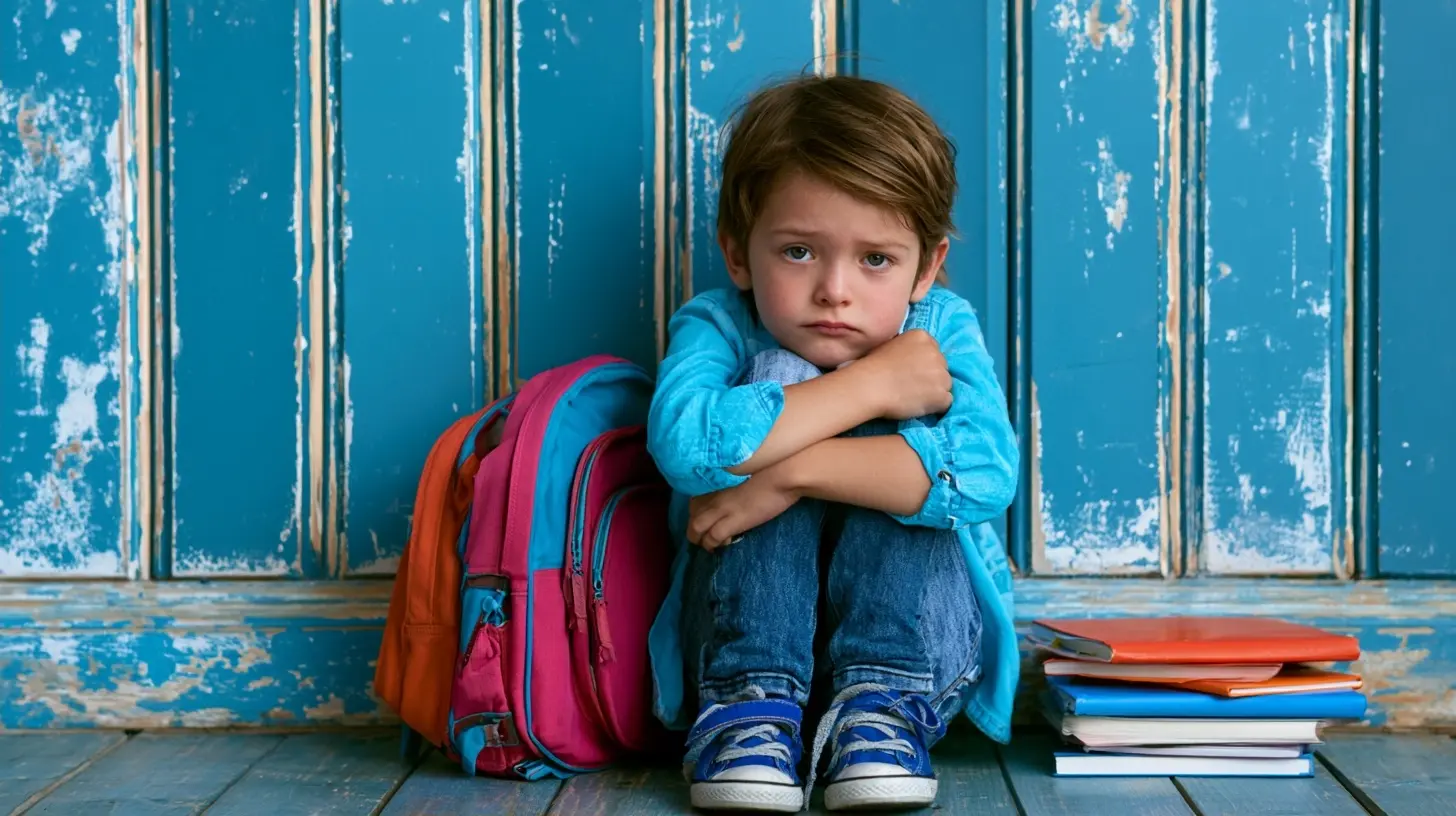
The Emotional Timeline: What to Expect and When
Emotions rarely show up all at once. They build in predictable waves. If you know the timeline, you can respond with precision instead of panic.The Pre-School Buildup (Two to Four Weeks Before)
This is the phase of vague irritability. Your child might snap at you for no reason, lose interest in favorite activities, or suddenly want to sleep in your bed. They are not being difficult on purpose. Their brain is anticipating a major transition, and that anticipation creates a low hum of stress hormones.Do not try to reason it away. Instead, increase physical activity. A tired body processes anxiety better than a restless one. Go on longer bike rides, schedule playdates that involve running, or simply take a brisk walk after dinner. Movement metabolizes stress. It is the cheapest, most effective intervention you have.
The First Few Days (Excitement and Exhaustion)
The first day brings a spike of adrenaline. Kids often come home buzzing with stories, only to crash hard by evening. Expect meltdowns over trivial things like the wrong color socks on day two or day three. This is not a regression. It is a release valve.The best response is low stimulation. After school, do not rush to extracurriculars or screen time. Let them decompress with a snack and some quiet, unstructured time. Ask specific questions about their day, but do not interrogate. "Who did you sit with at lunch?" is better than "How was school?" The latter invites a one-word answer. The former invites a story.
The Second Week (The Grind Sets In)
The novelty fades. Homework appears. Social dynamics become clearer. This is when real anxiety often surfaces, especially for kids who struggle academically or socially. You might see avoidance behaviors: stomachaches in the morning, sudden forgetfulness about assignments, or a renewed attachment to video games.This is not the time to punish. It is the time to problem-solve. Sit down with your child and ask what feels hardest. Listen without fixing. Often, they just need to say it out loud. Then work together on one small change. Maybe it is a visual checklist for the morning. Maybe it is a signal they can use to ask the teacher for a break. Small wins rebuild confidence faster than grand speeches.

The Role of Parental Anxiety (Yes, Yours)
Children are emotional geiger counters. They pick up on your stress even when you think you are hiding it. If you are dreading the school year because of a difficult teacher, a bullying concern, or your own memories of being miserable in class, they will sense it.That does not mean you must fake enthusiasm. But it does mean you need to manage your own feelings before you can help them manage theirs. Talk to a friend, a partner, or a therapist about your worries. Do not use your child as your emotional confidant. They are not equipped to hold your fear and their own at the same time.
If you are genuinely worried about a specific issue, such as a learning disability or a social conflict, address it directly with the school before the year starts. A proactive email or phone call can set up supports that make a huge difference. Waiting until the problem explodes in October only guarantees a messier resolution.

Practical Strategies That Actually Work
There is no shortage of advice about back-to-school routines. Much of it is repetitive and shallow. Here are strategies that address the underlying emotional mechanics, not just the surface behavior.The "Worry Window" Technique
Instead of telling your child not to worry, schedule a specific time each day for worrying. For example, after snack and before homework, give them ten minutes to voice every concern, no matter how silly. Write them down on a whiteboard or piece of paper. Then close the window. The worry is acknowledged, but it does not get to live in every waking moment.This works because anxiety thrives on unpredictability. By containing it to a set time, you teach the brain that worry is a task to be managed, not a constant state of being. Younger children may need you to sit with them during the window. Older kids might prefer to write privately. Adjust the format to fit their personality.
The "Two Things" Check-In
Every evening, ask your child two questions: "What was one thing that went well today?" and "What was one thing that was hard?" Keep your responses brief. Do not lecture. Do not offer solutions unless they ask. The goal is to normalize the idea that every day contains both good and bad. This prevents catastrophic thinking, where one bad moment defines the entire day.Over time, this practice builds emotional granularity. Kids learn that they can hold joy and frustration at the same time. That is a sophisticated skill, and it will serve them far beyond the classroom.
The "No Surprises" Calendar
Many children, especially those with anxious temperaments, struggle with unexpected changes. In 2027, school schedules are often more fluid than ever, with rotating blocks, early release days, and digital assignments that appear overnight.Create a physical calendar that your child can see every morning. Include not just school events but also after-school plans, parent work trips, and even meal plans. When they know what is coming, their nervous system stays calmer. The calendar is not about over-scheduling. It is about reducing ambiguity.
The "Re-entry" Ritual
The moment your child gets in the car or walks through the door after school is more important than any conversation you will have later. Do not start with questions. Start with presence. Offer a snack, a hug, or just sit silently together for a few minutes.This sounds simple, but it is profound. Many kids feel emotionally spent after a long day of managing themselves in a social environment. They need a transition period, just like adults need a commute to decompress. If you immediately ask about grades or friendships, you are adding cognitive load to an exhausted brain. Let them come to you.
The Problem with Over-Praising Resilience
There is a popular narrative that kids are "resilient" and will "bounce back" from anything. This is comforting but misleading. Resilience is not a fixed trait. It is a skill that develops through supported struggle, not through being thrown into the deep end alone.When you tell a child they are resilient, they may hear that their distress is not valid. They may learn to suppress their feelings to please you. Instead of praising their toughness, praise their strategies. Say, "I noticed you took three deep breaths before your test. That was smart." Or, "You asked the teacher for help when you were stuck. That took courage."
This shifts the focus from identity to action. The child learns that they have tools, not that they are simply strong enough to endure pain. That distinction matters. Endurance without tools leads to burnout. Tools without identity lead to adaptability.
When Professional Help Is the Right Call
Not every emotional struggle can be solved with a good routine. Some children have anxiety or depression that requires intervention. In 2027, mental health services in schools are more common than a decade ago, but they are still stretched thin.Seek professional support if you notice the following for more than two weeks:
- Refusal to attend school that is not resolved with gentle encouragement
- Significant changes in sleep or appetite
- Withdrawal from friends and activities they previously enjoyed
- Intense emotional outbursts that seem disproportionate to the trigger
- Comments about hopelessness or self-harm (this is always an emergency)
A school counselor is a good first stop. They can observe your child in the classroom and recommend next steps. A pediatrician can rule out physical causes and refer you to a therapist who specializes in childhood anxiety.
Do not wait for things to get worse. Early intervention is always less painful and more effective. There is no medal for suffering in silence.
The Digital Dilemma: Phones, Tablets, and Social Overload
In 2027, the question is not whether your child will use technology for school. It is how much of their emotional life will be mediated by screens. Group chats can be a lifeline for shy kids, but they can also be a 24/7 arena for social comparison and exclusion.Set clear boundaries around device use during the school week. The specifics depend on your child's age and maturity, but a few principles apply universally:
- Keep devices out of the bedroom at night. Sleep is non-negotiable for emotional regulation.
- Establish a "no screens for the first hour after school" rule. This allows the brain to reset.
- Have open conversations about what they see online. Ask them to show you funny memes or explain drama in their group chat. This keeps you informed without being intrusive.
The goal is not to demonize technology. It is to ensure that your child's primary emotional connections remain with real people in the real world. Screens should be a tool, not a refuge.
A Word on Different Age Groups
A first grader and a tenth grader face completely different emotional challenges. The strategies above apply broadly, but the tone and focus should shift.Elementary School (Ages 5-10)
Younger children often struggle with separation anxiety and the physical demands of school, like sitting still and following multi-step directions. They need concrete rituals. A special handshake at drop-off, a small object in their pocket that reminds them of home, or a note in their lunchbox can work wonders.They also need help naming their feelings. Use simple language. "You look nervous. Is your tummy feeling wiggly?" This gives them words for sensations they cannot yet articulate. Avoid asking "Why do you feel that way?" because they often do not know. Just acknowledge the feeling and offer comfort.
Middle School (Ages 11-13)
This is the peak of social anxiety. Fitting in is not a luxury; it is a survival need. Your child may be obsessed with clothing, hairstyles, or having the right phone case. Do not dismiss this as shallow. It is their way of signaling belonging.Help them navigate social dynamics without controlling them. Role-play difficult conversations. Discuss what makes a good friend versus a convenient friend. Validate their feelings when they are excluded, but also help them see that exclusion is often about the other child's insecurities, not their worth.
High School (Ages 14-18)
Teenagers are dealing with academic pressure, identity formation, and the looming question of the future. In 2027, that future feels especially uncertain. The job market is shifting, college admissions are competitive, and the world feels volatile.Teens need you to listen more than you talk. They need a safe place to voice their doubts without immediate lectures about effort or attitude. Ask open-ended questions like, "What is stressing you out the most right now?" and then simply listen. If they want advice, they will ask for it. If they do not, respect that.
Also, watch for signs of perfectionism. Many high-achieving teens in 2027 are burning out because they believe they must excel in every class, every sport, and every club. Help them understand that being good at a few things is more sustainable than being mediocre at everything.
The Myth of the "Normal" School Year
Parents often say, "I just want this year to be normal." But normal is a moving target. Every year has its own challenges, and children are not static. They change over the summer. Friendships shift. Teachers have different styles. The school building itself might have new rules or a new layout.Let go of the idea that there is a perfect year waiting to happen. Instead, focus on building a family culture that can adapt to whatever comes. That means having regular family meetings, checking in on each other's emotional states, and being willing to change plans when something is not working.
This approach is more sustainable than trying to engineer a stress-free environment. Stress is inevitable. Connection is the antidote.
What to Do When Your Child Says "I Hate School"
This is one of the hardest sentences for a parent to hear. Your instinct might be to argue, to minimize, or to jump into problem-solving mode. Resist all of those impulses.First, take a breath. Then say, "I hear you. That sounds really hard." Let them talk. Ask what specifically they hate. Is it the work? The teacher? The other kids? The feeling of being trapped?
Often, "I hate school" is shorthand for "I feel powerless." They cannot change the fact that they must attend. They cannot choose their classmates or their teacher. The only control they have is over their own response.
Help them find areas of agency. Can they choose a different seat? Can they join a club that interests them? Can they set a personal goal unrelated to grades, like reading a certain book or learning a new skill?
You cannot make them love school. But you can help them find moments of meaning within a system they did not choose. That is a realistic and valuable goal.
Looking Ahead: Building Emotional Strength for the Whole Year
The first month of school sets the tone, but it is not the whole story. Emotional regulation is a muscle that needs regular exercise. Do not stop your check-ins after September.As the year progresses, keep an eye on patterns. Is your child consistently tired? Are they complaining about stomachaches on Sunday nights? Are they withdrawing from family activities?
These are early warning signs that something is off. Address them sooner rather than later. A quick conversation with a teacher, a tweak to the bedtime routine, or an extra family movie night can often prevent a small issue from becoming a crisis.
Remember that your child is watching how you handle stress. If you lose your temper over a spilled drink, they learn that small mistakes are catastrophic. If you take a deep breath and clean it up without drama, they learn that problems are manageable. You are not just teaching them about school. You are teaching them about life.
The goal is not to raise a child who never feels anxious. That is impossible and not even desirable. A little anxiety sharpens focus and motivates effort. The goal is to raise a child who can feel anxious and still function, who can be sad and still reach out, who can be frustrated and still find a way forward.
That kind of emotional strength is built in small moments, day after day, in kitchens and cars and hallways. It is built when you listen without judging, when you comfort without fixing, and when you show up consistently even when you are tired.
In 2027, the world will keep changing. Classrooms will keep evolving. But the fundamental need of every child remains the same: to feel safe, to feel seen, and to know that someone believes in their ability to handle what comes next. That is your job. And you are more capable of it than you think.
all images in this post were generated using AI tools
Category:
Developmental StagesAuthor:

Noah Sawyer
Discussion
rate this article
2 comments
Kaitlyn James
Embrace the journey, support their feelings, and celebrate every small victory together!
September 25, 2026 at 3:17 AM
Freya Tucker
I love the perspective on handling back-to-school emotions. It's amazing how each year brings new challenges and opportunities. I'm curious about how technology will play a role in supporting kids' feelings this time around. Great read!
September 7, 2026 at 3:09 AM
Noah Sawyer
Thank you for your thoughtful comment! Technology will definitely offer new tools for supporting kids' emotions this year. I'm excited to see how it evolves and helps families navigate these challenges.