How to Address Peer Pressure with Your Son
3 August 2026
Raise your hand if you've ever asked your son, “So, what made you think jumping off the garage roof was a good idea?” and he replied with the classic, “Everyone else was doing it.” Cue the sigh.
Ah, peer pressure. That sneaky little intruder that worms its way into our kids’ lives faster than you can say, “Don’t do anything I wouldn't do.” If you’re reading this, chances are you’ve seen signs that your son is facing the daunting whirlwind of trying to fit in, stand out, and somehow survive puberty—all while possibly being nudged in directions he might not choose on his own.
Let’s dig into how you can guide your son through the peer pressure jungle without turning every conversation into a lecture or sounding like “back in my day…” on repeat. Keep your coffee close—this is parenting at its finest.
What Is Peer Pressure Anyway?
Think of peer pressure like that friend who constantly says, “C’mon, just one more episode!” at midnight—tempting, persuasive, and usually up to no good. It’s the influence kids feel from their social circles to behave in certain ways. It can be about anything: what to wear, how to talk, what music to like, and yeah, even whether or not to try vaping behind the school gym.For boys, especially, peer pressure often leans into themes of masculinity, toughness, rebellion, and fitting into their "pack." One minute they’re sweetly showing you their rock collection, the next they’re kicking things to impress their buddies.
But here's a fun fact: peer pressure can be both negative and positive. Ever seen your son do his homework because he doesn’t want to be the only one unprepared? Boom—positive peer pressure. It’s not all bad; it’s just all… tricky.
Recognize the Red Flags
Before we can bust peer pressure’s chops, we’ve got to know when it’s creeping around. Keep an eye out for these:- Sudden mood swings or secretive behavior
- Dropping old friends like hot potatoes
- Talking about new friends who make you raise an eyebrow
- Trying to “be cool” in ways that scream “not like him”
- Grades taking a nosedive faster than a TikTok trend
- Saying “I don’t care” more often than he says “I’m hungry” (now that’s saying something)
Sometimes, the changes are subtle—like your son dressing a little differently or suddenly not wanting to spend time with the family. And sometimes, they’re as subtle as a foghorn.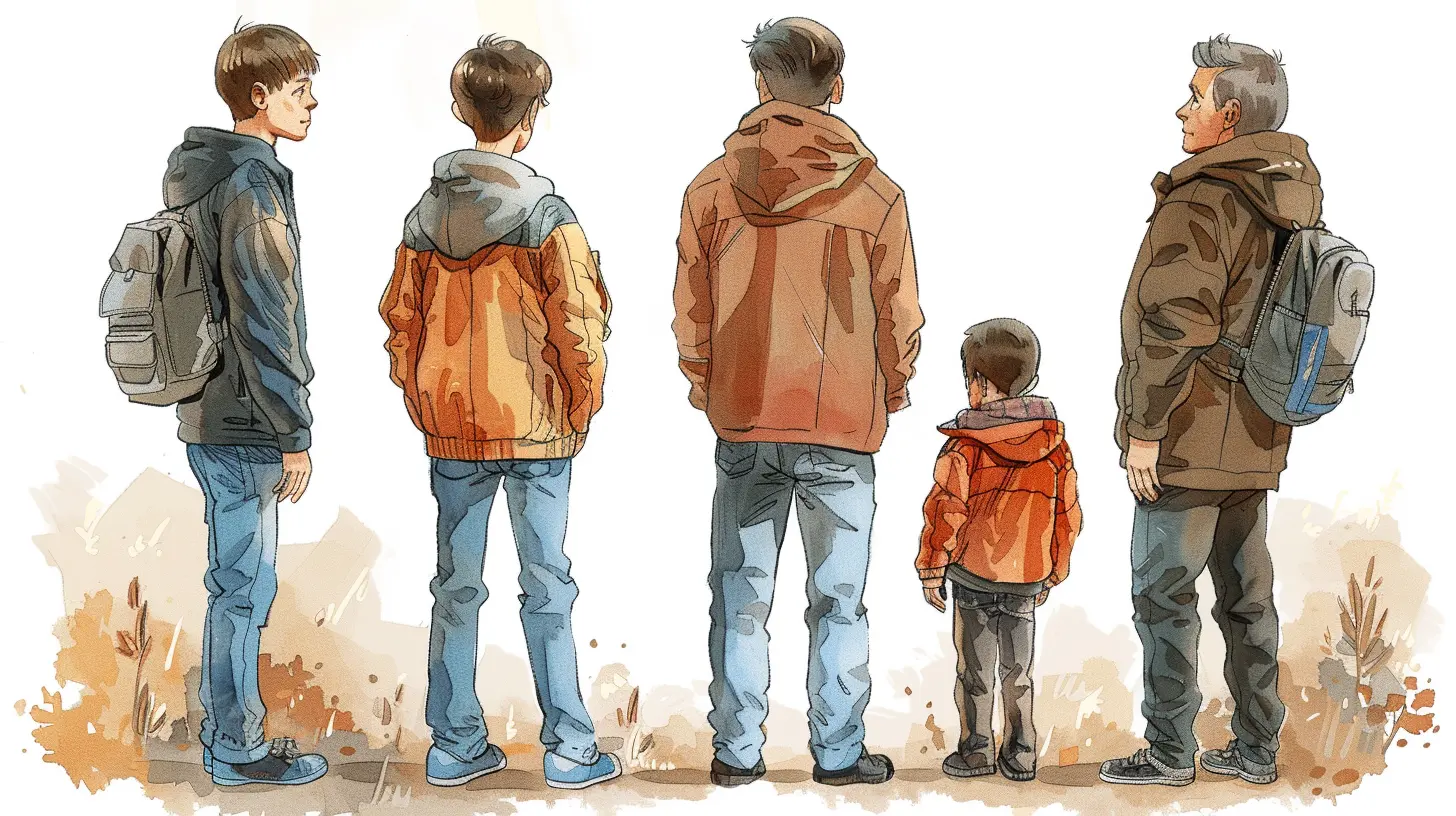
Start the Conversation — Without Making It Awkward
Easier said than done, right? “Talk to your kids,” they say. But what they don’t say is how often those talks result in nothing but eye rolls and dramatic sighs.Here’s the trick: talk without talking at. Instead of grilling your son like a bad cop in a buddy movie, ease into it. Take the pressure off both of you. Try something like:
>“Hey, I noticed you’ve been hanging out with a new group at school. They seem cool—how’d you all meet?”
Or—pro tip—talk while doing something else. Car rides, walks, even building a Lego set can be golden opportunities. It removes the intensity of face-to-face conversations, and suddenly, he’s opening up like you’re not even his parent.
Sneaky? Maybe. Effective? Totally.
Build that Trusty Trust Bridge
Here’s a bit of hard truth: if your son thinks you’re going to judge, punish, or “freak out,” he’s not going to tell you jack. That’s why building trust is the golden ticket.Make it clear that you’re his safe place. That doesn’t mean ignoring bad choices—it means creating a space where mistakes can be talked about, not just punished. Let him know that if he messes up, it’s not the end of the world. It’s a learning moment (even if it's a total facepalm moment for you).
When he tells you something tough or embarrassing, resist the urge to say, “Why would you DO THAT?!” Instead try, “Wow, that sounds hard. What made you feel like you had to do that?”
This lets him feel heard, not judged. And that, my friend, is parenting gold.
Teach Him It's Okay to Say No (Without Being a Party-Pooper)
Saying “no” in the middle of a group of 13-year-olds is about as easy as herding cats. Your son doesn’t want to be the odd one out, the goody-two-shoes, or cringe—the target of mockery.That’s why it helps to practice saying no.
Yep, get theatrical. Role play. Be the annoying friend trying to rope him into something sketchy. Teach him how to say no firmly but coolly. Or with humor:
- “Nah, man, I’ve got enough dumb decisions on my resume.”
- “My mom can smell lies like a bloodhound. I’ll pass.”
- “I’d rather keep my eyebrows, thanks.”
Make it fun, not preachy. The more confident he feels in his responses, the less likely he’ll crumble under pressure.
Help Him Understand the Why
Teenagers are mini lawyers. “But why?” “Prove it.” “That doesn’t even make sense!” Gotta love that logic, huh?So, when you explain the dangers of peer pressure, don’t just say, “Because I said so.” Give him the why behind it.
Talk about real consequences—without doomsday scenarios. Instead of, “If you drink, you’ll crash a car,” try, “Drinking can make you do stuff you wouldn’t normally do, and that can lead to some pretty rough outcomes."
Keep it real. Keep it relatable. And whenever possible, bring it back to values. Ask him things like:
- “What do YOU want people to remember you for?”
- “How do you feel when people do things that you know are wrong?”
- “Have you ever felt pressured and made a choice you didn’t feel good about later?”
Self-awareness is like a gym for the brain. Gotta work it out regularly.
Encourage Independent Thinking
Peer pressure thrives in the land of indecision. Kids who don’t fully know what they stand for are easier to sway. That’s why nurturing your son’s ability to think for himself is so important.Push him (gently) to form opinions. Ask what he thinks about something in the news, or how he’d handle a sticky situation. When he shares, resist the urge to correct—just listen.
Teach him that it’s totally normal not to follow the crowd. In fact, some of the coolest, most successful people were the weird kids in school. (Hello, Elon Musk?) Remind him that being different isn’t bad—it’s brave.
Surround Him with Positive Influences
Friendships are like snacks—some are healthy, some are junk food in disguise. And while you can’t pick your son’s friends (believe me, I’ve tried), you can help him spot the red flags and nurture good connections.Encourage activities that attract like-minded, well-grounded kids. Sports, music, coding clubs—whatever floats his boat. If he’s surrounded by kids whose values align with his (or yours), he’s a lot less likely to feel the need to bend over backward to impress anyone.
Also, don’t underestimate the power of cool adult role models. Coaches, uncles, older cousins—they can often say what we can't, and somehow, it registers.
Praise Courage, Not Just Success
When your son stands up to peer pressure—even in small ways—celebrate it. Loudly. Like, parade-level.Did he walk away when some friends were picking on another kid? Applaud that bravery.
Did he say “no” to something shady? Let him know how proud you are.
This reinforces that standing up—not blending in—is what you value. Make being a good human cooler than going along with the crowd.
Keep Checking In (Even When He Rolls His Eyes)
Teen boys are champions at pretending they don’t need you. But spoiler alert: they totally do.Even if he shrugs off your questions or gives you the one-word treatment, don’t stop checking in. Sometimes those casual, “How’s school?” or “Was lunch actually edible?” moments turn into golden chats.
Be present. Be curious. And don’t forget the power of just being there.
Final Thoughts: You’ve Got This
Parenting through peer pressure is like walking a tightrope while juggling flaming swords. Blindfolded. But guess what? You’re doing better than you think.Your son may not always show it, but he hears you. Every “I believe in you,” every “you don’t have to do what everyone else does,” is stored somewhere deep in that growing brain.
The key? Keep the door open, the ears listening, and the love unconditional.
And maybe—just maybe—he won’t jump off the garage roof next time.
all images in this post were generated using AI tools
Category:
Raising BoysAuthor:

Noah Sawyer
Discussion
rate this article
1 comments
Starla Carr
Open communication is key. Encourage your son to share his feelings about peer pressure, and help him develop strong values and decision-making skills to navigate these challenges confidently.
August 5, 2026 at 2:39 AM