How Free Play Cultivates Creativity in Children
6 May 2026
Ever watched a kid turn a sock into a puppet and a cardboard box into a spaceship, all before breakfast? That’s not just cute behavior—it’s creativity on overdrive. And guess what? That kind of imaginative magic doesn’t come from a workbook or a screen. It comes from something we often overlook in our rush to schedule every second of our kids’ lives: good old-fashioned free play.
Let’s dive into how free play cultivates creativity in children (and maybe keeps us parents a teensy bit saner in the process).
What Exactly Is Free Play?
Before we go any further, let’s clarify: when we say "free play," we’re not talking about giving your kid an iPad and calling it a day.Free play means unstructured, child-led playtime. No adult rules, no fixed goals, no learning outcomes (gasp!). Just a kid, their imagination, and maybe a stick or two. Think running around the backyard pretending to be a pirate, building a fort out of couch cushions, or hosting a tea party where the guests are teddy bears and one incredibly patient house cat.
It’s messy. It’s sometimes chaotic. But it’s crucial.
Creativity 101: Why It’s a Big Deal
Creativity isn’t just about painting pictures or writing symphonies. In the real world, it's the skill behind figuring stuff out—problem-solving, thinking outside the box, and adapting to new situations. Basically, it’s the ultimate life hack. And children develop it by doing exactly what adults often discourage: playing around.So why not let them?
How Free Play Supercharges Kids' Imaginations
1. It Makes Room for Wild Ideas
When kids aren’t being steered by adults, they come up with ideas that are totally bonkers and totally brilliant. A doll turns into a superhero. A pile of leaves becomes a treasure chest. That stick? Excalibur, obviously.There’s no “wrong” way to play when it’s free. It’s a judgment-free zone where imagination can run wild. And that’s the secret sauce to creativity—freedom to think without limits.
2. It Teaches Problem-Solving (Without a Lecture)
Let’s say two kids are fighting over the same plastic dinosaur. In structured play, an adult might step in, set the rules, and solve the issue. In free play? They’ve got to figure it out on their own.Maybe they share custody. Maybe they take turns. Maybe the dinosaur gets promoted to king and declares peace across the playroom—it’s their call. The point is, they’re solving problems, negotiating, and brainstorming solutions. That’s real-world practice, but without the real-world consequences (or paperwork).
3. It Builds Confidence, One Silly Game at a Time
In free play, kids are the bosses. They make the rules, set the scene, and decide what’s happening next. And when they create something from nothing, it boosts their self-esteem. They're basically saying, "I got this."That kind of confidence doesn’t show up overnight—but give a child a laundry basket, a blanket, and a mission to rescue a dragon, and you’ll see it start to bloom.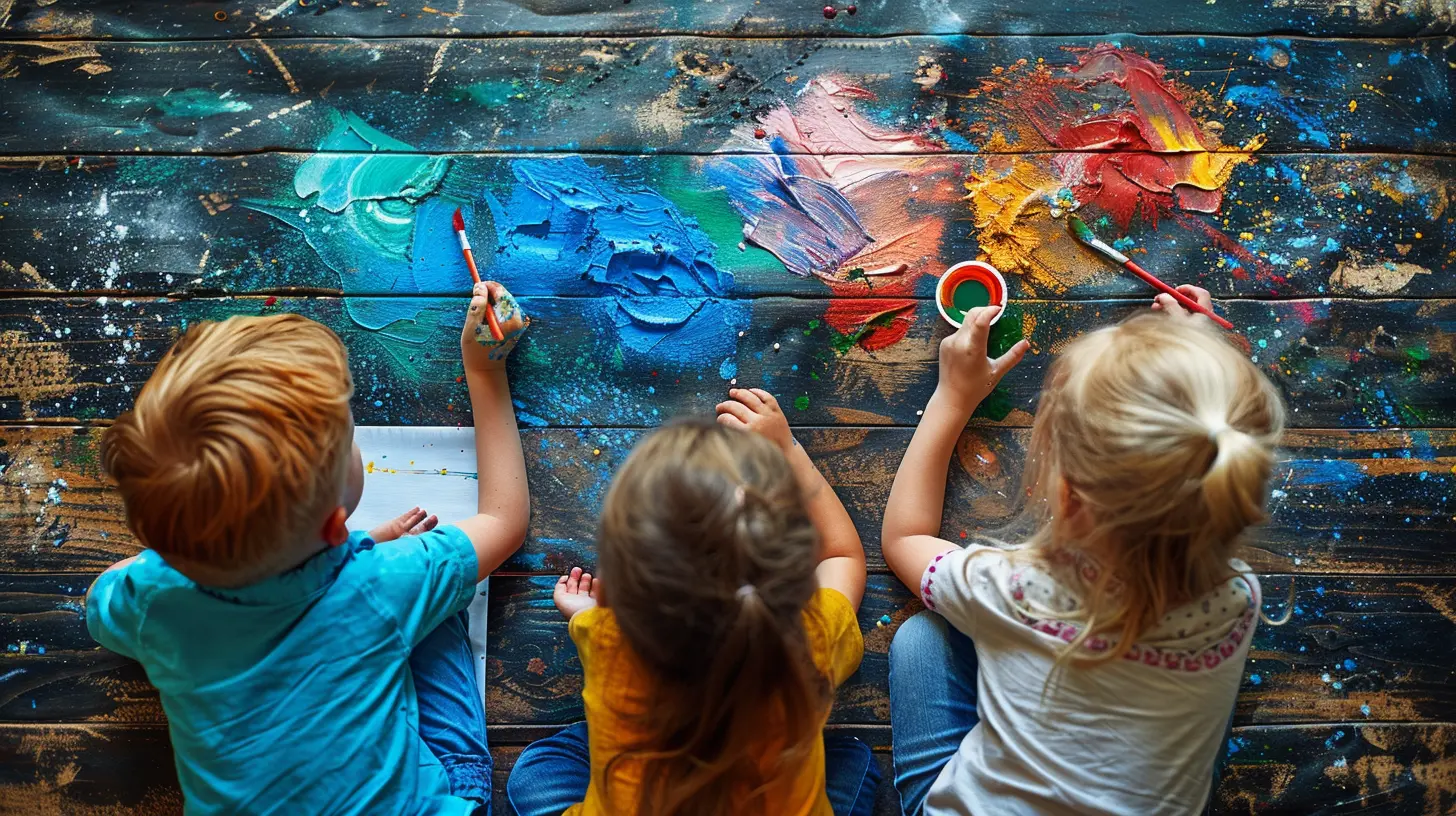
Screens, Schedules, and Why They’re Not the Same as Free Play
Let’s be real—modern parenting might as well be an Olympic sport. Between school, soccer practice, piano lessons, and attempting to feed them something vaguely resembling a vegetable, who’s got time for “just playing”?But here’s the thing: we’re filling their days with so much structure, there’s no time left for serendipity. It’s like trying to grow a garden in concrete—without space, nothing creative takes root.
And screens? Don’t get me started. Sure, they can be educational. But even the best app can’t replace a sandbox and a plastic shovel. Kids need to feel, move, touch, and totally immerse themselves in physical, imaginative experiences.
The Research Backs It Up (Don’t Worry, We’ll Keep It Brief)
Studies show that unstructured play improves cognitive flexibility—a fancy way of saying kids learn to think in different ways. It also boosts divergent thinking (coming up with lots of different ideas) and helps develop storytelling abilities.In short: Free play = Brain workout + Creative thrills.
Even big-brain organizations like the American Academy of Pediatrics encourage free play as essential for healthy development. So when your kid turns the living room into a jungle and you step on yet another LEGO, just remember—it’s science.
But Wait—Do Kids Even Know How to Play Freely Anymore?
Honestly? Maybe not.Kids today are so used to being entertained, instructed, and supervised that many have forgotten (or never really learned) how to play without direction. The good news? They’re naturals. A little boredom is all it takes to jumpstart their inner playwright/architect/mad scientist.
So yes, they might stare at you like you grew a second head the first time you say, “Go play.” But give it time. Creativity needs boredom the way cookies need chocolate chips.
How Parents Can Encourage Free Play (Without Losing It)
Okay, so you’re sold. You want to encourage more free play—but how do you do that without your home turning into a scene from a toy-filled apocalypse?Here are a few easy (and sanity-saving) tips:
1. Designate a Free Play Zone
Set aside an area—inside or outside—where chaos is allowed. Add some basic toys, open-ended materials (blocks, costumes, boxes, etc.), and let the magic unfold. Bonus: you’ll contain the mess… mostly.2. Embrace the Mess
Yep, it’s going to get messy. But think of it as creative residue. The glitter in your carpet, the marker on the table—that’s brain growth in action. And maybe a little vacuuming later.3. Offer Open-Ended Toys
Ditch the digital toys that do everything for them and go old-school. Blocks, play dough, cardboard boxes, stuffed animals—these are the real MVPs of the creativity world. Why? Because they force kids to supply the storyline.4. Schedule Less, Play More
Cut back on a few structured activities each week (don’t worry, no one’s getting kicked off the snack roster). Use that time to let your kid just be. They might complain at first—but soon enough, they’ll be building pillow castles and planning alien invasions without batting an eye.5. Be a Play Enabler, Not a Play Director
Resist the urge to jump in and organize their play like a mini cruise director. Let them lead. If they ask for help, be their assistant, not their boss. Think of yourself as their creative intern.What If My Kid Says, “I’m Bored”?
Fantastic. That’s the golden ticket.Boredom is the birthplace of imagination. It’s the blank canvas begging to be filled. When your child says they’re bored, it’s not your cue to entertain. It’s your cue to nod thoughtfully and walk away slowly (preferably sipping a coffee).
Nine times out of ten, they’ll find something to do—and it’ll probably be hilarious, inventive, and something you never would’ve thought of.
Real-Life Examples of Free Play Brilliance
Parents have shared all kinds of wild and wonderful stories about what happens when kids are given the freedom to just do their thing:- One mom found her kitchen turned into a veterinary clinic with Band-Aids on every stuffed animal.
- A dad caught his son trying to build a zipline from the tree to the porch using dental floss (points for engineering).
- Siblings turned a pile of laundry into a mountain expedition, complete with sherpas and snack breaks.
These aren’t just silly stories—they’re testimonies to how kids, given the right ingredients (time, space, freedom), can cook up creativity like master chefs.
Final Thoughts: Give ‘Em the Space to Create Magic
Free play isn't lazy parenting. It’s actually one of the most powerful tools we have to raise curious, resilient, and wildly creative kids. It teaches them not just how to imagine—but how to think, feel, solve, and grow.So the next time your kid grabs a broom and declares it a unicorn? Cheer them on. That’s not nonsense. That’s brilliance in action.
And you? You just have to get out of the way and let it happen. Maybe with a cup of coffee and earplugs, if things get really exciting.
all images in this post were generated using AI tools
Category:
Encouraging CreativityAuthor:

Noah Sawyer
Discussion
rate this article
2 comments
Antonia Patel
Free play is the ultimate creativity booster for kids. Who needs structured activities when you can let their imaginations run wild? Let them dig in the dirt, build forts, and turn the living room into a jungle. Just remember, a little mess never hurt anyone... right?
June 10, 2026 at 3:24 AM
Noah Sawyer
Absolutely! Free play sparks imagination and allows kids to explore without limits. A bit of mess is a small price for creativity.
Owyn Harris
I always thought "free play" meant giving kids a box and letting them figure it out. Who knew it was the secret to inventing new worlds, wild careers, and the possibility of my living room becoming a rocket ship? Genius!
May 9, 2026 at 4:10 AM
Noah Sawyer
You're absolutely right! Free play sparks imagination and opens doors to endless possibilities. It truly transforms everyday spaces into wonderlands.