Getting Ready for School in 2027: A Modern Parent's Guide
3 September 2026
Let me paint a picture that might feel familiar. It is 6:40 AM on a Tuesday in late August. Your child is standing in the kitchen holding a tablet in one hand and a half-eaten protein bar in the other. They are asking whether their AI tutor will sync with the classroom's learning management system, and whether they can bring their smart water bottle to homeroom. You are still trying to remember if you signed the digital permission slip for the robotics field trip.
Welcome to school prep in 2027. It is not your parents' back-to-school season, and honestly, it is not even your older kid's season from three years ago. The pace of change in education technology, health guidelines, and social expectations has accelerated to the point where the old checklist of buying notebooks and sharpening pencils feels almost nostalgic. But here is the good news: the core of getting a child ready for school has not changed. It is about building routines, managing anxiety, and fostering independence. The tools and the context have shifted, but your role as the steady anchor remains the most important variable.
Let me walk you through what actually matters this year, what you can safely ignore, and how to make the transition smoother for everyone involved. I will keep it practical, because you do not have time for fluff.
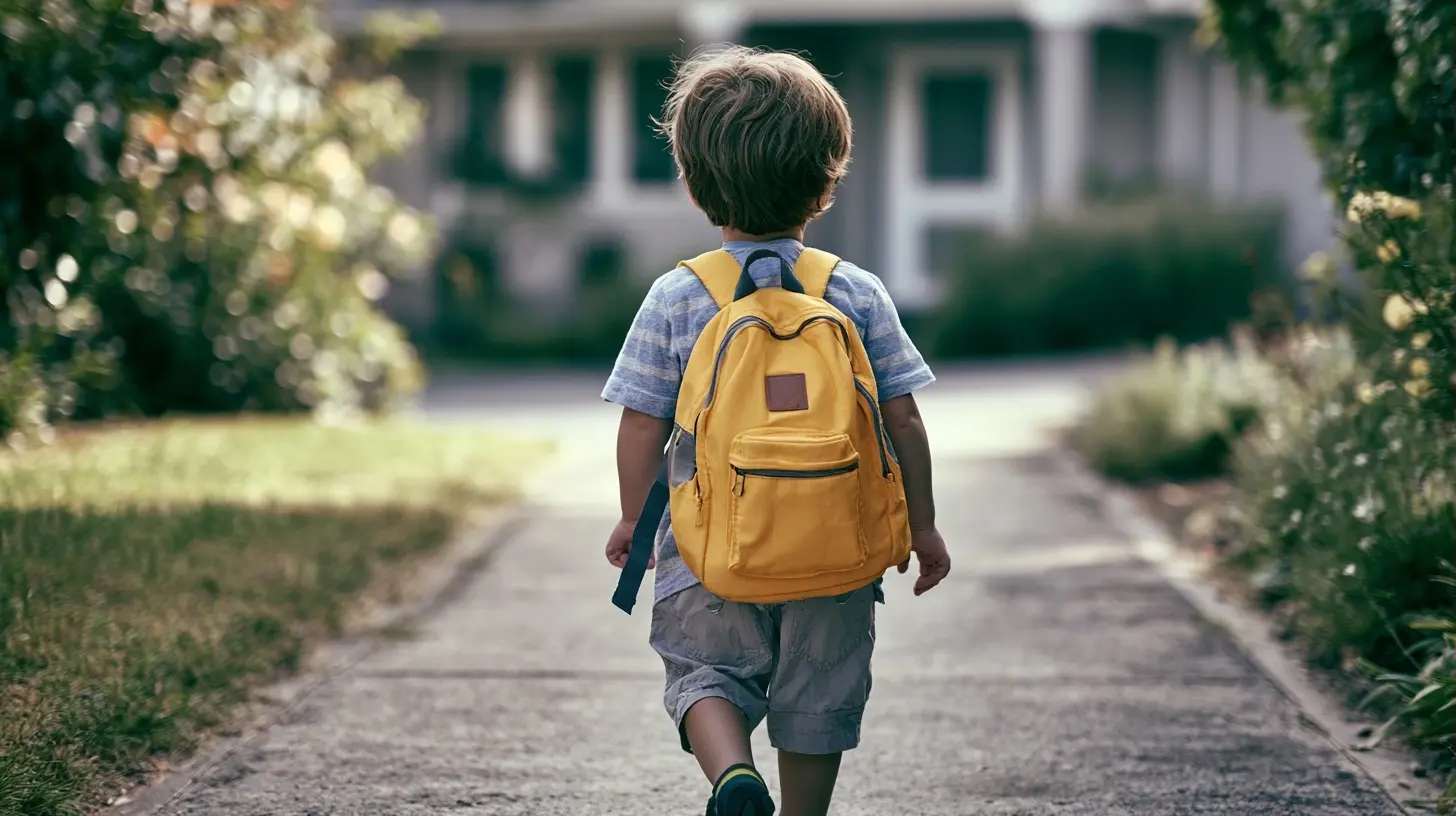
The New Backpack: Digital and Physical Load
We need to talk about the backpack, because it is no longer just a canvas sack for carrying textbooks. In 2027, the average elementary school student might carry a tablet, a keyboard case, a charger, a lunchbox with temperature control, a water bottle with hydration tracking, and maybe one actual spiral notebook for the teacher who prefers paper.The first mistake parents make is buying a bag designed for a laptop that is way too large for a seven-year-old. A heavy bag, even a digital one, causes posture issues and back strain. Look for a backpack that is lightweight when empty, has padded shoulder straps, and fits snugly against the child's back. The total weight, including the device, should not exceed ten to fifteen percent of your child's body weight. If the tablet and accessories alone push past that, consider a rolling bag or a separate sleeve that stays at school.
The bigger issue is digital clutter. Many schools now issue devices, but your child will still need to manage files, passwords, and app permissions. Before the first day, sit down with them and do a digital reset. Delete old games, organize homework folders, and set up a simple naming convention for assignments like "Math_Homework_0901." This sounds trivial, but it teaches executive function skills that will pay off for a decade.
Also, check the school's device policy carefully. Some schools have moved to a "bring your own device" model for upper grades, while others have banned personal devices entirely in favor of locked-down school tablets. Do not assume your child needs the latest gadget. A mid-range tablet with a decent keyboard and a long battery life is usually more than enough. The fancy stylus with pressure sensitivity? Unless they are in a digital arts program, skip it.

The Sleep Schedule Reset: Why It Takes Longer Than You Think
Every parent knows that kids should go to bed earlier before school starts. But very few parents understand the biology behind why the transition is so painful. During summer, children's circadian rhythms drift later. Their bodies naturally want to stay up later and sleep in. You cannot just flip a switch on the Sunday night before the first day.Start the reset at least two weeks before the first bell. Move bedtime earlier by fifteen minutes every two to three days. At the same time, move wake time earlier by the same amount. The key is consistency on weekends too. If you let them sleep until eleven on Saturday, you undo the entire week's progress.
Light exposure is your best tool. In the morning, get them outside for ten minutes of sunlight within an hour of waking. Sunlight suppresses melatonin and sets the internal clock. In the evening, dim the overhead lights and put screens away at least sixty minutes before bed. The blue light issue is real, but the bigger problem is the stimulating content. A fast-paced video game or a tense show keeps the brain alert even if the blue light is filtered.
One practical trick that works well: use a "sunrise alarm clock" that gradually brightens the room in the morning. Many kids who resist a blaring alarm respond much better to light. Pair that with a consistent bedtime routine that includes reading a physical book, not an e-reader, and you have a solid foundation.
Nutrition for the 2027 Student: Beyond the Lunchbox
School lunch in 2027 has evolved, but the principles of good nutrition have not. The challenge is that kids have more choices than ever, including vending machines stocked with "healthy" snacks that are still mostly sugar, and lunch lines that offer plant-based alternatives alongside traditional options.Do not fall for the trap of highly processed "kid-friendly" protein bars and fruit snacks. They are marketed with bright packaging and vague health claims, but many contain as much sugar as a candy bar. Instead, focus on whole foods that provide steady energy. A lunchbox with a protein source like chicken slices, hummus, or hard-boiled eggs, a complex carbohydrate like whole wheat crackers or brown rice, and a piece of real fruit will serve your child better than any pouch of pureed apples with added fiber.
Hydration is another area that deserves attention. By 2027, many schools have installed filtered water stations, but kids still forget to drink. Dehydration, even mild, affects concentration and mood. Send a water bottle that is easy to open and clean. Avoid bottles with complex straw mechanisms that are hard to disassemble, because mold will grow in the crevices and your child will not tell you.
The bigger conversation is about breakfast. If your child is not hungry at 7 AM, that is normal. Their appetite hormones have not caught up to the new schedule. Do not force a big meal. Offer something small and nutrient-dense, like Greek yogurt with berries, or a slice of whole grain toast with peanut butter. They can eat a larger snack mid-morning. The goal is to avoid a blood sugar crash by the time math class rolls around.

The Social-Emotional Check-In: What to Ask and What to Avoid
The most overlooked part of school readiness is emotional readiness. Kids pick up on parental anxiety, and the back-to-school season is ripe with it. You might be worried about academic performance, social dynamics, or the latest school safety headlines. Your child feels that tension even if you do not say anything.Instead of asking "Are you excited for school?" which puts pressure on them to feel a certain way, ask open-ended questions like "What are you curious about this year?" or "What is one thing you wonder about your new teacher?" This invites conversation without forcing a positive spin.
If your child expresses dread or anxiety, validate it first. Say something like "It makes sense you feel nervous. New classrooms can be tricky." Then help them problem-solve. What specifically is worrying them? Is it finding the lunch table? Is it the harder math content? Is it a specific kid from last year? Break the problem into small pieces and role-play solutions.
One common mistake is to over-schedule the first few weeks. Do not sign up for every club, sport, and tutoring session in September. Let your child adjust to the new rhythm first. Extracurriculars can wait until October. The first month is for establishing routines, making friends, and figuring out the homework load.
Also, be careful with your own social media habits. If you post about your child's first day, do not include details like their school name, teacher's name, or a photo with a visible location tag. In 2027, digital privacy is not paranoia; it is standard practice. Talk to your child about what they are allowed to share on their own devices, and set up parental controls together so they understand why the limits exist.
Navigating the Tech Stack: School Apps, Portals, and AI Helpers
Here is where many modern parents feel the most overwhelmed. Your school likely uses a parent portal for grades, a separate app for lunch payments, a communication platform for teacher messages, and possibly an AI-driven homework assistant that gives your child hints on math problems. That is a lot of logins.The best practice is to create a single family command center. Use a password manager, even a simple one, to store all school-related credentials. Set aside fifteen minutes every Sunday evening to review the week's calendar, check for permission slips, and clear out any digital clutter. This prevents the dreaded 9 PM email about a field trip form that is due tomorrow.
Now, about the AI tutors. Many schools now integrate AI tools that adapt to a child's learning pace. These can be genuinely useful for drill-based subjects like multiplication facts or vocabulary. But they are not a replacement for human teaching or parent involvement. Do not let your child use an AI assistant to write their essays or solve their homework entirely. That defeats the purpose of learning. Instead, use it as a check: have your child attempt the work first, then use the AI to verify and explain errors.
A common misconception is that more screen time in school means your child is more advanced. That is not necessarily true. Look at the quality of the digital interaction. Is the app asking open-ended questions and providing feedback, or is it just a digital worksheet? The latter has little advantage over paper. If you are concerned, ask the teacher how technology is being used in the classroom. A good teacher will have a clear rationale for each tool.
The Homework Battle: New Rules for a New Era
Homework in 2027 is often a mix of traditional assignments and online submissions. The struggle is not usually about the work itself; it is about transition time. Kids come home overstimulated and tired. Expecting them to sit down and do algebra immediately is unrealistic.Create a "decompression zone" for the first thirty minutes after school. This should be screen-free, snack-inclusive, and unstructured. Let them play outside, build with blocks, or just stare at the ceiling. Then start homework. The optimal window is usually between 4 PM and 6 PM, before dinner, when their brain is still somewhat alert.
If homework becomes a nightly power struggle, step back and look at the bigger picture. Is the workload appropriate for their age? In many schools, the "ten minutes per grade level" rule is still a good guideline. A fourth grader should have about forty minutes of work. If it is consistently taking two hours, something is off. It might be a focus issue, an undiagnosed learning difference, or an unreasonable teacher. Talk to the school before assuming your child is lazy.
Teach your child to use a planner, whether digital or paper. In 2027, many kids prefer a physical planner because it gives them a sense of control and a break from screens. Show them how to break a big project into smaller tasks with deadlines. This is a skill that many adults still lack, so do not expect mastery overnight. Model it yourself by writing your own to-do list in front of them.
Extracurriculars and the Overload Trap
There is enormous social pressure to have your child in multiple activities. By 2027, the competitive landscape for college admissions has trickled down to elementary school, and it is unhealthy. Parents are signing up five-year-olds for coding camps, Mandarin immersion, and travel soccer. This is not doing kids any favors.Here is the trade-off: every hour in an organized activity is an hour not spent in free play. Free play is where kids develop creativity, social negotiation skills, and resilience. It is not wasted time. It is essential development.
Choose one or two activities per child per semester. Let your child have a voice in the choice. If they want to quit after the first month, let them finish the commitment if possible, but do not force them to continue for a full year if they truly hate it. The lesson of sticking with something is valuable, but so is the lesson of recognizing when something is not a good fit.
Also, consider the logistics of the activity. Does it require a thirty-minute drive each way? Is the practice at 6 PM, which wrecks your dinner and bedtime routine? The cost is not just money; it is family stress. A local activity that your child enjoys is better than a prestigious one that exhausts everyone.
Special Needs and Individualized Support
If your child has an IEP or a 504 plan, the start of the school year requires extra vigilance. Do not assume that the new teacher has read the file thoroughly. Schedule a meeting within the first two weeks to review accommodations. Bring a one-page summary of what works and what does not. This is not being pushy; it is being a good advocate.In 2027, there are more assistive technology tools than ever. Speech-to-text software, predictive text, and reading apps can level the playing field for kids with dyslexia or dysgraphia. But these tools must be explicitly taught. A child cannot just be handed a tablet with speech-to-text and expected to use it effectively. Work with the school's special education team to integrate these tools into the daily routine.
For kids with anxiety or ADHD, the sensory load of a modern classroom can be overwhelming. Ask about flexible seating options, noise-canceling headphones, or permission to take movement breaks. Many schools are more accommodating than you might expect, but they need to hear from you first.
Money Matters: The Real Cost of School
Let me be direct about the financial side. Back-to-school spending in 2027 is astronomical, and much of it is unnecessary. The biggest expenses are often electronics and clothing. You do not need to buy a new tablet every year. You do not need a wardrobe of brand-name sneakers. Resist the pressure.Make a list of what the school actually requires versus what is recommended versus what is purely optional. Many schools provide supplies, especially in lower grades. Wait until the first week to see what the teacher really wants. You will save a significant amount of money by not buying thirty glue sticks that will go unused.
For clothing, the "capsule wardrobe" approach works well. Buy a few mix-and-match pieces that are durable and comfortable, rather than a dozen trendy items. Kids grow quickly, and they are hard on clothes. Focus on fit and fabric over logos.
If money is tight, look for community resources. Many districts have backpack drives and free supply closets. There is no shame in using them. Your child will not care about the brand of their notebook; they will care that you are calm and present.
The Morning Routine: Engineering for Success
Let us get tactical about the morning. The goal is to reduce decision fatigue and chaos. Prepare as much as possible the night before. Clothes out, including socks and shoes. Backpack packed and by the door. Lunch prepped or lunch money loaded. Any signed forms in the designated folder.Set a consistent wake-up time for yourself that is earlier than your child's. You need a few minutes of quiet to gather your own thoughts. If you are rushing and stressed, your child will absorb that energy.
Create a visual checklist for younger kids. A whiteboard with pictures of "brush teeth," "get dressed," "eat breakfast," "put on shoes" helps them feel independent. For older kids, give them a hard deadline for when they need to be ready, and then let them face the natural consequences of being slow. If they miss the bus and have to walk to school (safely), that is a lesson they will not forget. Do not rescue them every time.
One of the most effective strategies is to make the morning boring. No screens. No TV. No tablet games. Screens in the morning can cause meltdowns when it is time to leave. Instead, play some music or a podcast. Keep the mood light and the conversation simple. Save deep discussions for the car ride or dinner.
The Car Ride and Drop-Off: Last-Minute Words
The drop-off is a critical moment. If your child is nervous, do not give a long pep talk. That signals that you are worried. Instead, give a specific, calm statement like "I will be here at 3:10. Have a good day." Then leave. Lingering can increase anxiety.If your child has separation anxiety, which is common in early elementary even after a break, create a short goodbye ritual. A special handshake, a secret word, or a specific phrase like "See you later, alligator" provides predictability. The key is to keep it brief and consistent.
For older kids who take the bus, make sure they know their bus number and stop. Do a practice run of the bus stop a few days before school starts. In 2027, many buses have GPS tracking, so you can see when the bus is coming. Use that to avoid long waits in the heat or cold.
Adapting to the Unexpected: Illness, Weather, and Shutdowns
The last few years have taught us that school schedules can change overnight. There might be a snow day, a power outage, or another unexpected closure. Have a plan in place. What happens if school is canceled and you have to work? Who can watch your child? What is the backup plan if your backup plan falls through?Talk to your child about flexibility. If they are disappointed about a canceled field trip or an unexpected change, validate their feelings but also model resilience. Say something like "I know you were looking forward to that. It stinks. What can we do instead this weekend?" This teaches them that setbacks are survivable.
Also, keep an eye on your own stress levels. Parents in 2027 are juggling more than ever, and burnout is real. You cannot pour from an empty cup. Take time for yourself, even if it is just ten minutes of quiet with a cup of tea. Ask for help from your partner, family, or friends. There is no prize for doing it all alone.
Final Thoughts: The Big Picture
Getting ready for school is not about having the perfect supplies or the most organized routine. It is about creating a sense of safety and predictability for your child. They need to know that you are in their corner, that mistakes are okay, and that learning is a journey, not a performance.In 2027, the world is more complex than it was when we were kids. There are more distractions, more pressure, and more unknowns. But the fundamentals remain: sleep, nutrition, connection, and routine. If you get those right, everything else becomes manageable.
So take a deep breath. You have got this. The first day is just one day. The school year is a marathon, not a sprint. Pace yourself, stay flexible, and remember to laugh. The toddler who cried at drop-off will eventually become the teenager who rolls their eyes at your morning reminders. That is growth, even if it does not feel like it in the moment.
Here is to a smooth transition and a wonderful year ahead. You are doing better than you think.
all images in this post were generated using AI tools
Category:
School ReadinessAuthor:

Noah Sawyer
Discussion
rate this article
2 comments
Ivan Klein
This guide offers practical tips for navigating school prep in 2027, helping parents stay ahead of trends.
September 18, 2026 at 2:29 AM
Noah Sawyer
Thanks for your feedback! I'm glad you found the tips useful.
Paris Lawrence
As we prepare for the future of education, let's not forget the importance of nurturing curiosity and resilience in our children. Technology will evolve, but fostering critical thinking and connection will remain essential for navigating the challenges ahead.
September 16, 2026 at 3:48 PM
Noah Sawyer
Absolutely! Curiosity and resilience are key. As we embrace new technologies, let's keep fostering those critical skills in our kids to ensure they thrive in the future.