Finding Patience in Parenting Through Understanding
16 October 2026
Patience is one of those qualities every parent admires and few feel they have enough of. It shows up in the quiet moments before dawn when a toddler refuses to sleep, in the tenth repetition of the same question, and in the split second between a child's defiance and your reaction. Most parents assume patience is a trait you either have or you do not. That assumption is both wrong and harmful. Patience is not a fixed personality feature. It is a skill shaped by understanding, and it grows when you know what is actually happening inside your child, inside yourself, and inside the relationship between you.
This article is about building that understanding. Not as a collection of tricks, but as a working model you can apply to real situations. The goal is not to become a parent who never loses composure. The goal is to become a parent who understands enough to respond rather than react, and who can repair quickly when reactions happen anyway.

Why Patience Feels So Hard in the First Place
Before you can build patience, you need an honest account of why it runs out. Most advice skips this step, which is why it fails.The mismatch between adult and child time
Adults live in a world of schedules, outcomes, and efficiency. Children live in a world of process. A four-year-old putting on shoes is not being slow on purpose. They are learning a motor sequence, negotiating with a sibling, and noticing a bug on the floor. Your nervous system reads this as delay. Their nervous system reads it as life. When you understand that a child's pace is developmentally necessary rather than personally directed at you, the same situation carries less insult.The cumulative load nobody talks about
Patience is not tested in isolation. It is tested after a broken night, a work deadline, a sick pet, and a missed lunch. By 5 p.m., your capacity is not the same as it was at 8 a.m. This is not weakness. It is basic human physiology. Parents who track their own depletion honestly tend to lose their temper less, because they stop expecting peak patience from a depleted system.The myth of the "good parent"
Many parents carry a private standard in which good parents stay calm, and losing patience means failure. That standard creates a trap. When you believe you must never lose patience, every moment of frustration becomes evidence of inadequacy. The shame that follows makes the next moment harder. Understanding replaces that standard with a more workable one: patience is a practice, and repair matters as much as prevention.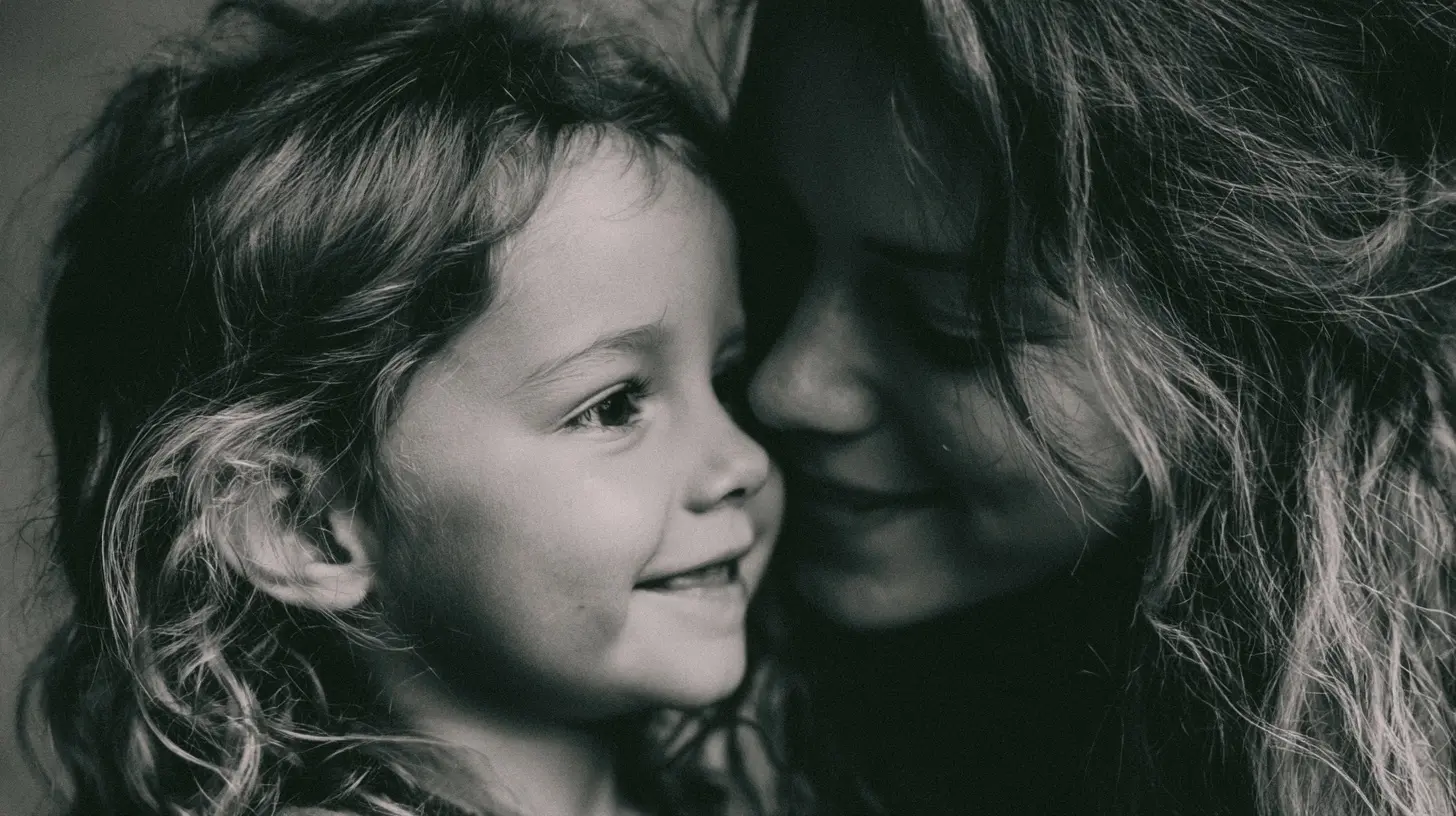
What Is Actually Happening in a Child's Brain
Understanding your child's development is the single most powerful patience tool available, and it costs nothing.Executive function is under construction
The prefrontal cortex, which supports planning, impulse control, and emotional regulation, develops slowly and continues maturing well into early adulthood. This means a young child is not choosing to ignore your instructions. They often cannot yet hold an instruction in mind while resisting an impulse. Expecting consistent self-control from a three-year-old is like expecting a first grader to file taxes. The expectation, not the child, is the problem.Emotions arrive before language
Children feel big emotions long before they can name them. A child screaming over a broken cracker is not upset about the cracker. They are overwhelmed by a feeling they cannot describe or manage. When you understand this, your job shifts from correcting the overreaction to helping the child survive the feeling. That shift alone reduces your frustration, because you are no longer arguing with a disproportionate response. You are coaching a nervous system.Stress behavior is communication
Whining, clinging, defiance, and regression are usually signals, not attacks. A child who suddenly cannot dress themselves may be anxious about a change at school. A child who argues about everything may be seeking control in a life where they have very little. Reading behavior as information rather than opposition changes how you respond, and it changes how long your patience lasts.
Understanding Yourself as the Other Half of the Equation
Patience is not only about the child. It is also about what you bring into the room.Your triggers have histories
Most parents have specific buttons that get pushed harder than others. Backtalk. Ingratitude. Whining. Mess. These sensitivities usually trace back to your own childhood, your values, or your fears about how your child will turn out. A parent who was shamed for crying may find crying intolerable. A parent raised in chaos may overreact to disorder. Naming your triggers is not self-indulgence. It is practical, because you cannot manage a reaction you have not noticed.Regulation is contagious
Children borrow calm from adults. When you slow your breathing, lower your voice, and reduce your movements, you offer their nervous system something to sync with. This is not manipulation. It is co-regulation, and it is one of the most reliable tools in parenting. The reverse is also true. Your escalation teaches their escalation. This is why managing your own state is not separate from parenting. It is parenting.Capacity is not constant, and that is fine
Some days you will have more patience than others. Accepting that variability prevents the spiral of self-blame. Instead of asking "Why can't I stay calm?" ask "What does this moment require, and do I have the capacity right now?" If the answer is no, the appropriate response may be to step away for two minutes, call a partner, or simply lower the stakes.
Practical Strategies That Actually Hold Up
Techniques only work when they rest on the understanding above. Used without it, they become mechanical and fail under pressure.Name the feeling before solving the problem
When a child is upset, the sequence matters. Acknowledge the emotion first: "You are really angry that we have to leave." Then hold the limit: "We still have to go." Then offer choice where possible: "Do you want to walk or be carried?" This order works because an activated child cannot process logic until the emotional surge begins to settle. Solving first usually escalates things.Use the pause as a deliberate tool
A three-second pause before responding is not hesitation. It is a decision point. In those seconds, you can notice your impulse to yell or lecture and choose something else. Parents who practice this report that the pause becomes automatic within weeks, and that most conflicts de-escalate simply because the adult did not add fuel.Lower the bar in high-stress moments
During illness, travel, or big transitions, children regress. Expecting the same behavior you get on a normal Tuesday sets everyone up to fail. Temporarily relaxing standards, such as allowing more screen time during a stomach bug, is not permissive parenting. It is realistic parenting. The key is that the relaxation is temporary and intentional, not a permanent drift.Repair quickly and specifically
Every parent loses patience sometimes. What matters is what happens next. A specific repair sounds like: "I yelled when you spilled the milk. That was too much. I am sorry. Let's clean it up together." This does three things. It takes responsibility, it models accountability, and it reassures the child that the relationship is safe even when emotions run high. Children who see repair learn that conflict does not equal abandonment.Separate the behavior from the child
"You are being careless" lands differently than "The cup broke because it was too close to the edge." The first attacks identity. The second describes reality. Over time, children internalize the labels we use. Keeping the focus on behavior preserves their self-image and makes correction easier to accept.Common Mistakes and Misconceptions
Even well-intentioned parents fall into patterns that undermine patience. Recognizing them is half the work.Mistake: Treating patience as suppression
Some parents confuse patience with swallowing frustration. This works briefly and then fails dramatically, often as a sudden explosion over something small. Real patience involves acknowledging the frustration internally and choosing a response. Suppression stores pressure. Understanding releases it.Mistake: Assuming a calm child is a compliant child
A child who never protests may be anxious rather than easy. Patience should not become a demand for obedience. The goal is a child who can express disagreement appropriately, not one who has learned that feelings are unwelcome.Misconception: Consequences must be immediate to work
Many parents rush to punish because they fear that delay weakens the lesson. In reality, a brief pause often improves the outcome, because the consequence can be delivered calmly and connected to the behavior. Immediate reaction is not the same as effective reaction.Misconception: More patience means fewer boundaries
The opposite is true. Clear, consistent boundaries reduce conflict over time because children know what to expect. Vague limits create constant negotiation, which drains patience faster than firm ones.
When to Seek Support
Understanding goes a long way, but some situations need more than self-reflection.If you find yourself frequently overwhelmed, if you notice patterns of yelling that frighten you or your child, if you feel persistently hopeless, or if your child's behavior is significantly affecting daily functioning, talking to a pediatrician, therapist, or family counselor is a reasonable and responsible step. This is not a sign of failure. Parenting is a high-demand role, and outside support is a tool, not a verdict.
Building Patience as a Long-Term Practice
Patience is not something you achieve once. It is something you maintain, like fitness. A few principles make that maintenance realistic.- Sleep and basic self-care are not luxuries. They are the foundation of emotional regulation.
- Support systems matter. Parents who have someone to talk to lose patience less often, because they are not carrying everything alone.
- Reflection beats rumination. A short, honest review of a hard moment, focused on what you would do differently, is more useful than hours of self-criticism.
- Progress is uneven. A good week followed by a hard day is normal, not a relapse.
A Final Thought on What Patience Really Is
Patience in parenting is not the absence of frustration. It is the presence of understanding. When you understand your child's development, your own triggers, and the dynamics between you, you stop fighting reality and start working with it. That shift does not make parenting easy. It makes it workable. And over time, it makes it kinder, for your child and for you.
all images in this post were generated using AI tools
Category:
Parenting With EmpathyAuthor:

Noah Sawyer